By Robert Schrader | Published on January 21, 2026
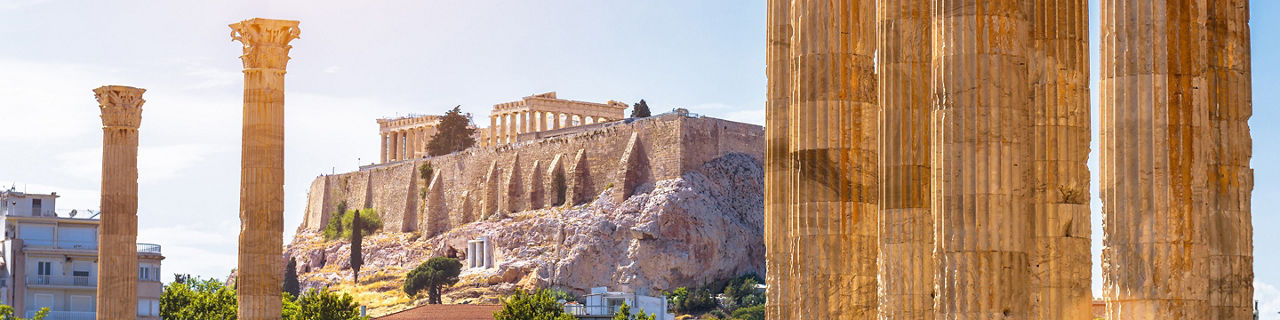
It's impossible not to be amazed as you travel through Greece, even if you don't know much about the ancient ruins. And if you're hoping to learn more, consider taking a few Greek mythology tours on your upcoming trip.
Whether you explore the Acropolis of Athens with an insightful guide or take day trips from the northern city of Thessaloniki to legendary spots like Mt. Olympus and Dion, watch as the world of the Ancient Greeks comes alive as you explore present-day Greece. No matter where you plan to disembark from your cruise, you can easily access at least one of these timeless destinations.
Key Takeaways: Modern Greece and Greek Mythology
- ● Many of the sites mentioned in Greek mythology are still known and accessible today, with well-preserved ancient temples and other structures to visit.
- ● Some of these destinations, including the most important site in Greek mythology, Mt. Olympus, also involve impressive natural landscapes you can explore.
- ● Day trips from Athens or other major Greek cities are good ways to see the best of Greek mythology today.
- ● Greek mythology tours are a fun way to spend your time in port during a cruise to Greece.
Greek Mythology Travel: Matching the Myths to Top Travel Destinations
Greek mythology has had an incredible amount of impact on modern Western civilization, but certain myths hold special importance to travelers, since they take place in real-life destinations you can visit to this day:
- ● The Birth of Zeus: Rhea, mother of the Gods, gave birth on the island of Crete, which is one of Greece's top cruise destinations.
- ● The Naiad Aegina: Zeus pursued the island nymph Aegina on an island near Athens, which you can travel to via several daily ferries.
- ● The Twelve Olympians: Learn how Mt. Olympus, located in Thessaly, became home to the 12 Olympian Greek gods and goddesses, and also visit the nearby Archaeological Park of Dion.
- ● Korkyra and Poseidon: Fall in love with the romance of a nymph and the water god on the modern island of Corfu, which, like Crete, is a popular stop for cruises.
- ● Birth of the Twins: Twin gods Apollo and Artemis were born on Delos, which sits just 30 minutes from modern-day Mykonos by ferry.
- ● The Minotaur: The legend of the fiercest monster in Greek mythology is tied to the Temple of Poseidon, which is less than two hours by car from Athens.
The best news is that many destinations from these myths are accessible via day trips from Athens, which is great if your ship is docking at Piraeus (the port nearest to Athens) for only a day or two.
The Best Greek Mythology Destinations and Tours To Take
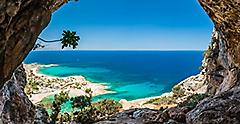
Crete, Greece
Return to where the immortal Zeus was born.
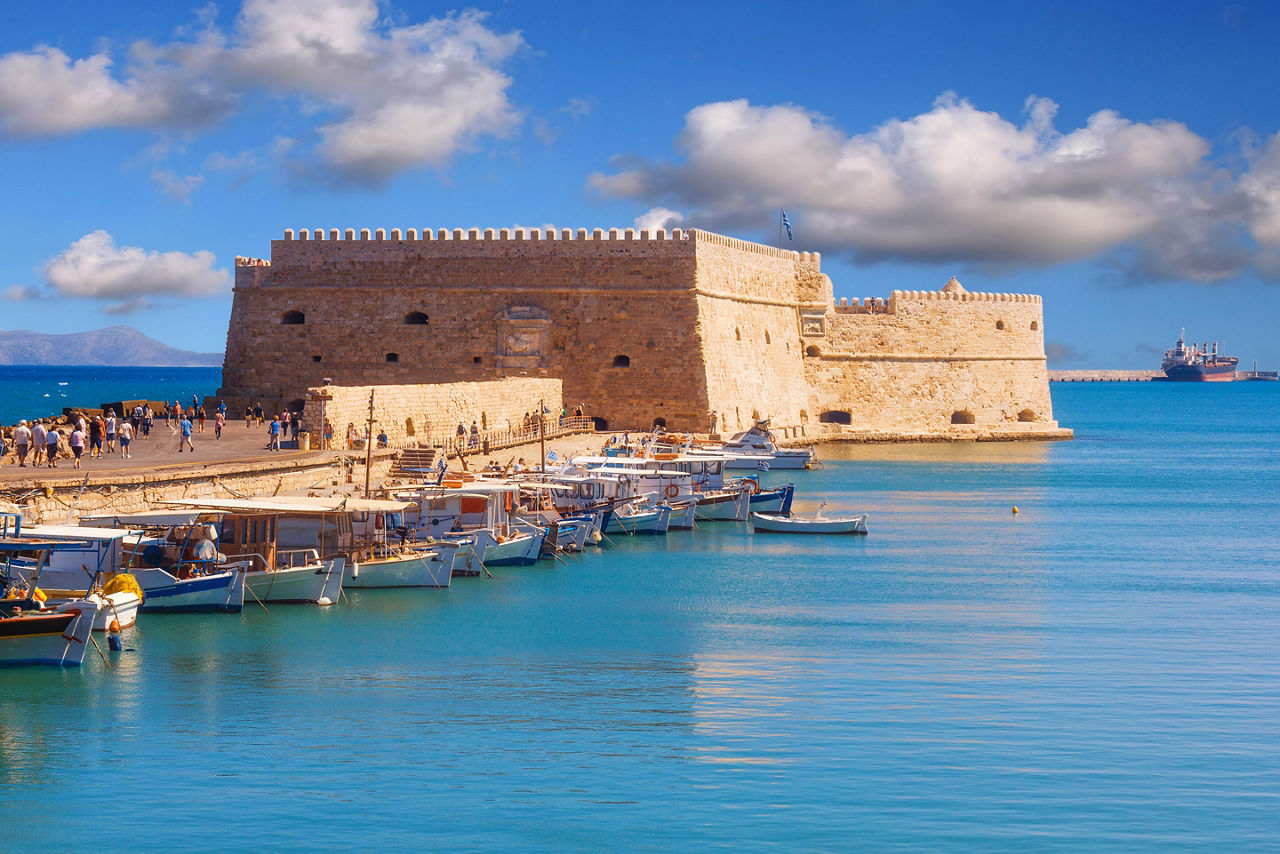
While the island of Crete is too far from Greece's capital to be considered a realistic day trip from Athens, you can do some mythological digging if your cruise ship happens to be docking here. That's because Crete isn't just home to some of the most stunning coastal scenery in all of Europe and some of the best culture cruises can discover when they call here. According to legend, Zeus himself was born here — and if these stories are to be believed, you can actually take a hike to the very cave where the immortal lived out his first days.
No one knows where precisely Rhea, mother of the gods, actually gave birth to Zeus. However, many generally agree that she hid him in a grotto known as Ideon Cave, in order to protect him from many who knew the power he was about to have and wanted to destroy him.
You can visit Ideon Cave yourself by hiking up Mt. Ida, whose trailheads begin just 90 minutes by car from Heraklion, the port city where your ship will most likely arrive. Closer to town, you'll also want to visit the Knossos archaeological site, which dates back to the pre-Greek Minoan civilization. The Heraklion Archaeological Museum provides more insight into the history of the region, both as it relates to mythology and otherwise.
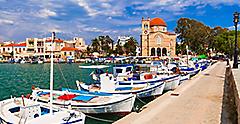
Aegina, Greece
Follow Zeus' romantic conquests on an afternoon trip from Athens.
If you're on the hunt for Greek mythology tours, but don't have the time or desire to go far from the capital, Aegina Island is the perfect destination. According to legend, Aegina is the island where Zeus pursued romance with a river nymph (Aegina, for whom the island was named), daughter of the river god Achelous. You can reach Aegina in just over an hour by ferry from Piraeus, the same ferry port where your cruise ship will dock. This is a great option for discovering mythology if you just have the day in Athens and aren't even planning to stay a night.
These days, Aegina is a popular day trip destination for Athenians, most of whom are not history buffs. However, an excursion here isn't just about gorgeous scenery, from sweeping views of the Aegean Sea to incredible beaches that are basically empty of tourists.
Architecture buffs will want to visit the Temple of Aphaia, the most notable man-made structure on the island. Built around the 5th century and BCE, this site is dedicated to the Greek goddess of the same name, who represents fertility and agriculture, but worship of whom was largely restricted to this island throughout history. While on the island, you can learn more about the legend at the Archaeological Museum of Aegina and cool off from the heat at gorgeous Agia Marina Beach.

Mt. Olympus, Greece
The most important Greek mythology destination of all.
If you're divided between several potential Greek mythology tours but only have time for one, you should consider visiting Mt. Olympus. Accessible from the northern Greek city of Thessaloniki on a day trip, this peak near the border with Macedonia is the highest mountain in all of Greece.
In addition to being where the gods and goddesses were born (and, if you believe the legend, still reside), it's one of the most impressive remaining landmarks related to this lore. Although the sprawling Archaeological Park of Dion relates primarily to Dionysus, the god of pleasure, you'll find representations of other deities amid its ruins. These include Demeter, Artemis and Zeus, who you've probably noticed has seemed to find his way into basically all the attractions on this list.
What's fascinating about Dion, beyond its huge 1,500-acre footprint, is that its structures date back to several historical periods, spanning hundreds of years from the early Hellenistic period, well into the time when the Romans controlled this part of Greece. Another place to visit nearby, if you have the time, is the gorgeous green Urlias Stream, which isn't directly related to mythology, but whose beauty will have you feeling like you've stepped into a myth.
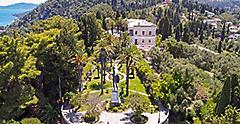
Corfu, Greece
On this island, a tryst with the water god went terribly wrong.
For cruises, Corfu is one of the most popular ports in Greece, as it's a particularly gorgeous island. What you might not realize, however, is that this hot spot for beaches and local cuisine is also a great place to travel for Greek mythology tours. One of the most important myths to take place on Corfu, at least allegedly, is the romance between Poseidon, the Greek god of the seas, and a nymph named Korkyra. Cruelly, Poseidon banished Korkyra to this island, which now bears a variant of her name, although hers is not the only story now told here.
In particular, you'll want to visit the Achilleion Palace — and take note of its story, which is surprisingly modern. Although it is named after the warrior Achilles, one of the most recognizable and culturally durable names in Greek mythology, the structure itself was built in the mid-18th century by a Bavarian princess. In addition to offering a different experience from most other temples and palaces in Greece, a visit to this particular spot highlights just how captivating and relevant the stories of ancient Greece have been throughout history.
If you're on the hunt for something more ancient in Corfu (albeit not related directly to a character from mythology), consider visiting Antivouniotissa, a museum dedicated to the Byzantine era.
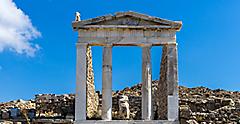
Delos, Greece
Trade Mykonos nightlife for a day with Apollo and Artemis.
Greek mythology tours depart from many popular cruise destinations in Greece, and Mykonos is no exception. Mykonos' natural beauty and thrilling nightlife make an excursion to the nearby island of Delos worthwhile, especially when you consider that the one-way journey is only 30 minutes.
Upon arriving on Delos, be mindful of the important history you're stepping into: Here, on this beautiful island, is where the twin gods Apollo and Artemis took their first breaths. That'll make for an interesting drinking story you can tell when you arrive back at the bars and clubs of Mykonos!
In all seriousness, not all the impressive architecture on Delos is directly related to Apollo, the god of healing, and his sister Artemis, goddess of the hunt. The largest of these so-called "cult" temples, the Temple of the Delians, took shape in the fourth century B.C. out of intense devotion to Apollo. However, other such temples stand on the island, most notably one dedicated to Hercules, a god and hero famous for his strength and bravery.
As you look down onto the Ionian Sea from the peak of Mt. Clinthos, you might even be able to see all the way back to Mykonos, if it's a clear day! Before you head back, consider further education at the island's Archaeological Museum, or dipping your toes into the sands of Kapari Beach, which are much less crowded than anything you'll find elsewhere in the Cyclades.
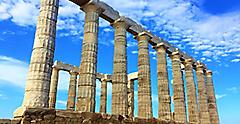
Cape Sounion, Greece
The majestic Temple of Poseidon has a tragic origin story.
Another popular day trip includes the Temple of Poseidon, if only due to its distance (less than two hours by car, depending on the traffic) from the capital. The structure itself is also impressive: Most of the skeleton of the temple is still intact, which is remarkable when you consider it was built almost 2,500 years ago. Dramatic views of the sea just off Cape Sounion, where the temple sits, further reinforce the timelessness of this edifice — and that's before you even know the sad story behind it.
According to legend, a young Athenian warrior named Theseus successfully slayed the Minotaur, a vicious creature that plagued Crete. Unfortunately, when he was sailing back to Athens, he forgot to change the color of his sail from black (which represents defeat) to victorious white, which led his father, Aegeus, to jump to his death into the sea from Cape Sounion, where Poseidon's house of worship now still stands. Think about this grave error as you look out onto the blue waters of the Aegean, believed to be named for the doomed king.
Cruise to a Land of Myth and Legend

Get Royal Deals, Sign Up Today

Getting There
Best Deals To Discover Greece and its many islands
Sail on a mythological trip of your own with a Mediterranean cruise vacation.