By Sherri Eisenberg | Published on November 17, 2025
Beautiful scenery, stunning people and mouthwatering food make any trip to the Mediterranean an intoxicating experience. From the heart-thumping energy of Spain and the charming towns of Italy to the soaring cliffs of Croatia, this region has one delicious uniting force — the cuisine!
The Mediterranean diet is renowned worldwide for being exceptionally healthy and balanced. Here's what it entails, plus all the top eats and treats for your foodie bucket list.
Key Takeaways: Mediterranean Foods
- ● Mediterranean cuisine blends bold flavors from Europe, North Africa and the Middle East.
- ● The “holy trinity” of Mediterranean food includes olives, wheat and grapes.
- ● Try iconic Mediterranean dishes like paella, kokkinisto, shakshuka and Italy’s rich tomato sauces.
- ● Discover regional specialties like Croatia’s under-the-bell cooking and squid ink pasta.
- ● Explore our Mediterranean cruises to discover these unforgettable flavors in every port.
What Is Mediterranean Food?
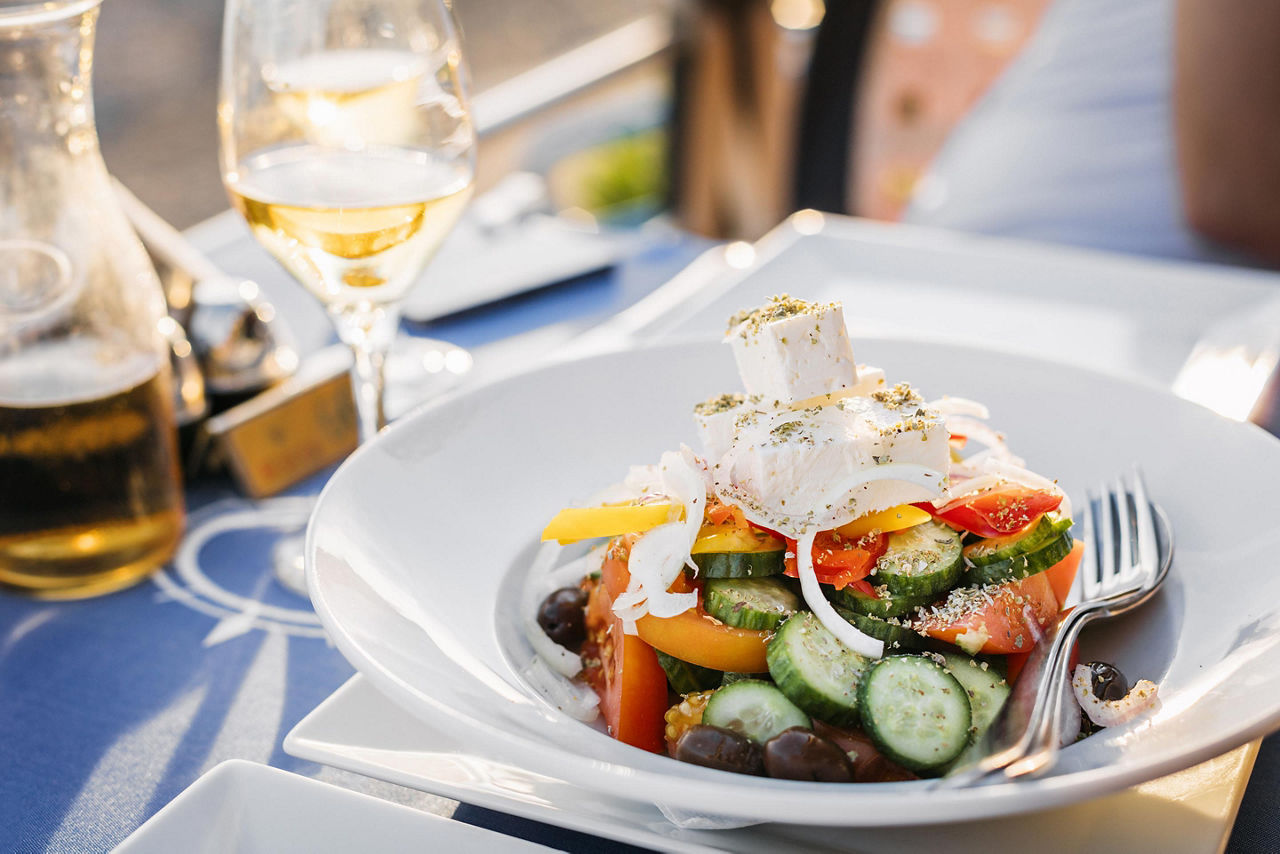
Mediterranean food is cuisine from areas including Italy, Spain, Greece, Croatia, Egypt, France, Morocco and other countries. Dishes are generally built around ingredients like fresh fruits and vegetables, healthy fats and whole grains. The flavors are varied because the Mediterranean includes a massive variety of cultures — and cooking.
Back in 1950, a writer named Elizabeth David released the popular cookbook, A Book of Mediterranean Food. While the pages were filled with French recipes, Britain's fascination grew and spread quickly. This helped make the food of the southern Mediterranean more widely recognized, even as North African cuisines continued to thrive in their own right.
Other authors started contributing to the fascination, covering everything from the basics to the ingredient diversity in each country. Experts rarely agreed on a single definition of the cuisine.
The Holy Trinity of Food From the Mediterranean Area
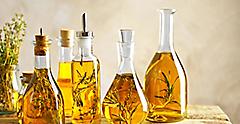
Those living near the Mediterranean Sea are at lower risk of some cancers and heart disease, and they typically have longer lifespans. Many attribute this to what's been coined "the Mediterranean diet," a style of eating based on lean proteins, fresh fruits and vegetables, seeds and olive oil. The core ingredients, often referred to as the "holy trinity," are easy to remember:
- ● Olives
- ● Wheat
- ● Grapes
Almost every meal you have in Southern Mediterranean countries will have elements of olives or olive oil, bread or pasta and grapes or wine. Think warm slices of freshly baked bread (wheat) dipped in olive oil (olives) and a splash of balsamic vinegar (grapes) — a flavor combination that speaks for itself.
Mediterranean cuisine can also be broken down into three regions: Eastern Mediterranean, Southern Europe and North Africa. Thanks to their central sea, each region has traded and shared its culinary riches, but some distinctions still exist.
East
In the east (Greece, Turkey and Egypt), yogurts and fresh cheeses like halloumi are popular. Gentle flavors of parsley and mint complemented by fresh lemon juice provide the key taste. Thick chunks of lamb and poultry are served with flatbreads like pita or lavash.
South
In the south (Italy, France and Spain), wine finds its way into most Mediterranean dishes and onto dinner tables, bringing with it ingredients like tomatoes, olives, anchovies and capers. Tuck into comfort-food dishes like paella, margarita pizza or tortilla.
North
In the north of Africa (Morocco, Tunisia and Libya), spices reign supreme. Much like in India, cumin, coriander and paprika meld together to create fragrant stews. Markets in Morocco often sell Harissa spice — a powerful addition to your at-home cooking.
Fun fact: In the U.S., a person uses about 1.2 liters (1 kilogram) of olive oil per year. In Greece, the average climbs to 20.5 liters (9.3 kilograms) — a flavorful testament to its place in everyday cooking.
11 Famous Mediterranean Foods You Must Try
1. Hummus And Fava
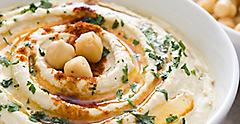
Hummus (known as houmous in the UK) is a famous staple of Mediterranean cuisine. Thanks to ancient trading routes, it's unclear whether hummus originated from Greece or Egypt, but it's clear that both countries enjoyed it. Now a popular diet food and party dip, hummus is available in Western supermarkets around the world.
To make this Mediterranean street food, blend chickpeas, sesame seed paste (tahini), lemon juice, garlic, salt, cumin and olive oil until smooth, thick and creamy. Enjoy it on crackers, tortilla chips, fresh cucumber, carrot sticks and more.
On the other hand, fava is like the Greek cousin of hummus. Many people think hummus is popular in Greek restaurants, but you'll have more luck finding an appetizer of mild fava drizzled in olive oil and salt. While the ingredients are different, fava has a similar texture to hummus with a gentler taste.
2. Paella From Spain
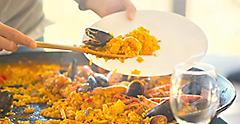
Paella can be traced back to a small town in Spain named Valencia. It was here that Roman conquerors introduced rice and irrigation to the land — a lesson learned from Arabic cultures. Much like pizza had humble beginnings based in poverty, paella was originally created by servants from the leftovers of their masters' tables. Rice, leftover meat and spices were cooked in a large flat-bottomed pan over a hot fire to create the flavorful masterpiece we now know as paella.
Today, paella can be made with meats such as chorizo, beef or seafood like shrimp, mussels and lobster. Every family and restaurant has its prized paella recipe with just one spice in common — saffron, which is what turns the rice a beautiful shade of yellow and provides a rich, earthy taste.
While enjoying a paella in the town of Valencia is a real treat, you can find this popular menu item all over Spain and the Mediterranean. If you want to give this dish a taste before you travel, you can make a seafood paella at home. Just remember that not all rice is the same! You'll need the thick and bouncy bomba rice that holds more water than usual.
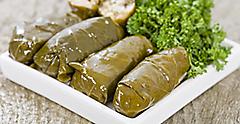
3. Stuffed Grape Leaves (Dolmades)
Grape leaves are edible, which means they’re the gift that keeps on giving! You've probably seen stuffed grape leaves at some point in your life. They kind of look like a muddy brown leaf-version of a spring roll. Once you bite into these tender parcels of savory flavor, you'll never ignore them again.
Stuffed grape leaves are most popular in Greek and Arab culture. You may know them as dolmades or “dolmadakia.” Either way, the concept of this Greek Mediterranean food remains simple: rice, vegetables, spices and sometimes ground meat are combined and wrapped in a cooked grape leaf (you can purchase these in jars). The parcels are then placed in a big pot with more seasoning and boiled until fully cooked. A true labor of love.
On your trip to indulge in must-try Mediterranean food, you will find stuffed grape leaves on restaurant menus, in supermarkets and at delicious local markets. At home, try your hand at this Greek Mediterranean food or give the meaty Lebanese version a try.
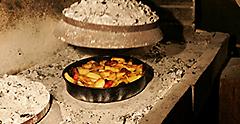
4. Croatia's Under The Bell Cooking
This recipe dates back to ancient Balkan times, and it gets its name from its cooking method. "Under the bell" refers to a cooking dish called "peka" or "bell." It’s made of thick clay or metal and has a unique double-purpose lid. The peka is placed on coals, filled with savory ingredients and covered with the lid (the bell) before coals are stacked on top, cooking what's inside from both top and bottom.
A mix between roasting and baking, food made under the bell is juicy and tender. Roast lamb and potatoes are a common Easter-time treat for Croatian families, but octopus and even bread are common favorites in Croatia.
Croatian spice gives under-the-bell Mediterranean dishes an irresistible taste. This is definitely one to order in a local mom-and-pop restaurant!
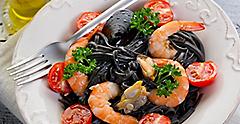
5. Black Squid Ink Pasta
When it comes to examples of Mediterranean food, squid ink is often used as an additive to pasta and rice dishes. It has a gentle, savory and salty flavor and gives any dish a striking black color. If you're worried about the safety of eating something with ink, don't panic — squid ink is generally safe to ingest.
Squid ink is used for presentation and natural flavor enhancement. This is one of the most Instagrammable Mediterranean delicacies out there, so it's worth trying at least once.
Order squid ink seafood pasta or tuck into a fresh calamari risotto for the full experience. If you want to impress your friends back home with your refined tastebuds, you can buy ready-made squid ink spaghetti and cook up a quick but delicious tomato pasta.
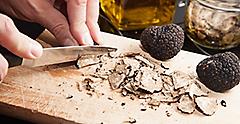
6. Truffle Everything
Truffles are a small type of mushroom; these fungi often make headlines for selling at ridiculous prices. Gourmets and chefs around the world fork out thousands of dollars — sometimes paying more per kilo than gold — for these culinary delights. Truffles fetch such a high price because they can only be grown underground, and trained pigs and dogs need to be used to dig them up.
But don't despair — you don't have to be super-wealthy to treat yourself with a little truffle action. In France and Italy (where you'll find a large concentration of truffle varieties), they’re used as a flavor-enhancing addition to meals. They can be grated over pasta or scrambled eggs (much like Parmesan cheese), infused into decadent olive oil or butter and much, much more.
But be warned: Once you order a dish that contains truffles, you might want to order a second and then a third!
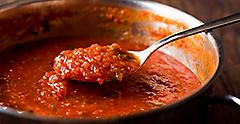
7. Neapolitan Tomato Sauce
Thanks to the warm sunny climate of the Mediterranean, tomatoes grow incredibly well. They make a staple appearance in Italian, Spanish and even French cuisine. Nothing is more loved than the basic Neapolitan tomato sauce. It can be used as a base for other sauces and dishes, spread over a pizza or simply spooned over a fresh pot of pasta. Here's how you make it at home:
- 1. In a pan, fry three cloves of crushed garlic in a dash of olive oil.
- 2. Add in 1lb (500g) of chopped tomatoes, a sprinkle of basil and some oregano to taste.
- 3. Bring to a simmer and cook for 25 minutes, stirring occasionally.
- 4. The secret here is to sprinkle a teaspoon or two of sugar to balance out the acidity of the tomatoes before serving.
It’s nutritious and delicious — yum!
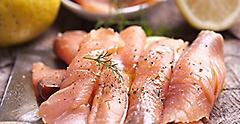
8. Mediterranean Sashimi
You may have heard about Japanese sushi and sashimi, but the Mediterranean has developed its own way of indulging in the gifts of the ocean. Where Japan uses soy sauce and wasabi, Mediterranean chefs use a sprinkle of salt and pepper and a squeeze of fresh lemon.
For the adventurous, try raw oysters, or achinos (sea urchin). If those two look a little too weird for your taste, opt for a starter of tuna tartare or a delicate salmon carpaccio.
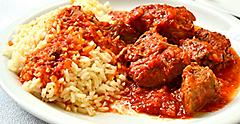
9. Kokkinisto Stew From Greece
The name of this must-try Mediterranean food means "reddened" in Greek and refers to the style of browning meat before adding it to the stew. Kokkinisto is made with either lamb, beef or rooster, garlic, onions, tomato and a hefty few glugs of red wine. It’s packed with nutrition and feel-good flavor, making it the perfect pick-me-up after a long, busy day.
Better yet, Kokkinisto isn't difficult to make nor does it include any exotic ingredients. But be prepared to wait, as this stew can take up to two hours to simmer and soften.
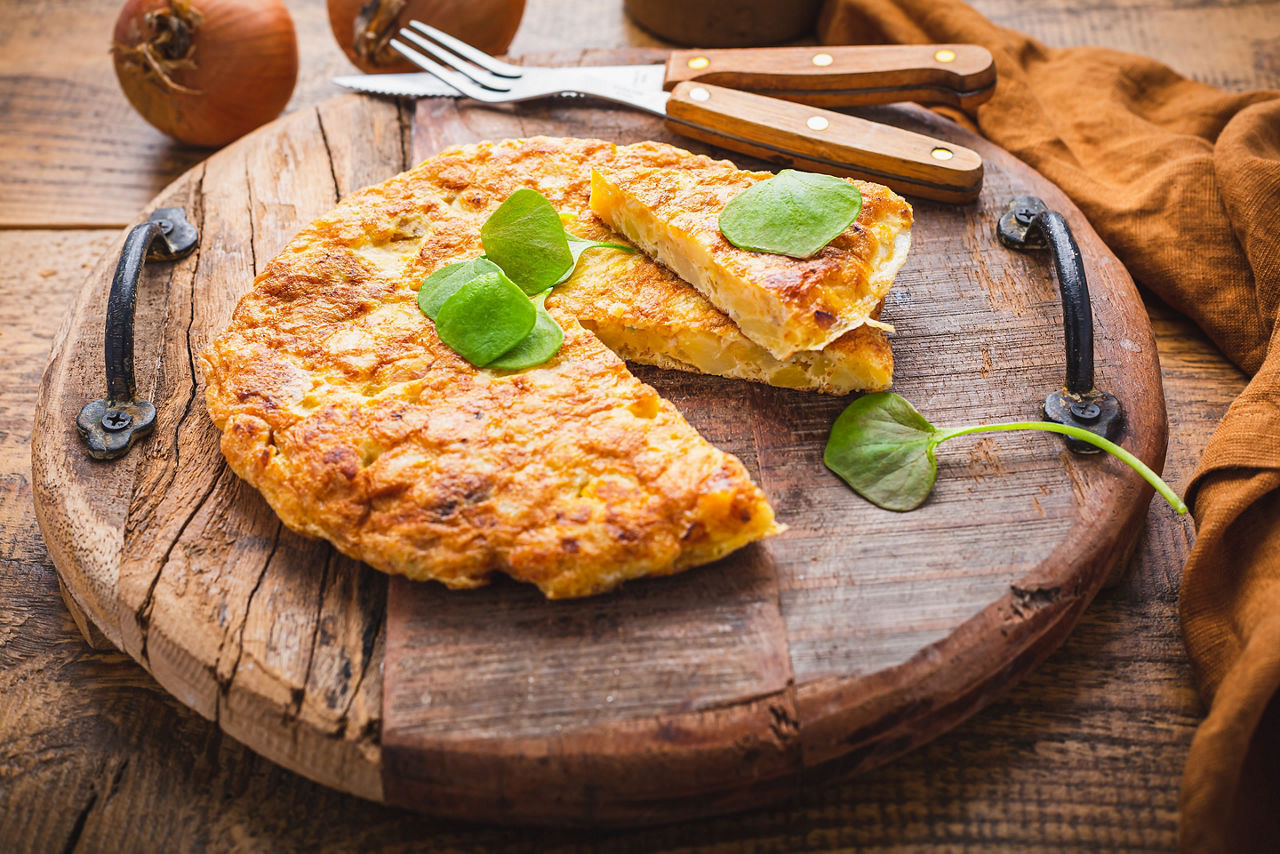
10. Tortilla Española In Spain
Throw out everything you thought you knew about tortillas. Spanish tortillas are nothing like their Mexican counterparts. Also called a Spanish omelet, this tapas dish is the ultimate comfort food. Here's how to make it:
- 1. First, peel and dice potatoes into small cubes.
- 2. Pan-fry in half a cup of olive oil until golden and crispy.
- 3. Add in diced onions and fry until transparent.
- 4. Drain oil and pour over scrambled eggs.
- 5. Mix until mostly cooked, then fry on each side until golden.
- 6. To serve, slice into golden pizza-like triangles.
Get this dish for breakfast or lunchtime tapas while traveling through Spain.
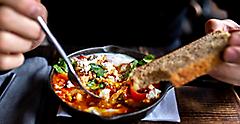
11. Shakshuka Eggs Poached In Spicy Tomato Sauce
This Moroccan dish is yet another example of how versatile and delicious tomatoes are. Shakshuka is basically a one-pan mix of tomato sauce, spices and poached eggs. It's a hearty mix of Mediterranean flavor and heat — a great way to kickstart your day.
What Drinks Pair Well With Mediterranean Food?

Great Mediterranean delicacies need great refreshments. In the Mediterranean, spice and flavor make it into every part of daily life. Try an Italian aperitivo called Campari. Made with bitter herbs and a strong alcohol, it whets the palate and settles your stomach before big meals.
Take it to the next level in Greece with ouzo, a strong spirit nicknamed "mother’s milk" by locals. If a local offers you a cup of homemade raki, be warned: This grape-based spirit will knock your socks off.
Italy also has a free wine fountain. In Abruzzo, the Dora Sarchese winery supports a free 24-hour wine fountain open to the public.
When Is the Best Time To Go to the Mediterranean?

The Mediterranean has a temperate climate, which means it only really experiences two distinct seasons: summer and winter. Summers are hot and dry and winters are wet and mild, rarely getting unpleasantly cold.
There isn't really a bad time to visit and indulge in the best Mediterranean food. While the warm weather occurs between April and October and brings in the beach-lovers, late fall and winter bring fewer crowds and a delight of seasonal ingredients for you to taste!
Savor the Flavors of the Mediterranean
From the spice-laden markets of North Africa to the sun-drenched kitchens of Southern Europe, Mediterranean cuisine is a celebration of bold flavors, rich traditions and simple, wholesome ingredients. Whether you're craving creamy hummus, golden paella or rustic shakshuka, there's no better way to experience these iconic dishes than where they began.

Get Royal Deals, Sign Up Today

Getting There
Discover the most delicious foods and try these dishes
on your cruise to the Mediterranean.