By Mary Luz Mejia | Published: April 7, 2022 | Updated: March 13 2026
You may know Hawaii for its beaches, surf culture and its "aloha spirit" state of mind. You might also recall trivia, like that it's the home of Don Ho, the singer behind the 1966 iconic Billboard Top 20 tune "Tiny Bubbles," and the birthplace of former President Barack Obama. If you're a history buff, you may know everything there is to know about Pearl Harbor. On a Hawaiian cruise, you’ll see that the culture of Hawaii is much more than that.
Hawaii's history is so long that the date of its first settlement is greatly debated to this day: Some say the settlers first came to the islands as early as 400 A.D., while others argue it was closer to between 1000 and 1200 A.D. If you believe the stories of mythical creatures on the islands of Hawaii, you may think it was even earlier than evidence shows. From the Polynesian settlement to the unification of Hawaii's people to legends that are still shared today, the culture of Hawaii is rich with charm and intriguing mystery.
Key Takeaways: Hawaii Culture
- ● Hawaiian culture began with transpacific voyagers who discovered and settled the islands.
- ● The Kapu system and ali’i rule shaped early life until King Kamehameha united the islands.
- ● Modern Hawaii blends native roots with global influences in its food, language and lifestyle.
- ● Legends, hula, luaus and leis keep Hawaii’s aloha spirit alive today.
- ● Discover Hawaiian customs and traditions on a Royal Caribbean cruise.
What Is the History of Hawaiian Culture?
TThe history of Hawaiian culture started centuries ago with volcanic hot spots in the Pacific Ocean. These volcanoes erupted to create a chain of islands from the ensuing lava in the middle of the sea. Transpacific voyagers sailed there, arriving from the Marquesas and Tahiti. It's said they used only the stars and their exceptional navigational skills to guide them. As these early explorers landed, they brought with them bananas, coconuts, sweet potatoes, taro, breadfruit, pigs, chickens and dogs — everything needed to build a society and survive.
The Kapu System and Rule of the Ali’i
These societies were later invaded by warriors, who brought the idea of a caste-based social system to the islands, known as a Kapu system — kapu meaning sacred. The Kapu system became a way of life for the natives, serving as their set of sacred laws that could never be broken. Each society was ruled by its own chief, known as an ali'i, who upheld these laws and Hawaiian values.
It was a common belief that the chiefs were direct links to the gods, so people respected them. This enabled them to have complete rule over the islands. Religion is what held these societies together, and it affected every aspect of ancient Hawaiian beliefs and customs; even food and drink were seen as godly.
Conflict for Control
Soon, the system began to wear down, and wars broke out as chiefs fought each other for rule over more territories. This resulted in nearly 100 years of wars for complete control of the islands and the entire Hawaiian archipelago. It wasn't until much later that there would be peace between the Hawaiian islands.
The Islands Today: Unique Hawaiian Values
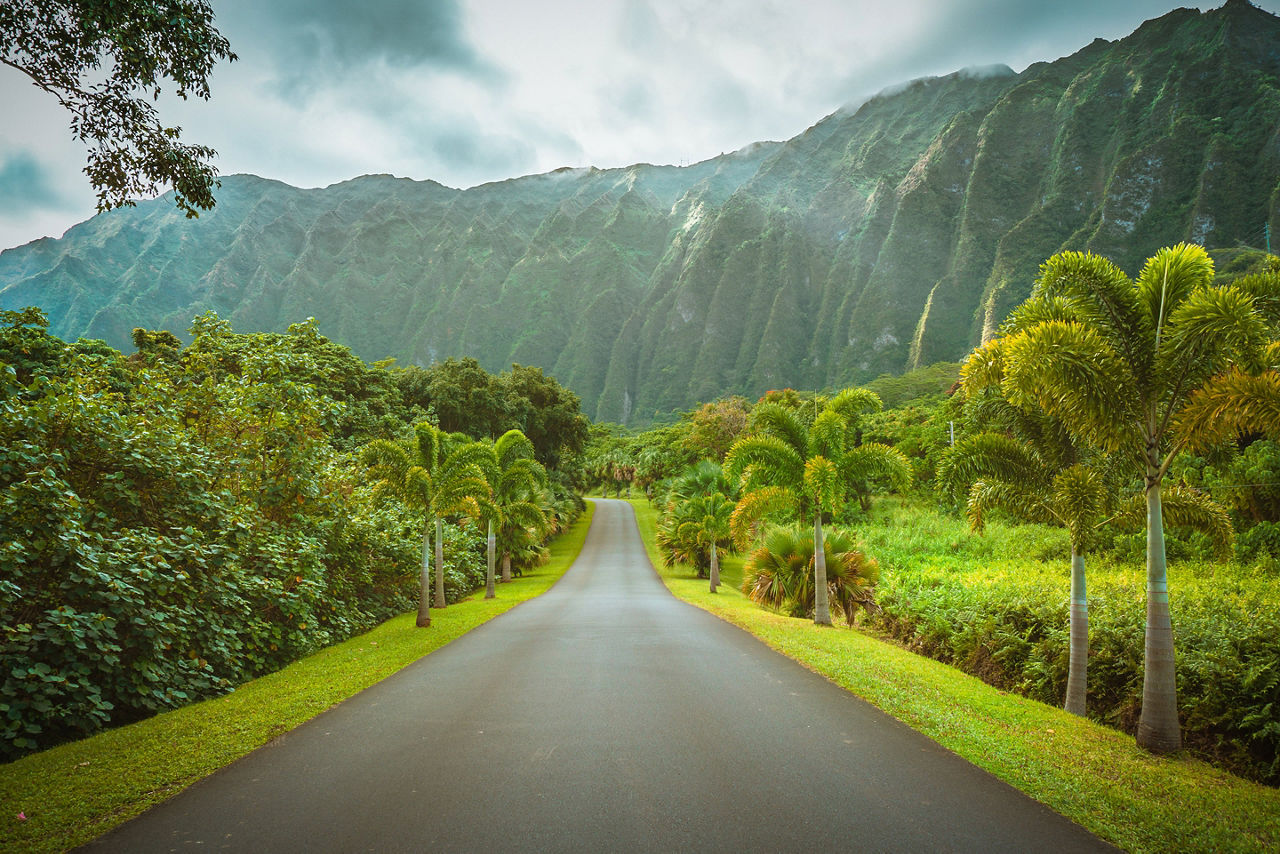
Today, 137 islands are officially recognized by the state of Hawaii, including small, uninhabited islets, atolls and coral reefs. If you've ever been to this corner of the North Pacific, you likely started on the "Big Island" of Hawaii to the south, while there are seven other well-known islands: Oahu, Maui, Kauai, Lanai, Molokai, Kahoolawe and Niihau. Due to its ancient history and dedication to honoring the past, each island has a unique culture.
When Halley's comet zipped across Hawaiian skies in 1758, it held great significance to the people of Hawaii. First, this was no small feat, considering you can only see it once every 75 years. This occurrence was particularly important to the Hawaiians because they believed in a prophecy that a child born during the comet's passing would one day rise to become a great leader, bringing peace to the islands.
The Unification of the Islands
This child, born under the comet in the Kohala District of the Big Island, became known as King Kamehameha the Great. He did what many could not — unify an island kingdom out of various tribes, which had been warring in part because the original navigators who settled Hawaii each had their own chief. This proved difficult in terms of governance in the years to come, and it required negotiations. Kauai's ruling chief finally agreed to accept King Kamehameha's rule, leading to battles with other tribes to ultimately unite the once-warring chiefs.
King Kamehameha Day
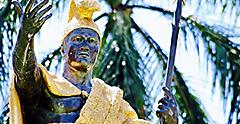
As the first King of Hawaii, he brought peace to the islands, and in appreciation of this leader's intelligence and vision, today the people of Hawaii celebrate him on June 11 — King Kamehameha Day. People gather around the King Kamehameha statue at Ali'iōlani Hale in downtown Honolulu and drape fragrant plumeria flower leis on the outstretched arms of the statue. There's music, pageantry and, of course, hula dancing to remember Hawaii's beloved king.
Western Influence and Hawaii’s Cultural Blend
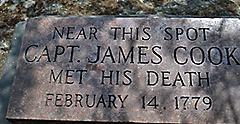
Today, Hawaii is a melting pot and haven of diversity, which is apparent in its culture, cuisine and languages. Prior to King Kamehameha's unification of Hawaii, the islands were first put on the map by the English Royal Navy Captain James Cook. By 1778, Cook had landed on the island of Kauai, at Waimea Bay, making him the first European to do so. He named the archipelago the "Sandwich Islands" after his patron, the Earl of Sandwich.
It was on his third trip there, however, that Cook made a fatal error in judgment. On February 14, 1779, one year after his first visit, Cook tried to kidnap the island's ruling chief, Kalaniʻōpuʻu, in exchange for a stolen longboat. This led to a skirmish, resulting in his death at Kealakekua Bay at the hands of Hawaiian natives.
The Lasting Impact on Hawaiian Cuisine
This chain of events led to Western ideas being integrated into the kingdom, thanks, in part, to missionaries who arrived in the 1800s. It was also influenced by the rise of the whaling industry, a major part of the region's economy at the time, and the influx of international businessmen who started pineapple, sugar and sandalwood plantations. Laborers from the Philippines, Japan and China all made their way to Hawaii to work in agriculture.
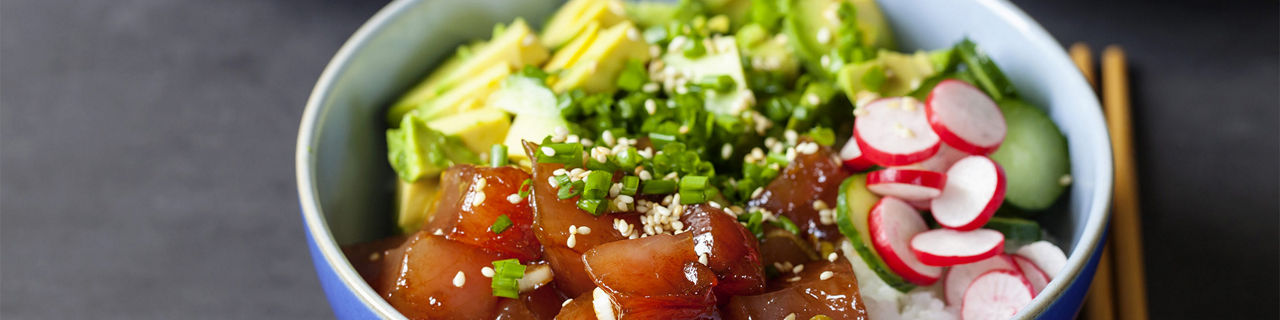
These Hawaiian culture facts influenced the cuisine in Hawaii, too. The island's native poke (i.e., seasoned cubes of raw fish, often mixed with soy, sesame oil, seaweed and green onion) means to "slice or cut." It includes the Japanese influence of shoyu (soy sauce) and sesame oil added to the traditional salted raw-fish version of this now global phenomenon.
Hawaiian Beliefs and Customs
Little Hawaiian Legends: The Menehune
Folklore, myths and Hawaiian traditions are still alive and well today. Legend has it that when settlers came to Hawaii, they were surprised to find that the islands were already inhabited by the Menehune. When the settlers landed there, the Menehune immediately fled into the deep, remote valleys. Menehune are known as industrious, mischievous and powerful "little people" who roam the islands at night and are rarely ever seen by human eyes — and that's just how they like it.
Children in Hawaii grow up with tales of the Menehune and are told that if you stay quiet, you can hear them scurrying through the forest. Some even believe the Menehune are magical and will grant wishes, similar to leprechauns. I learned about the Menehune when visiting Maui with my mom, who was smitten by the idea of their existence. I was skeptical.
A Personal Encounter With Island Magic
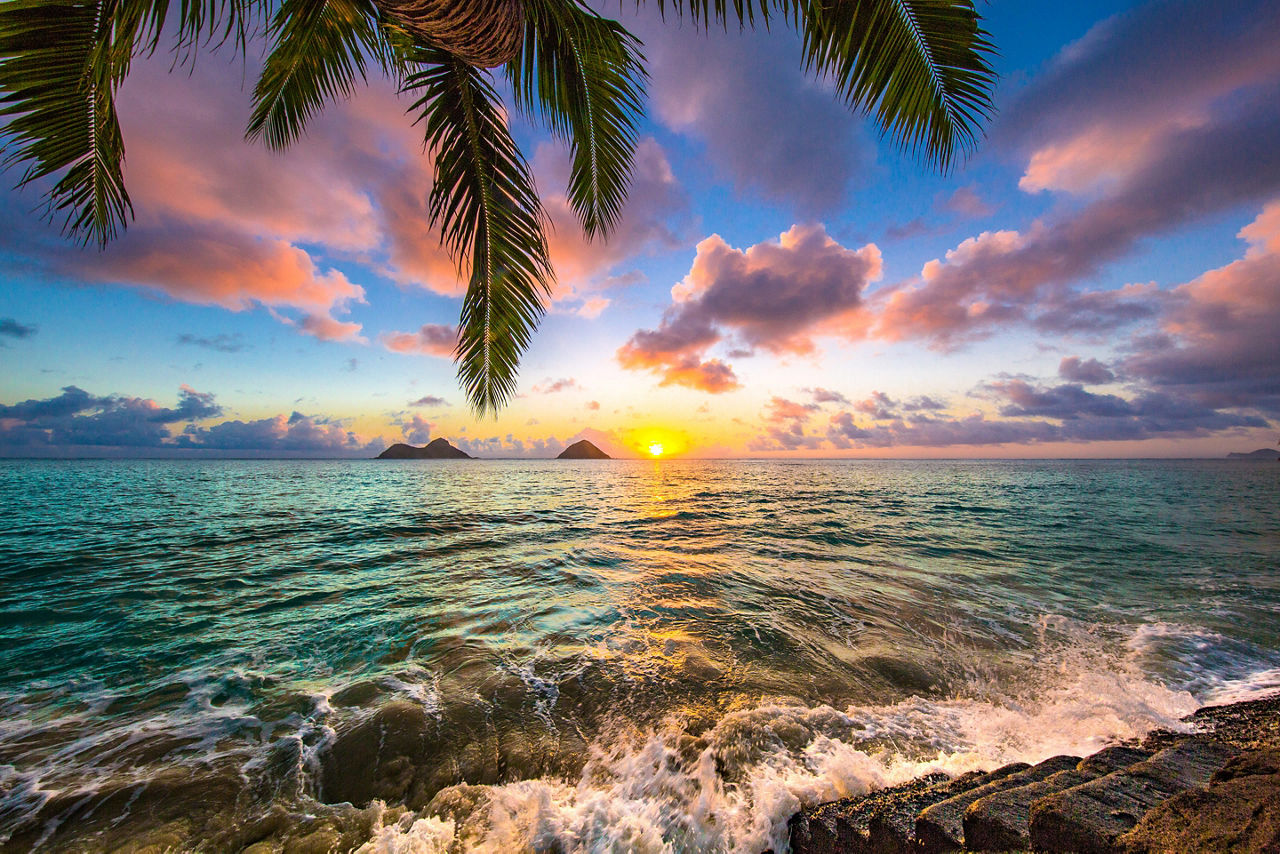
On the way home after a long day of immersing ourselves in Hawaiian customs, my mom and I stopped to walk along a beach during a brilliant sunset. All of a sudden, my mom called out to the Menehune, imploring them to show her proof of their existence. As a young 20-something, I was mortified by this.
My mom, who quickly realized the level of my embarrassment, began shouting to the waves and the wind, "Menehune, Menehune, Menehune, come here, Menehune!" beckoning the Menehune to come out of hiding. For good measure, she added, "Send me some luck, or money!"
Red with embarrassment, I begged my mom to stop."You're being ridiculous! They. Do. Not. Exist," I said. In that moment, a wave washed up at our feet, carrying a crumpled $20 bill, as if it were expressly delivered by some mischievous force.
"A-ha! Thank you, Menehune!" my mom shouted with child-like joy, unfurling her water-logged bill in triumph and taunting me with her mystical treasure. I just stood there in dumbstruck disbelief. Could it have just been some coincidence or a cosmic sign that the Menehune are really out there? To this day, I'm not so sure.
Celebrating Hawaii Islands Traditions Today
The Culture of Luau in Hawaii
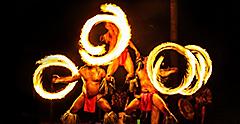
What I was sure of was the ultimate must-do Hawaiian experience — the culture of luau in Hawaii. The luau is an ancient tradition rooted in Polynesian culture. It’s a celebration of community, often held to commemorate special events. Luaus were originally called 'aha'aina, or "gathering meal," where people would come together to feast on a variety of cultural dishes, alongside some traditional song and dance.
Luaus were a place to have fun, but they also had strict rules; only a specific kind of food could be served, men and women could not eat at the same table and certain foods were reserved only for the chiefs. These restrictions were ended in 1819 with a symbolic gesture by King Kamehameha II. He bucked the old Hawaiian traditions and held a luau where he shared the table with women and common folk alike, and thus the luau that is known and celebrated today was born.
I could not wait to attend my first luau. On the way there, we chatted up our bus driver, an older man who had lived on the island his whole life. He explained that he's part native Hawaiian, Welsh, German, Chinese and French. "Us Hawaiians are a mix of the whole world!" he proudly told us. "We're all connected, all ‘ohana,’ one family," he said. I quite liked this sentiment, too.
At the center of the lavish luau was a large table with the most magnificent spread of colorful foods. We feasted among friends on shredded pork prepared in an imu (an underground oven), with pounded, starchy taro root called poi as a side dish, the aforementioned poke, and my favorite, haupia, a sturdy, jelly-like coconut pudding for dessert. It's decadent and delicious, but don't overdo it. I was warned: Eat too much of this treat, and you've got one of nature's best laxatives!
What Is the Culture of Lei in Hawaii?
Leis (made from flowers, leaves, shells or even feathers) are a traditional way to show respect or celebration. They’re commonly given for milestones like graduations, birthdays or to welcome and send off visitors. And if you’re at a luau, you can expect to receive one. Just be sure to accept it graciously; it’s considered rude to refuse or remove a lei in front of the person who gave it to you.
The History of the Hula
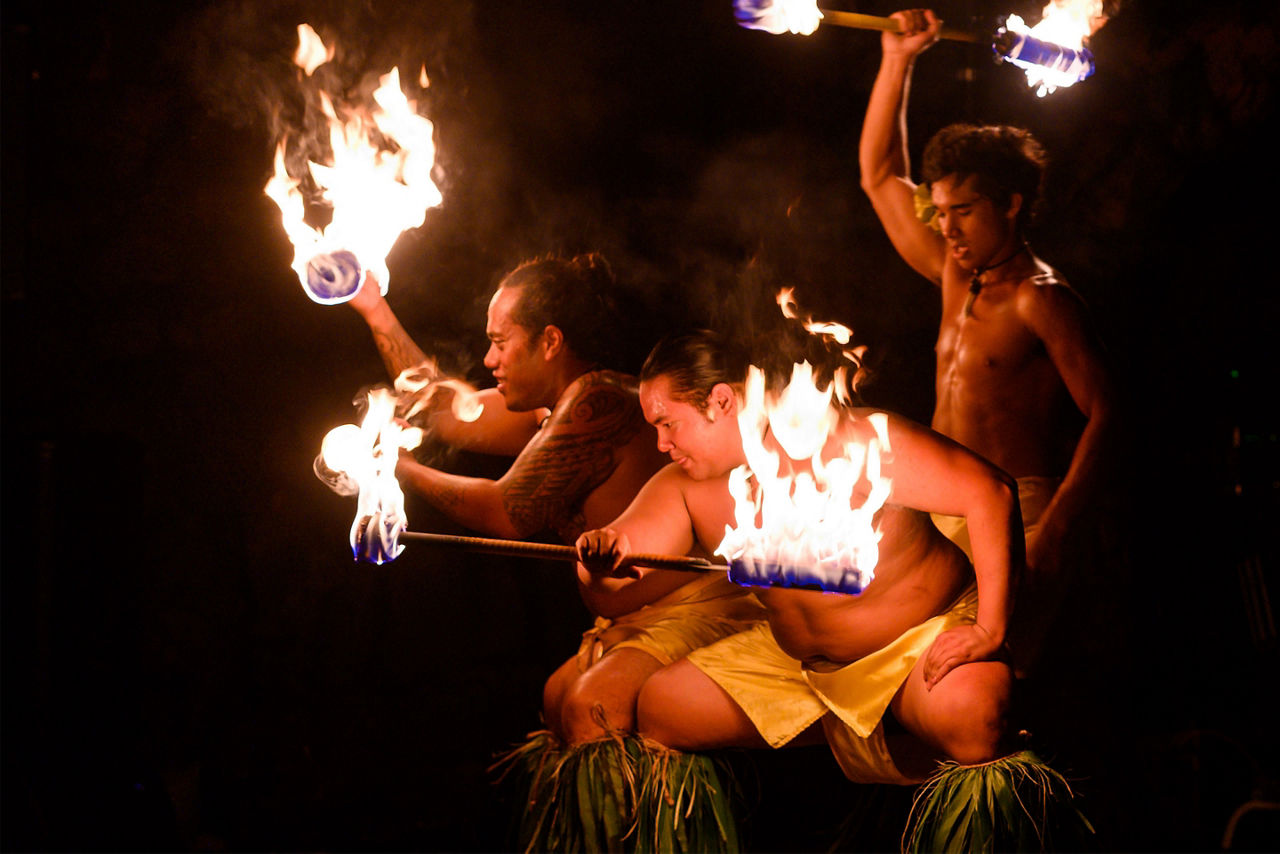
After the feast, the event becomes an all-out party. Hula, as I learned, is much more than just a beautiful dance of gracefully swaying hands and lithe women dressed in traditional Hawaiian clothing. Prior to the 1820s, before missionaries came to the islands and introduced a Latin-based alphabet, Hawaiians passed on their history and culture to the next generation by storytelling through song, hula and chants known as oli, which Hawaiians believe carry spiritual energy.
While my mom and I had so much fun learning how to hula, we also discovered the deeper meaning behind it. This tradition connects present-day Hawaiians to their ancestors. Some dances are slow and sorrowful, others vibrant and fast-paced — always with a nod to Hawaii's colorful past and its connection to the present, and to the people who call these islands home.
Sail Into the Heart of Hawaiian Culture
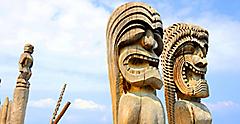
Hawaii’s culture is rooted in centuries of history, shaped by voyagers, royalty and a rich mix of global influences. From ancient Hawaiian Islands traditions to modern customs, each island offers something unique to discover.

Get Royal Deals, Sign Up Today

Getting There
Explore Our Most Affordable Itineraries
Discover the culture of Hawaii and its island folklores on your cruise vacation.