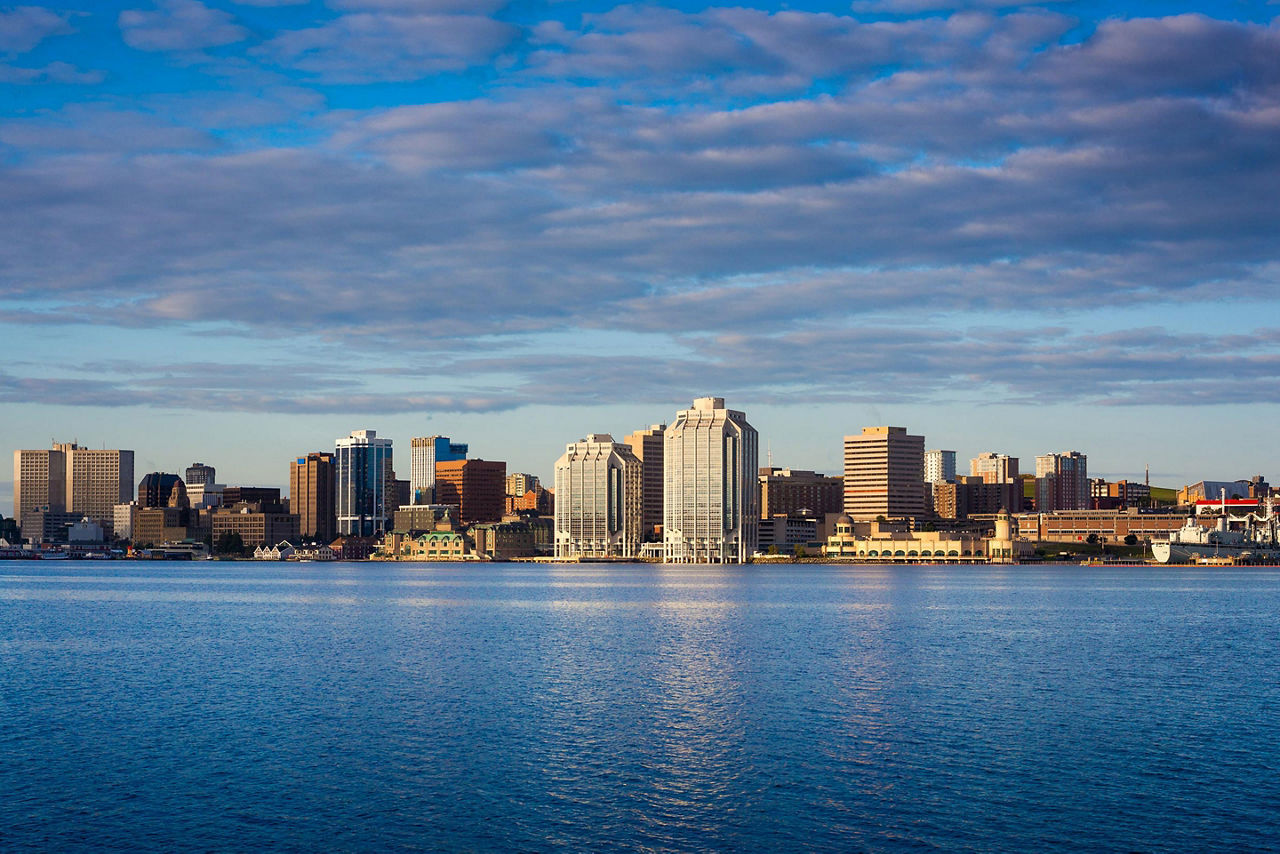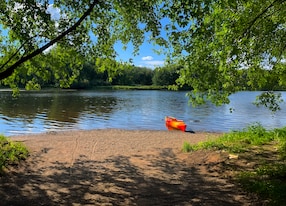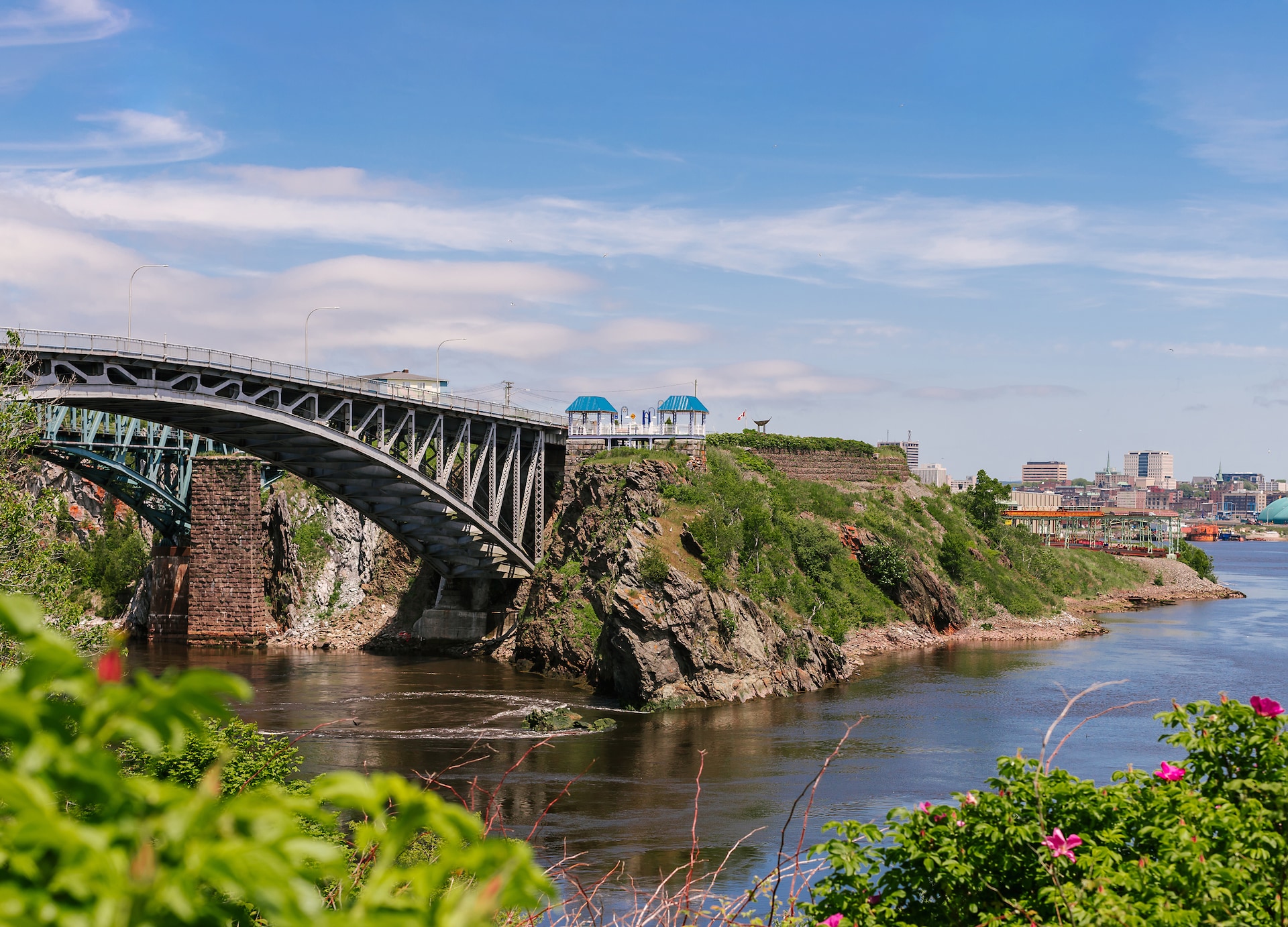
Saint John, New Brunswick is known for the dramatic tides of the Bay of Fundy, the Reversing Falls Rapids, its historic uptown district and the Saint John City Market. Canada’s oldest incorporated city also offers Victorian architecture, fresh Atlantic seafood, ancient geological formations and easy access to the sea caves and rugged coastline of St. Martins.
Here are 10 of the things Saint John is most famous for.
1. The Bay of Fundy’s Powerful Tides
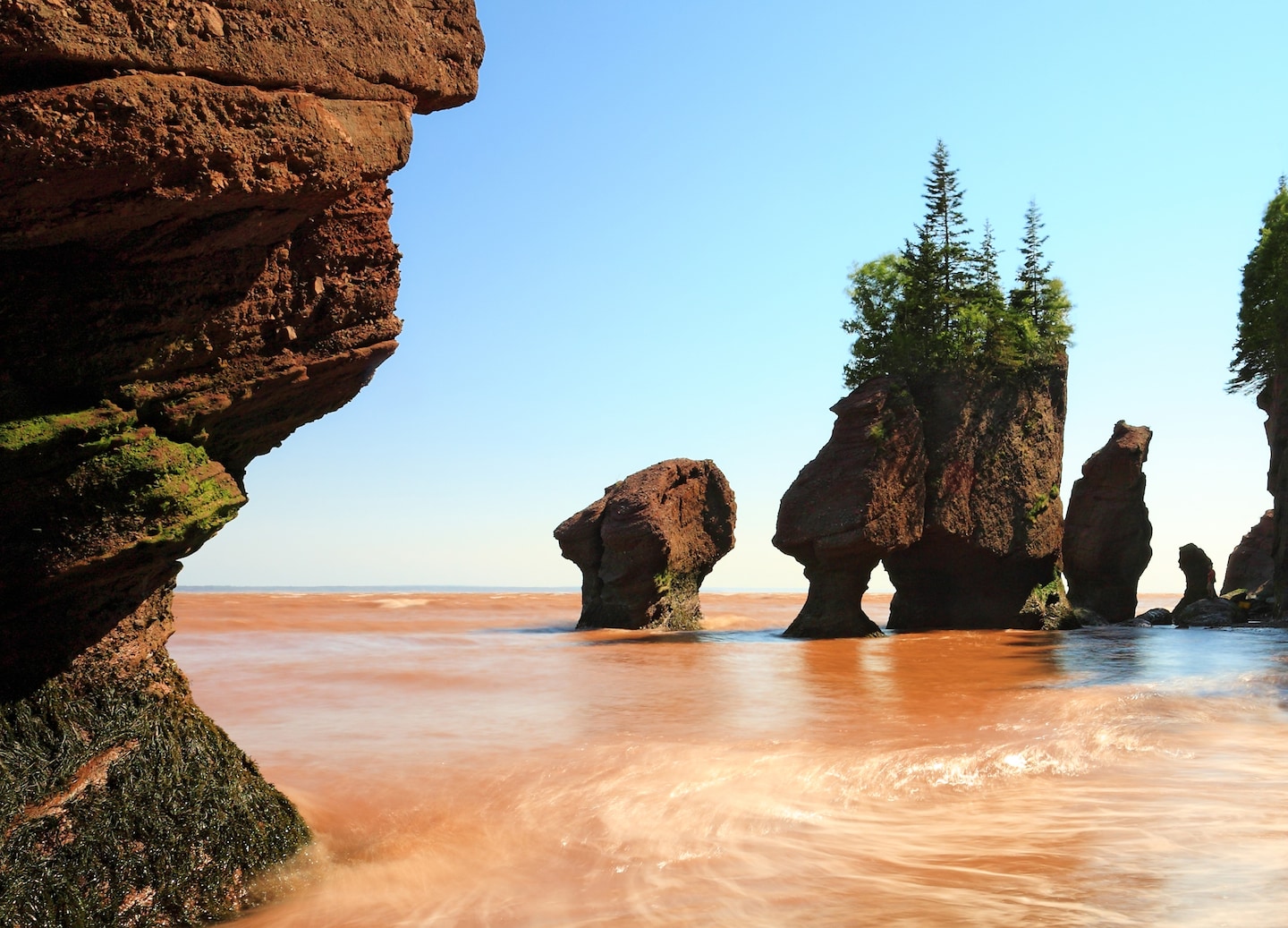
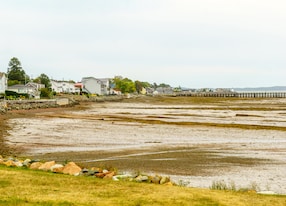
Saint John is the only city located directly on the Bay of Fundy, home to the highest tides in the world. Across the bay, water levels can rise by as much as 16 meters, or 52.5 feet, transforming shorelines, exposing the ocean floor and creating powerful currents. Watching the landscape change between high and low tide is one of the region’s defining natural experiences.
2. Reversing Falls Rapids
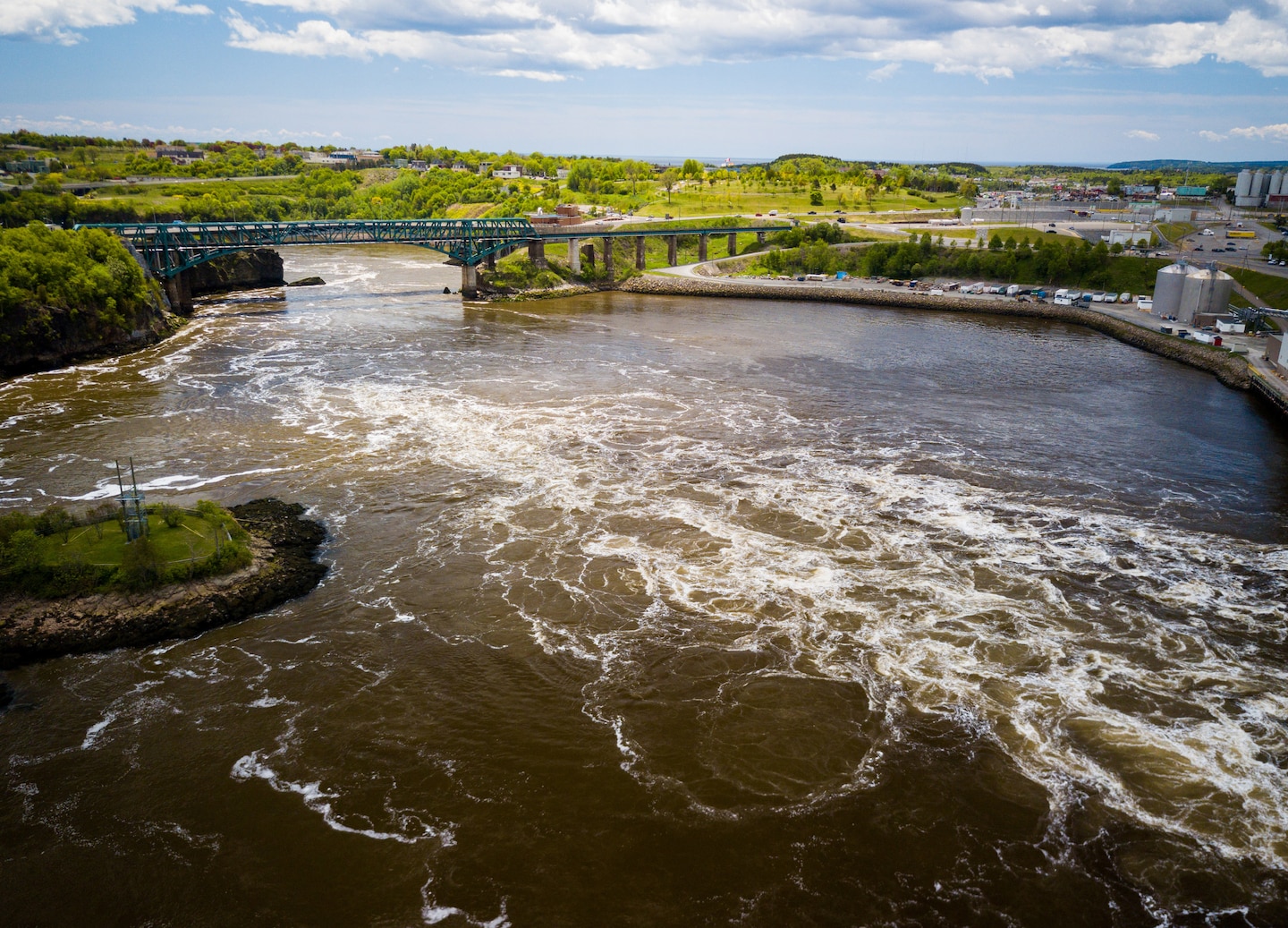
The Reversing Falls Rapids are Saint John’s most famous natural attraction. They form where the Saint John River meets the enormous tides of the Bay of Fundy. At low tide, the river flows toward the bay and creates rapids and whirlpools. As the tide rises, the current briefly becomes calm before the incoming seawater forces the river to flow in the opposite direction. Tourism New Brunswick explains the complete tidal cycle.
3. Saint John City Market
The Saint John City Market is recognized as Canada’s oldest continuously operating farmers market. Its stalls offer local produce, seafood, baked goods, prepared meals and handmade products in the heart of the uptown district. The building’s distinctive roof resembles the inverted hull of a ship, reflecting Saint John’s shipbuilding history. Its combination of architecture, food and local merchants makes the market a favorite stop for first-time visitors.
4. Historic Uptown Saint John
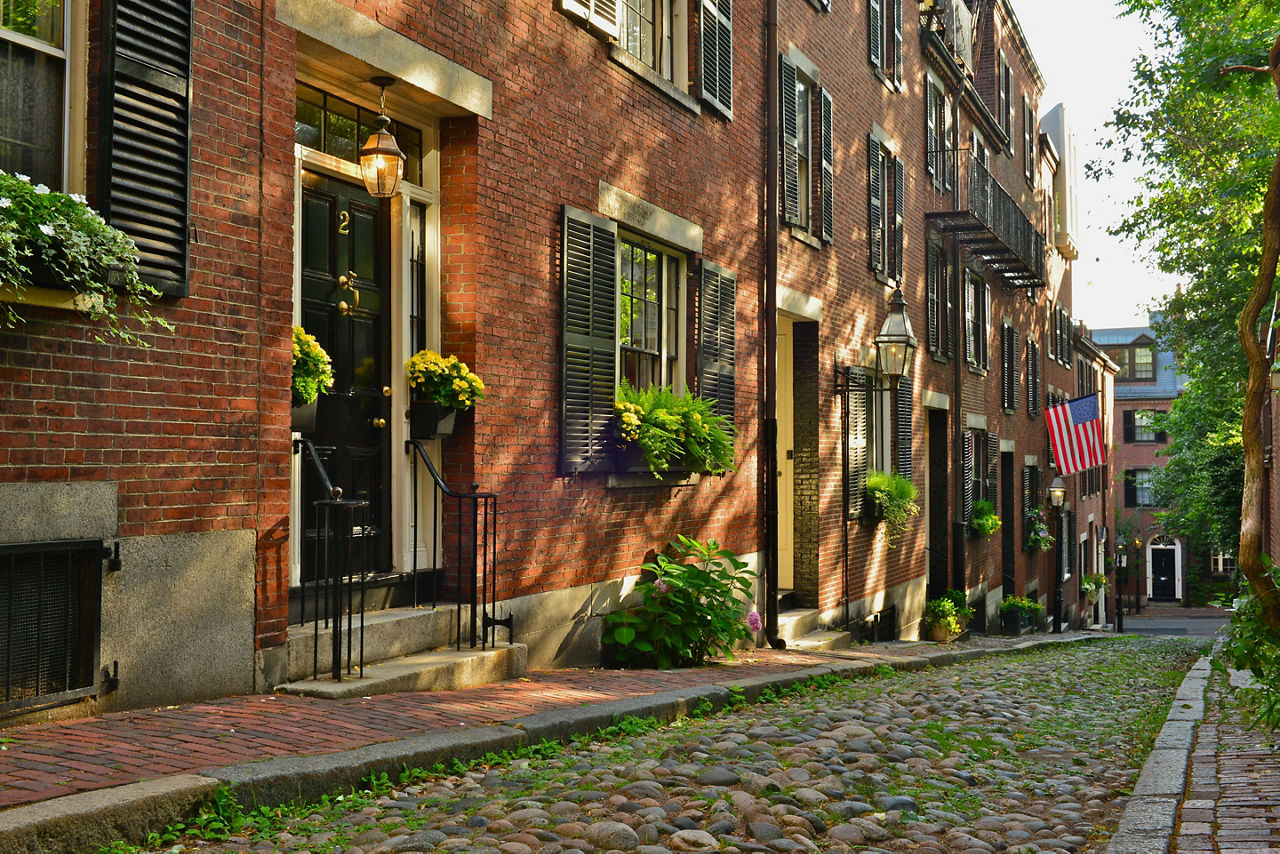
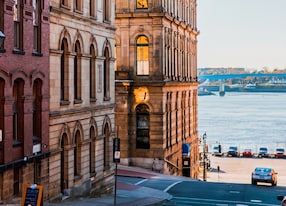
Rows of preserved brick and stone buildings give uptown Saint John one of Atlantic Canada’s most distinctive historic streetscapes. Much of the district was rebuilt after the Great Fire of 1877 destroyed a significant portion of the city. The reconstruction produced an impressive collection of Victorian commercial and residential architecture. Today, these buildings contain independent restaurants, galleries, boutiques and cafes connected by walkable streets and public squares.
5. Canada’s Oldest Incorporated City
Saint John is famous for being Canada’s oldest incorporated city. It was officially incorporated by royal charter in 1785, following the arrival of thousands of Loyalists after the American Revolution. Historic locations such as Loyalist House preserve stories from this period, while churches, burial grounds and public buildings reveal how the city developed. Its long history remains visible throughout the uptown district and waterfront.
6. Stonehammer UNESCO Global Geopark
Ancient rock formations throughout the Saint John region tell a geological story spanning approximately 1 billion years. Stonehammer UNESCO Global Geopark covers about 2,500 square kilometers and contains evidence of shifting continents, volcanic activity, changing oceans and ancient life. Geological features appear at Reversing Falls, Rockwood Park, St. Martins and even beneath uptown streets. Stonehammer Geopark connects these natural landmarks to the communities surrounding them.
7. St. Martins & the Fundy Sea Caves
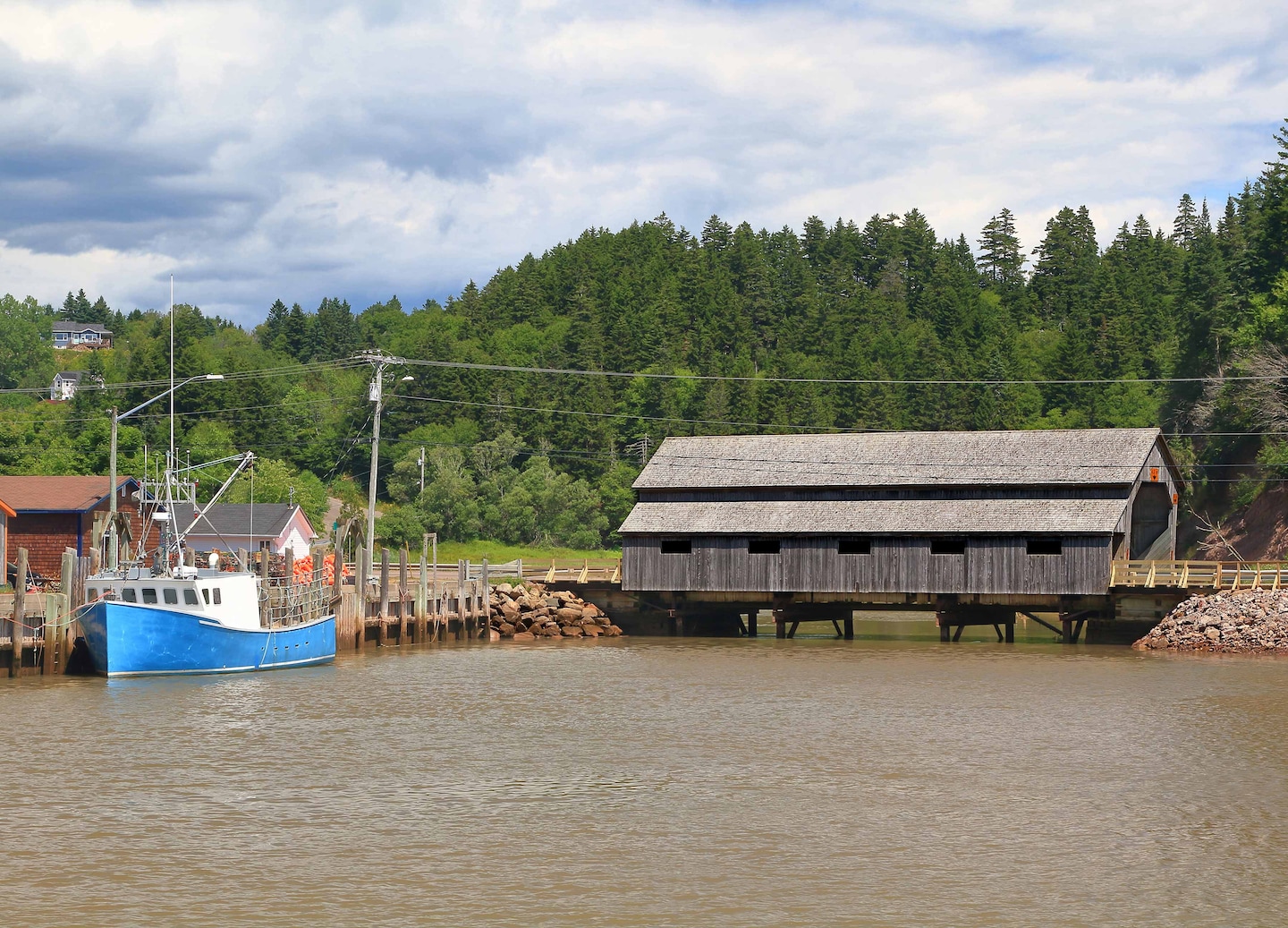
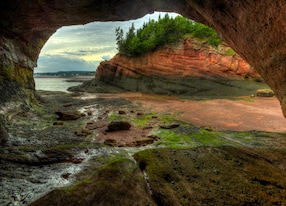
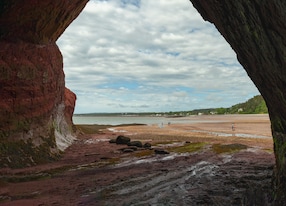
The coastal village of St. Martins is celebrated for red cliffs, covered bridges and sandstone sea caves shaped by the Bay of Fundy. At low tide, visitors can walk across the exposed ocean floor to explore the caves. Hours later, the rising tide fills the same area with seawater. St. Martins also serves as a gateway to the Fundy coast, where scenic lookouts reveal forested cliffs, rocky beaches and sweeping views of the bay.
8. Fresh Atlantic Seafood

Cold Atlantic waters make seafood one of Saint John’s defining local flavors. Restaurants serve lobster rolls, scallops, mussels, salmon, fish and chips and bowls of creamy seafood chowder. The Saint John City Market provides another convenient place to sample regional specialties or browse locally sourced ingredients. Enjoying seafood near the waterfront connects the city’s culinary traditions to the fishing communities and coastal waters of southern New Brunswick.
9. Coastal Parks & Outdoor Adventures
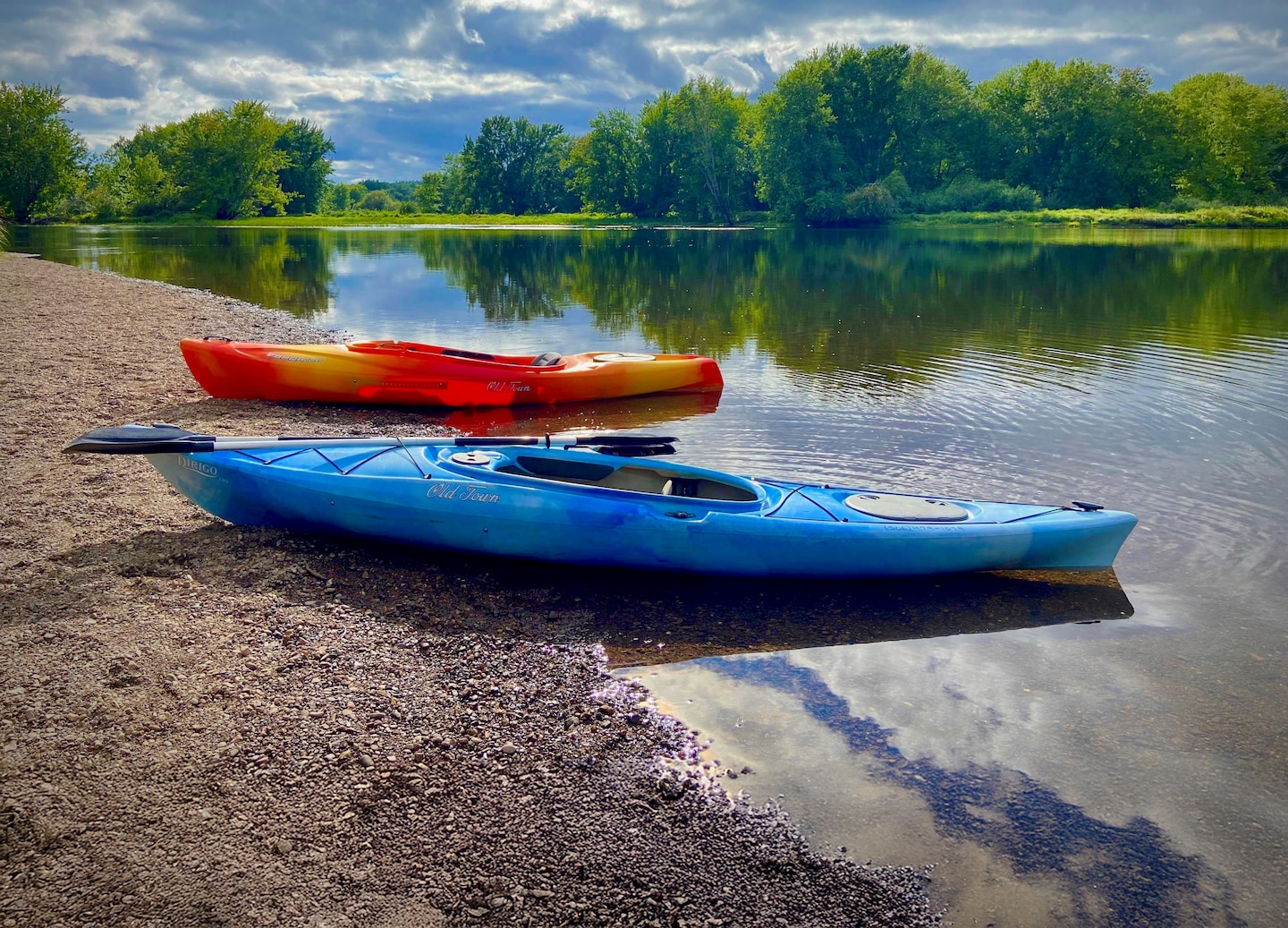
Saint John offers extensive natural areas within a short distance of its urban center. Rockwood Park contains lakes, trails, caves, waterfalls and geological formations within the city, while Irving Nature Park features forests, beaches, salt marshes and views across the Bay of Fundy. These parks provide opportunities for hiking, kayaking, bird-watching and coastal sightseeing without requiring a long journey from downtown.
10. Maritime & Shipbuilding Heritage
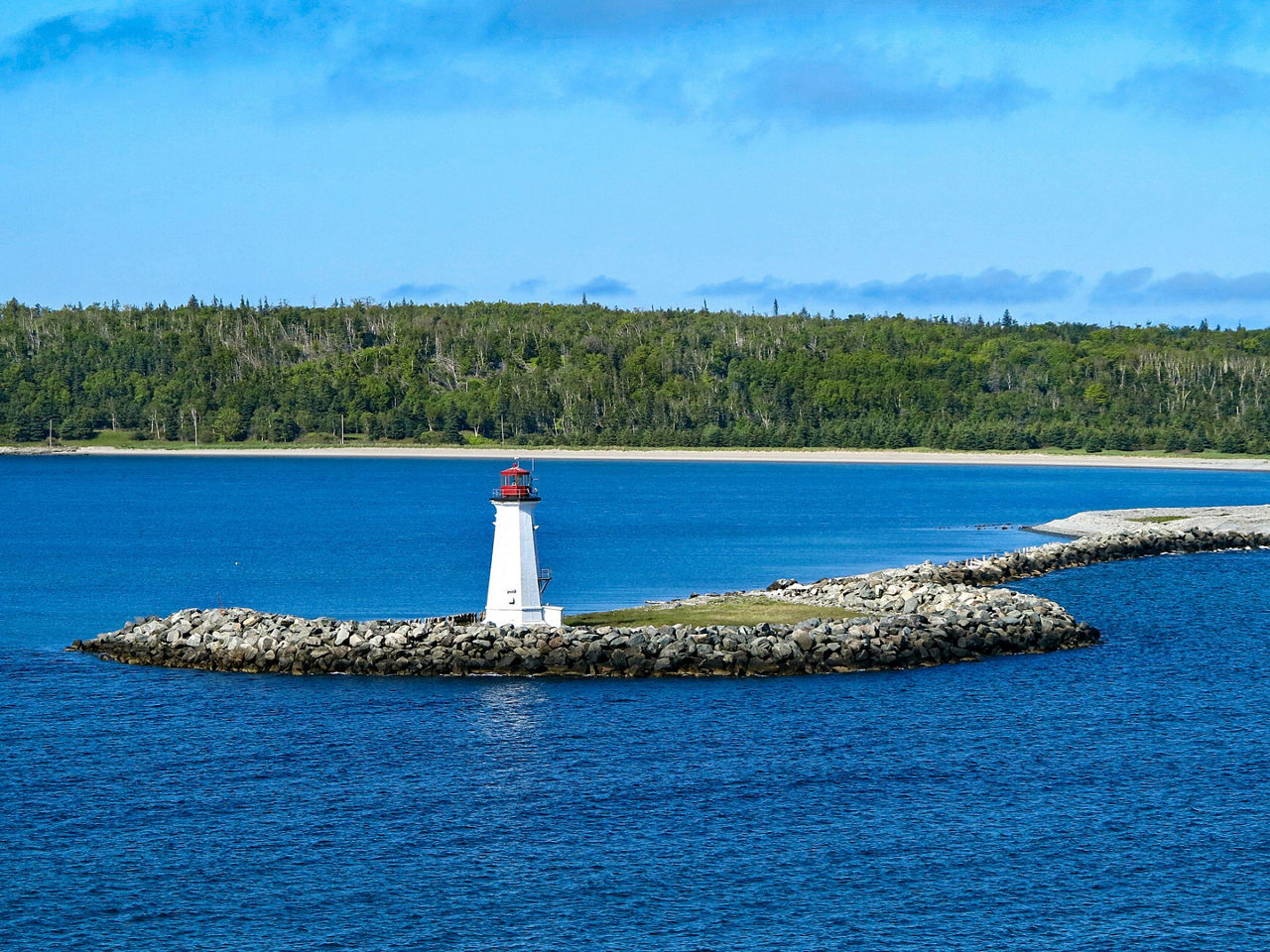
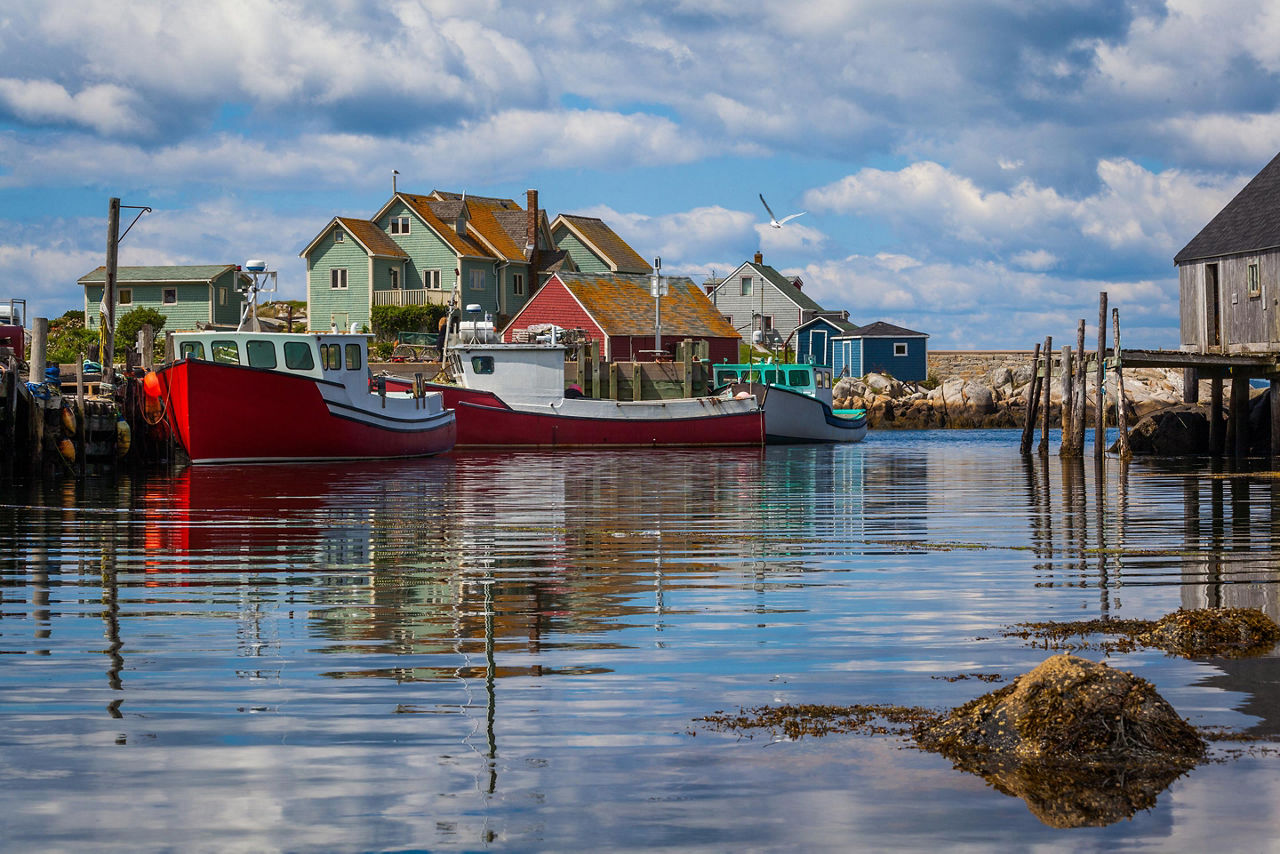
Saint John’s deep harbor helped establish the city as an important center for trade, immigration and shipbuilding. Its maritime legacy remains visible in the working port, historic waterfront and architectural details found throughout the city. Vessels continue to move through the harbor as visitors explore public spaces, restaurants and shops along the shoreline. The city’s connection to the sea has shaped both its economy and its cultural identity for generations.
What Is Saint John Famous For?
Saint John is famous for the Bay of Fundy’s record-breaking tides, the Reversing Falls Rapids, Saint John City Market and its historic uptown architecture. The city is also associated with Loyalist history, maritime traditions, fresh seafood and the ancient landscapes of Stonehammer UNESCO Global Geopark. Nearby St. Martins and the Fundy coast add sea caves, covered bridges and dramatic coastal scenery to the experience.
Discover Saint John on a Royal Caribbean Cruise
A cruise to Saint John provides a convenient way to experience the natural and historic highlights of the Bay of Fundy. Watch the Reversing Falls Rapids, explore the City Market, walk through uptown or travel to St. Martins for sea caves and rugged coastal scenery. Royal Caribbean cruises to Saint John, New Brunswick bring travelers directly to Canada’s oldest incorporated city as part of a journey through New England and Atlantic Canada.