
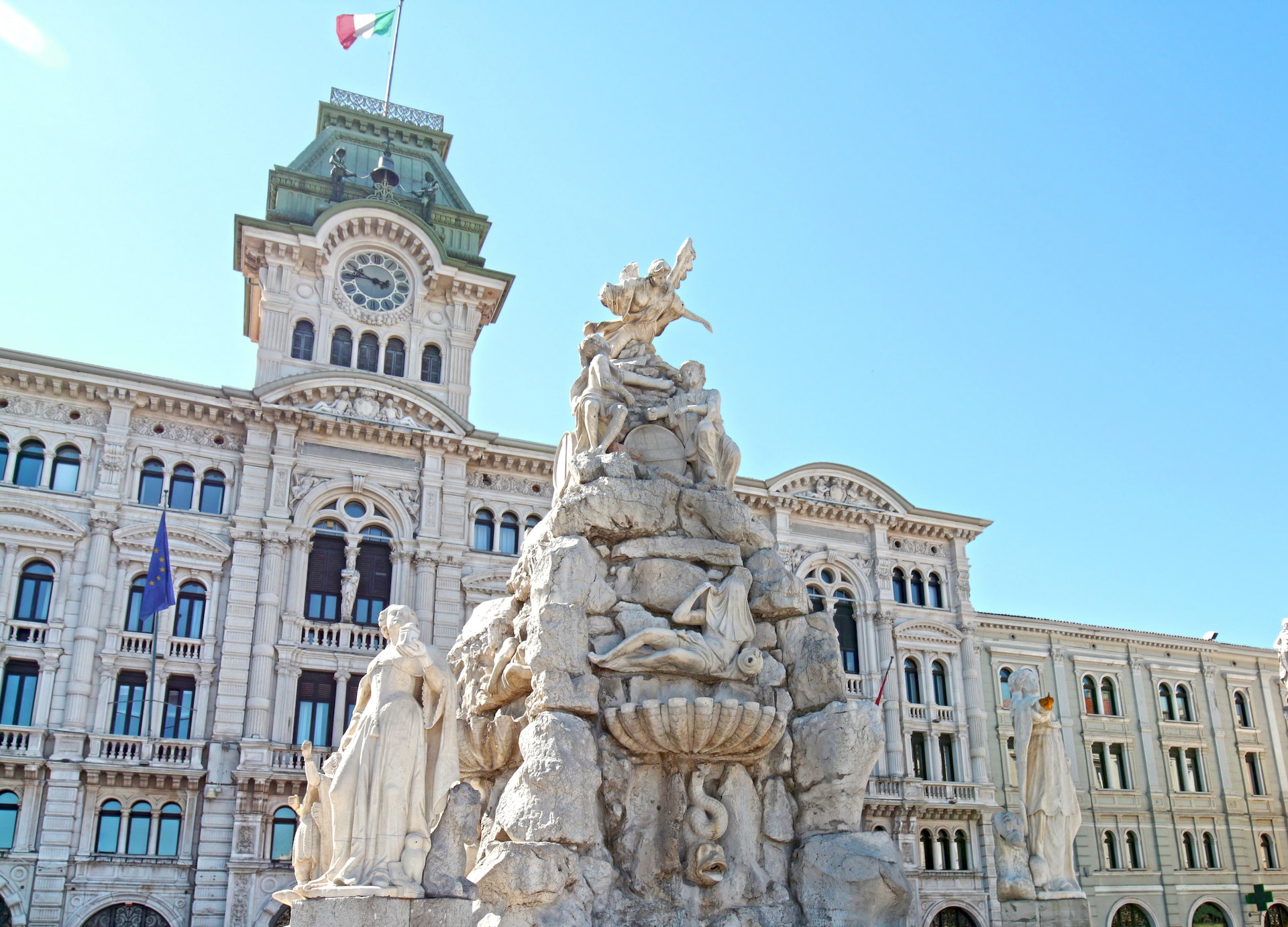
Trieste, Italy is known for its Adriatic Sea setting, grand piazzas, historic coffee houses, Habsburg architecture, literary legacy and landmarks like Miramare Castle and Piazza Unità d’Italia. Set in northeastern Italy near the Slovenian border, this elegant port city feels distinct from many other Italian destinations, with Central European influences, seaside scenery and a layered cultural identity shaped by centuries of trade, travel and empire.
1. Piazza Unità d’Italia
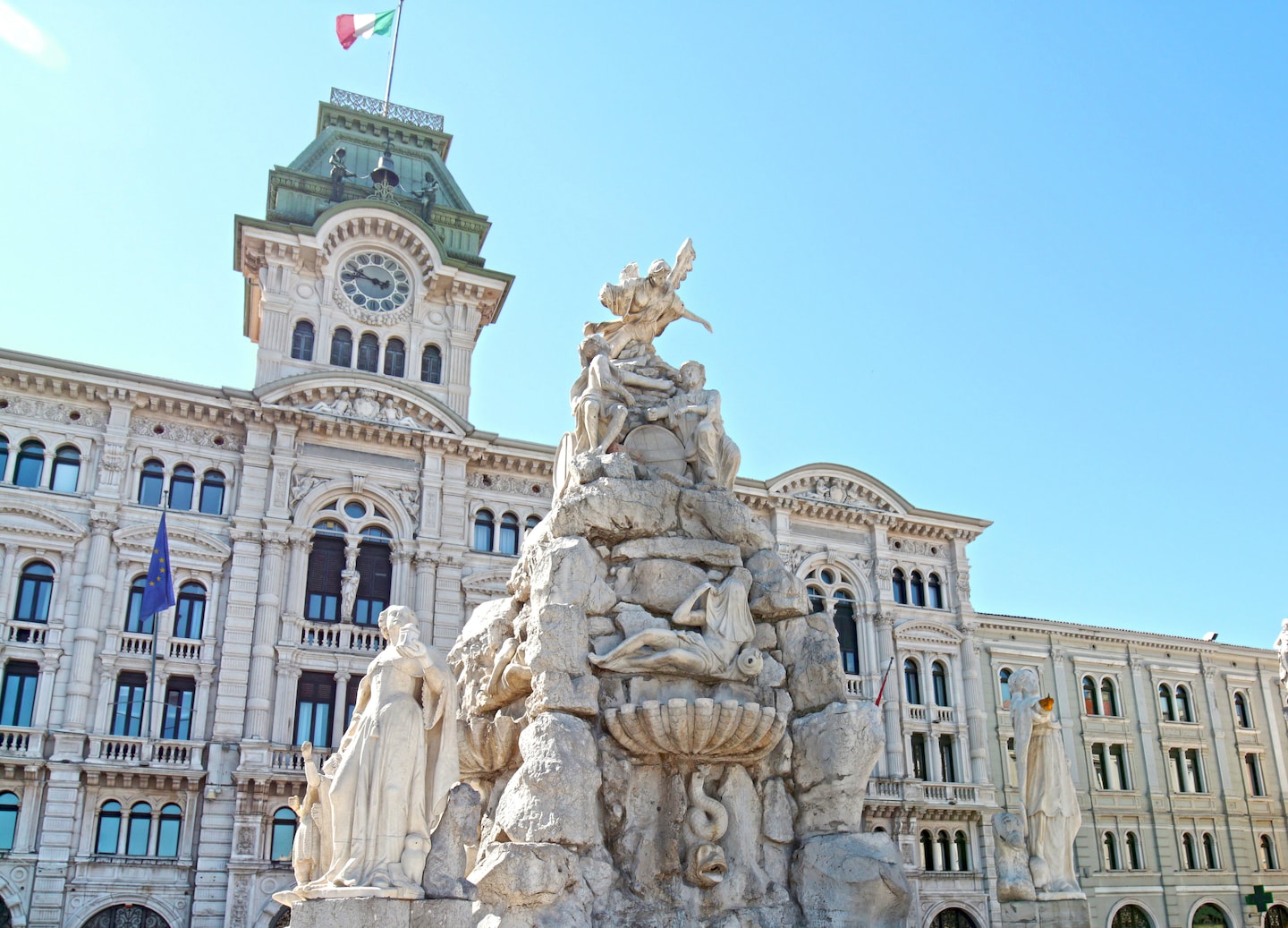
Trieste is famous for Piazza Unità d’Italia, one of the city’s most iconic landmarks, and one of Europe’s most impressive sea-facing squares. Framed by grand historic buildings on three sides and open to the Adriatic on the fourth, the piazza captures Trieste’s mix of architectural elegance and maritime identity.
It's especially striking in the evening, when the buildings glow and the sea becomes part of the backdrop. Visitors often begin their time in Trieste here because it immediately gives a sense of the city’s scale, history and refined atmosphere. Whether you stop for photos, coffee or a waterfront stroll, Piazza Unità d’Italia is the heart of the city.
2. Miramare Castle

Miramare Castle is one of Trieste’s most beautiful coastal landmarks. Built between 1856 and 1860 for Archduke Ferdinand Maximilian of Austria, the castle sits on the promontory of Grignano overlooking the Gulf of Trieste. Its white towers, sea-facing terraces and landscaped park make it one of the most memorable places to visit near the city.
The setting is just as impressive as the architecture. Visitors can walk through the castle rooms, explore the gardens and enjoy sweeping views of the Adriatic from the surrounding grounds. Miramare offers a romantic glimpse into Trieste’s Habsburg past while also showcasing the natural beauty of the coastline.
3. Historic Coffee Culture
Trieste is celebrated for its deep coffee culture. The city became an important coffee port in the 18th century, and coffee remains a central part of its identity today. Its historic cafes were once gathering places for writers, intellectuals and artists, giving the city a literary and social energy that still lingers in its cafe culture.
Visiting a traditional cafe in Trieste is more than a quick coffee stop. It's a chance to experience a local ritual shaped by conversation, reading, writing and lingering at marble-topped tables. From elegant, old-world coffee houses to busy neighborhood bars, Trieste offers one of Italy’s most distinctive coffee scenes.
4. Habsburg Architecture & Central European Character
Trieste has a different architectural feel from many Italian cities because of its long connection to the Habsburg Empire. Grand palaces, wide boulevards, neoclassical façades and ornate cafes give parts of the city a Central European elegance that feels closer to Vienna than Venice in certain corners.
This blend is part of what makes Trieste so interesting. The city is Italian, Adriatic, Central European and borderland all at once. Walking through its streets, visitors can see layers of influence in the buildings, churches, squares and waterfront. It's a destination where history feels visible in the cityscape.
5. The Adriatic Sea & Waterfront
Trieste’s waterfront is one of its defining features. Set at the head of the Adriatic Sea, the city has long been shaped by ships, trade, fishing, travel and coastal life. The sea is never far away, whether you're standing in Piazza Unità d’Italia, walking along the harbor or looking out from one of the city’s scenic viewpoints.
The waterfront gives Trieste its open, windswept character. Visitors can take a relaxed walk by the sea, watch boats in the harbor or enjoy a meal with views of the Gulf of Trieste. The city’s maritime atmosphere makes it feel both elegant and practical, rooted in centuries of movement across the Adriatic.
6. Literary History
Trieste is strongly associated with literature and intellectual life. Writers such as James Joyce, Italo Svevo and Umberto Saba are closely linked to the city, and their presence still shapes how Trieste is experienced today. Historic cafes, book shops, statues and walking routes help connect visitors to this literary heritage.
This creative legacy gives the city a thoughtful, atmospheric quality. Trieste feels like a place made for slow walks, long conversations and quiet observation. For travelers who enjoy destinations with literary depth, the city offers a compelling mix of real history and reflective charm.
7. San Giusto Hill & Cathedral
San Giusto Hill is one of the best places to understand Trieste’s older history. The area includes the Cathedral of San Giusto, the Castle of San Giusto and traces of the Roman city that once stood here. From the hilltop, visitors can also enjoy views over the rooftops, harbor and Adriatic Sea.
The cathedral itself reflects centuries of religious and architectural history, while the surrounding area gives a quieter perspective on the city. After exploring the busy center and waterfront, San Giusto offers a more historic and elevated view of Trieste — literally and culturally.
8. Roman Ruins & Ancient Tergeste
Before it became a major port of the Habsburg Empire, Trieste was the Roman settlement of Tergeste. Remnants of that ancient past can still be seen around the city, including the Roman Theatre near the historic center. These ruins add another layer to a destination often associated with more recent maritime and imperial history.
The Roman sites are especially interesting because they sit within the modern city. They are not isolated ruins, but part of Trieste’s everyday urban fabric. This makes the city feel layered and lived in, with ancient, medieval, imperial and modern chapters all visible within a compact area.
9. The Bora Wind
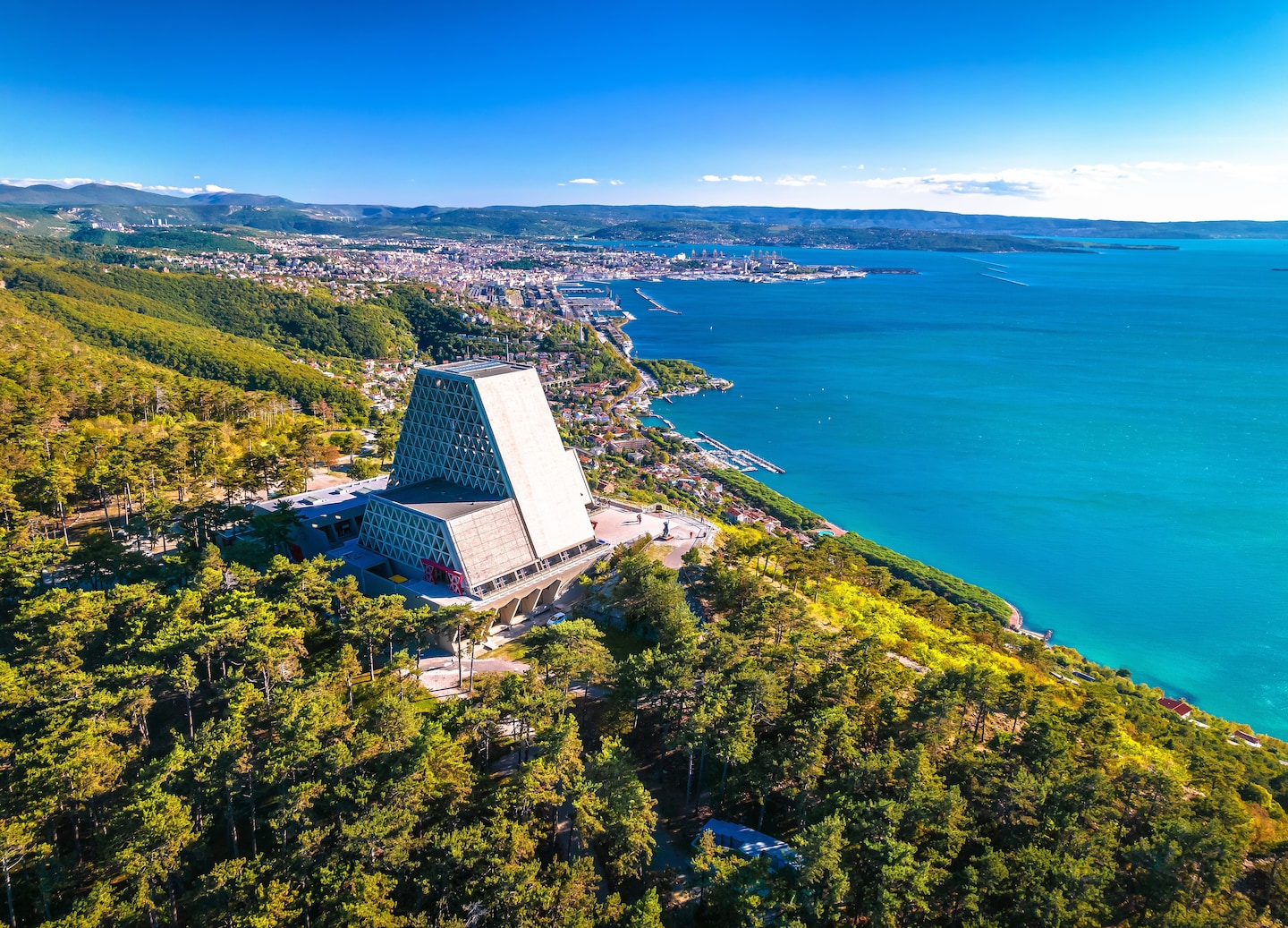
Trieste is also recognized for the Bora — a powerful, cold wind that sweeps through the city from the northeast. The Bora is more than a weather pattern here: It's part of local identity, shaping stories, daily life and the city’s windswept atmosphere.
Visitors may not experience the Bora at its strongest, but knowing about it adds context to Trieste’s character. The city’s position between the Karst Plateau and the Adriatic gives it a dramatic natural setting, and the wind is one of the most vivid expressions of that geography.
10. A Gateway to Friuli Venezia Giulia & Slovenia
Trieste is a natural gateway to the wider Friuli Venezia Giulia region and nearby Slovenia. Its location near the border makes it easy to combine Italian coastal culture with Central European landscapes, Karst scenery, wine areas and nearby towns. This gives Trieste a strong sense of connection beyond Italy’s more familiar tourist routes.
For visitors, that borderland setting is part of the appeal. You can explore the city’s cafes and piazzas, visit Miramare Castle and venture into the surrounding countryside or toward Slovenia for a broader look at the region. Trieste works beautifully as both a destination and a starting point.
What Is Trieste Known For?
Trieste is known for its Adriatic Sea views, historic cafes, Habsburg architecture, literary heritage, Miramare Castle and distinctive blend of Italian and Central European culture. The city stands out for its elegant piazzas, maritime history and borderland identity, making it one of northeastern Italy’s most atmospheric destinations.
FAQ: Visiting Trieste, Italy
1. Is Trieste, Italy worth visiting?
Yes, Trieste is worth visiting if you enjoy coastal cities, historic architecture, coffee culture and destinations with a distinct local identity. It offers a different experience from Italy’s more famous tourist cities, with Adriatic views, Habsburg-era buildings, literary history and easy access to Miramare Castle.
2. What are the best things to do in Trieste?
The best things to do in Trieste include visiting Piazza Unità d’Italia, touring Miramare Castle, exploring San Giusto Cathedral and Castle, seeing the Roman Theatre and enjoying coffee in one of the city’s historic cafes. A walk along the waterfront is also one of the simplest and most rewarding ways to experience the city.
3. How many days do you need in Trieste?
One to two days is a good amount of time for Trieste. With one day, you can see the main landmarks, enjoy the waterfront and stop at a historic cafe. With two days, you can add Miramare Castle, San Giusto Hill, museums or a short trip into the surrounding region.
4. Is Trieste different from the rest of Italy?
Yes, Trieste feels different from many other Italian cities because of its history, geography and Central European influences. Its Habsburg architecture, coffee-house culture, port identity and location near Slovenia give it a unique character that sets it apart from places like Rome, Florence or Venice.
5. Can you visit Miramare Castle from Trieste?
Yes, Miramare Castle is an easy trip from central Trieste. The castle sits along the Gulf of Trieste (just outside the city center) and can be reached by local transportation, taxi or organized tour. It's one of the most popular attractions in the area.
6. Is Trieste a walkable city?
Trieste is very walkable in the central areas, especially around Piazza Unità d’Italia, the waterfront, the historic cafes and many major landmarks. Some places, such as San Giusto Hill, require an uphill walk, while Miramare Castle is located outside the city center and is best reached by transportation.
7. What food should you try in Trieste?
In Trieste, try dishes that reflect both Italian and Central European influences. Local favorites may include seafood, jota (a hearty bean), sauerkraut soup, gnocchi, pastries, coffee and regional wines. The city’s cuisine reflects its coastal setting and its history as a cultural crossroads.
8. Why is Trieste associated with coffee?
Trieste is associated with coffee because of its long history as a major coffee port and its strong cafe culture. The city has been important to coffee imports for centuries, and its historic cafes became gathering places for writers, artists and intellectuals.
9. Is Trieste good for a cruise stop?
Yes, Trieste is a strong cruise stop because the city center, waterfront and Piazza Unità d’Italia are easy to explore. In addition, major attractions like Miramare Castle are close enough for a half-day excursion. Its mix of sea views, history, cafes and architecture makes it rewarding — even on a shorter visit.
Planning a Trip to Trieste?
Want to learn more about this Italian gem? Check out these guides to plan your next trip:
- What to Buy in Trieste - Find your perfect Trieste souvenir by comparing coffees, crafts, and Adriatic‑inspired collectibles.