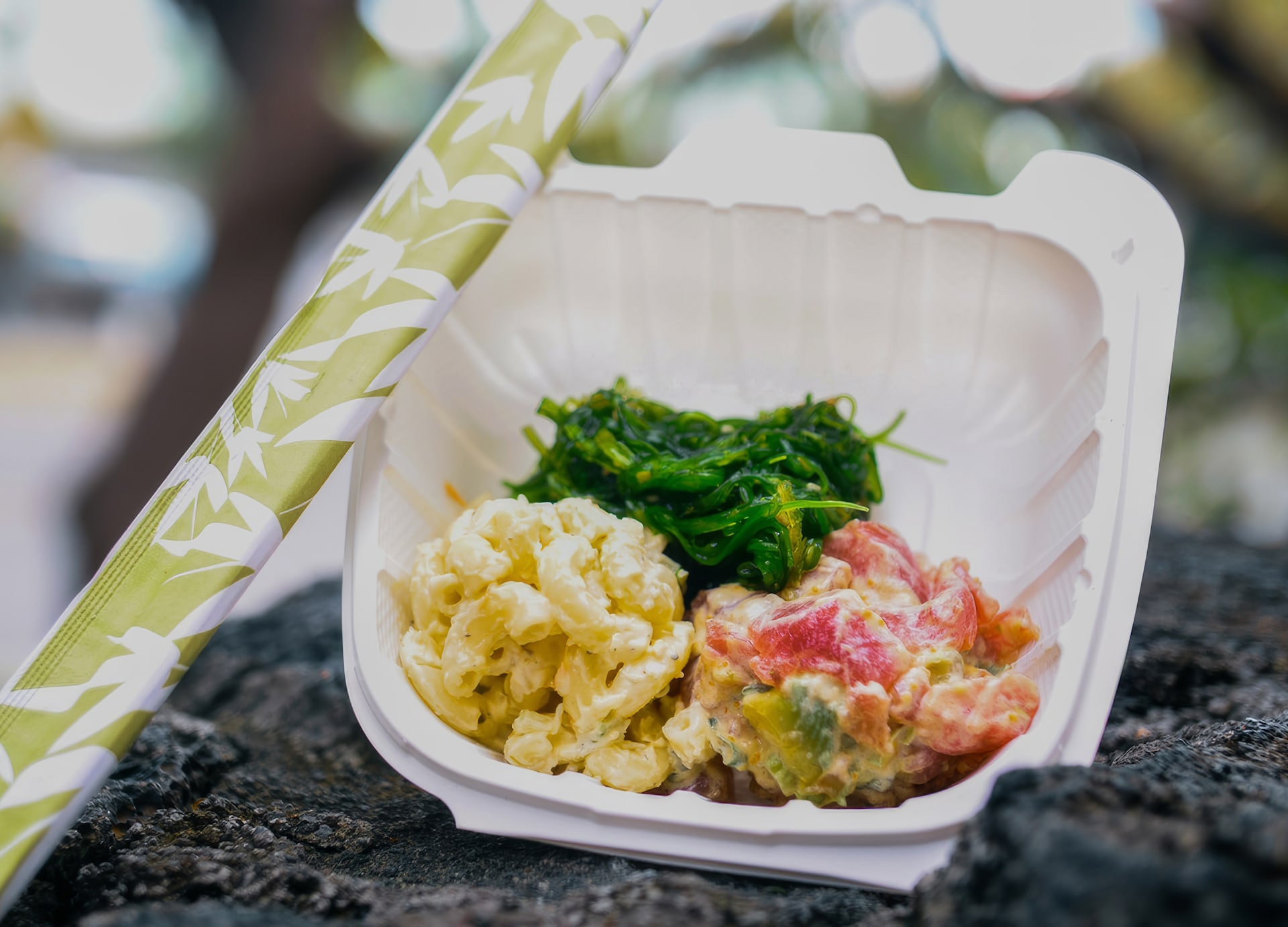
From fresh-cut ahi poke and slow-roasted kalua pork to shave ice piled high with tropical syrups and malasadas dusted in sugar, the best foods in Hawaii are as vibrant and layered as the islands themselves. Hawaiian cuisine is a reflection of the culture that built it, drawing from Native Hawaiian traditions, Japanese, Chinese, Filipino, and Portuguese influences, and the produce of one of the most fertile island chains on Earth.
Whether you're exploring Honolulu's food scene ashore or sampling Kona's coffee farms and chocolate orchards, this guide covers what to eat in Hawaii and the popular Hawaiian foods no first-time visitor should miss.
1. Poke
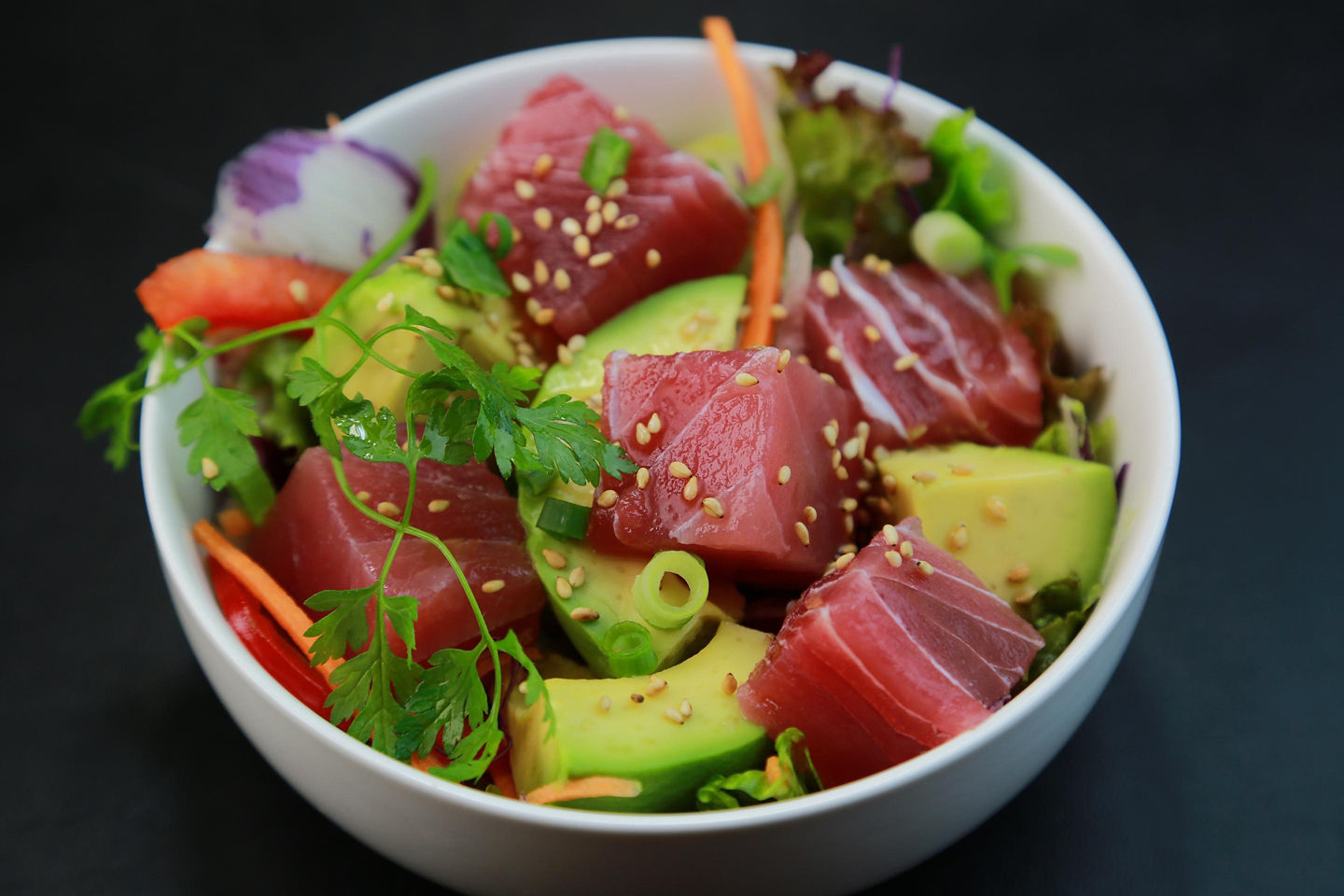
Poke is the most iconic food in Hawaii and the dish most visitors want to try first. The word means to slice or cut, and the dish delivers on that simplicity: diced raw fish, most commonly ahi tuna, marinated in soy sauce, sesame oil, and green onions, then served over rice as a poke bowl or eaten on its own by the scoop. Variations include spicy mayo ahi, octopus (tako) poke, and salmon poke, each reflecting the Japanese and Native Hawaiian influences that shaped local cuisine. You will find poke at supermarket fish counters, food trucks, and dedicated poke shops across Oahu and the Big Island.
2. Kalua Pork
Kalua pork is traditional Hawaiian cooking at its most elemental. A whole pig is seasoned with Hawaiian sea salt, wrapped in ti and banana leaves, and slow-roasted for hours in an imu, an underground pit oven lined with hot volcanic rocks. The result is meltingly tender, smoky pork that pulls apart effortlessly. Kalua pork is the centerpiece of any luau and one of the most popular Hawaiian foods among visitors and locals alike. It is typically served alongside poi, lomi lomi salmon, and rice.
3. Plate Lunch
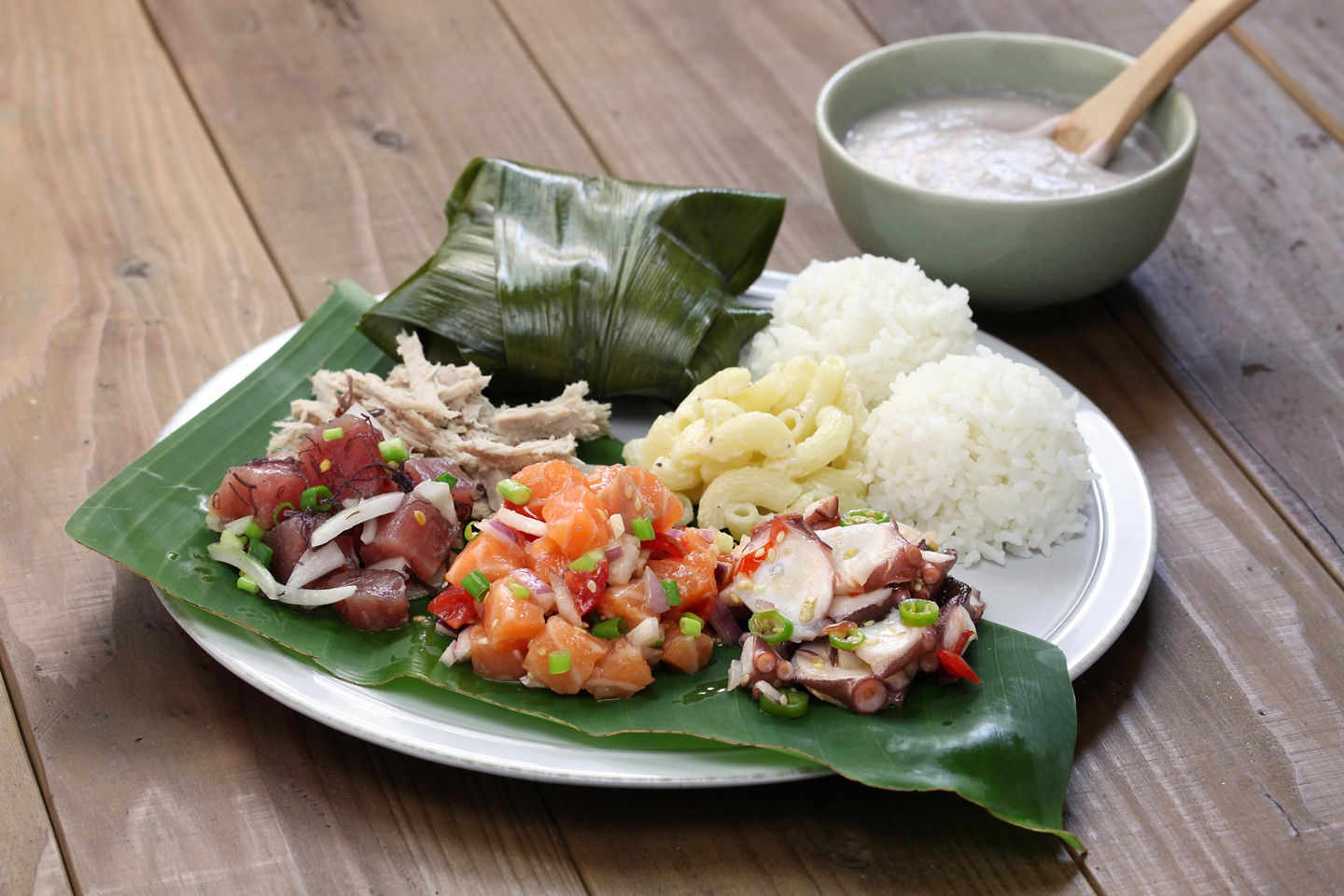
The plate lunch is the defining comfort food of everyday Hawaii. Born from the plantation era, when workers of different ethnicities shared meals, a classic plate lunch includes two scoops of white rice, a scoop of macaroni salad, and a protein, most often teriyaki chicken, kalua pork, or garlic shrimp. It is the local fast food, sold at diners, food trucks, and lunch counters across every island. Eating a plate lunch is one of the most authentic food experiences available on a short visit, and the price is always right.
4. Shave Ice
Hawaiian shave ice is not a snow cone. The ice is shaved to a fine, powdery consistency that absorbs flavor syrups rather than letting them pool at the bottom. Classic flavors include lilikoi (passion fruit), guava, mango, and coconut, and a proper shave ice often comes with a scoop of vanilla ice cream and a layer of sweetened azuki beans at the base. On Oahu's North Shore, shave ice from Matsumoto's has been a landmark stop for decades. It is the quintessential Hawaii dessert and an essential item on any list of what to eat in Hawaii.
5. Loco Moco
Loco moco is a beloved Hawaiian comfort dish that originated on the Big Island in 1949, invented to feed hungry teenagers who wanted something more filling than a sandwich but cheaper than a full meal. The classic version layers steamed white rice, a hamburger patty, a fried egg, and rich brown gravy in a single bowl. It is eaten for breakfast, lunch, and dinner, and variations now include shrimp, fish, and spam in place of the patty. Its mix of Japanese rice culture, American diner food, and local ingenuity makes it a perfect symbol of Hawaii's culinary identity.
6. Spam Musubi
Spam musubi is Hawaii's most beloved snack and a direct product of the islands' history. During World War II, Spam became a staple when fresh meat imports were restricted, and it never left. A musubi is a block of seasoned rice topped with a slice of pan-fried Spam and wrapped in a strip of nori, the same seaweed used in Japanese onigiri. It is sold at convenience stores, ABC Stores, and food trucks across Hawaii for just a few dollars and eaten on the go. Do not leave Hawaii without trying one.
7. Garlic Shrimp
Oahu's North Shore is famous for its shrimp trucks, and garlic shrimp is what they do best. The shrimp are farmed locally in the waters off the North Shore, then cooked in a generous amount of butter and minced garlic until golden and fragrant. They are served over rice with a wedge of lemon and best eaten at a picnic table in the open air. Giovanni's Original White Shrimp Truck is the most well-known stop, but several trucks line the Kamehameha Highway and the debate over who makes it best is a local institution.
8. Laulau
Laulau is one of the most traditional Hawaiian dishes still widely eaten today. Cubed pork belly, chicken, or fish is seasoned with salt and wrapped tightly in layers of taro leaves, then steamed until the meat is fall-apart tender and the taro leaves have taken on a flavor similar to cooked spinach. Each laulau arrives as a bundled package that you unwrap at the table. It is a centerpiece of traditional Hawaiian plate lunches and luaus, and the technique of cooking in leaves over heat dates back to ancient Polynesia.
9. Malasadas
Malasadas are Portuguese-origin fried doughnuts that became a Hawaii staple during the plantation era, when Portuguese immigrants arrived to work the sugar fields. They are round, golden, deep-fried, and rolled in sugar while still warm, with no hole in the center. Leonard's Bakery in Honolulu is the institution most associated with them, having sold malasadas since 1952. Filled versions are now common, with flavors like haupia (coconut cream), chocolate, and lilikoi custard available throughout the day. They are best eaten fresh and warm.
10. Kona Coffee
Kona coffee is one of the most prized coffees in the world, grown on the volcanic slopes of Hualalai and Mauna Loa on the Big Island in a narrow agricultural belt known as the Kona Coffee Belt. The combination of volcanic soil, afternoon cloud cover, and mild temperatures produces a smooth, low-acid bean with a rich, complex flavor. Genuine 100% Kona coffee is distinct from blends that carry the name, and a visit to a working coffee farm is one of the best ways to understand the difference. Tasting Kona coffee on the Big Island, fresh-roasted at its source, is a coffee experience unlike any other.
11. Haupia
Haupia is a traditional Hawaiian coconut pudding made from coconut milk, sugar, and starch, set to a firm, sliceable consistency and served cold. It has been part of Hawaiian cuisine for centuries and remains a fixture at luaus and local celebrations. Today it appears in many forms, most notably as a filling for malasadas and as the base for chocolate haupia pie, a dessert beloved across the islands that layers rich chocolate pudding over a haupia layer in a buttery crust. It is one of the most distinctive Hawaiian sweets and a must-try for anyone with a sweet tooth.
12. Fresh Tropical Fruit
Hawaii grows some of the finest tropical fruit in the world, and eating it fresh and in season is one of the simplest and most rewarding food experiences the islands offer. Pineapple grown in Hawaii is sweeter and more aromatic than anything shipped to the mainland. Lilikoi, the Hawaiian name for passion fruit, is intensely flavorful and used in everything from shave ice syrups to salad dressings. Papaya, starfruit, lychee, rambutan, and white pineapple are all found at farmers markets across the islands. On the Big Island, the Dole Plantation stop on the North Shore of Oahu offers a popular introduction to the range of tropical varieties grown in Hawaii.
Hawaii Food Excursions Worth Savoring
You do not have to search far for great food in Hawaii, but joining a curated culinary excursion can bring the experience to life in a way that independent dining rarely matches. These shore excursions pair Hawaiian flavors with local expertise and unforgettable settings:
Experience Historical Kona on a Walking Tasting Tour
Get the inside scoop from locals on the best spots to eat and drink in Kona on this walking food tour, some of which have even been featured on the Food Network's Diners, Drive-Ins and Dives. This excursion is designed for guests who want to eat like a local rather than a tourist, covering the food that defines everyday life on the Big Island.
Kona Joe Coffee Roasting Experience and Coffee Farm Tour
Roast your own coffee on the world's first trellised coffee farm, set against a breathtaking 270-degree view of the Pacific Ocean and the Kona Coast. This hands-on experience walks guests through the entire process from tree to cup, with tastings of 100% Kona coffee at its source.
Sense-sational Kona
This excursion visits farmer-entrepreneurs whose products are grown in Kona's rich volcanic soil on the slopes of Hualalai. Stops include Puna Chocolate, one of the few cocoa-growing farms in the United States, where guests explore cacao plants and try fresh cocoa fruit, and the award-winning Kona Joe Coffee Farm, where the coffee is grown, processed, and tasted on a lanai overlooking the ocean.
Polynesian Cultural Center and Circle Island Tour
Meet the people of Samoa, Hawaii, Tonga, New Zealand, Tahiti, and Fiji through exhibits and live demonstrations at the Polynesian Cultural Center on Oahu. This excursion provides cultural context for traditional Hawaiian foods rooted in Polynesian tradition, including the techniques behind dishes like kalua pork and poi that have been passed down across generations.
What Food Is Hawaii Famous For?
The best foods in Hawaii are poke, kalua pork, plate lunches, shave ice, and malasadas. Hawaii is also famous for Spam musubi, loco moco, garlic shrimp from the North Shore, and fresh-roasted Kona coffee from the Big Island. Traditional Hawaiian dishes like laulau and haupia reflect the islands' Native Hawaiian and Polynesian roots, while plate lunches and spam musubi tell the story of Hawaii's plantation-era past and the Asian immigrant communities that shaped local cuisine. Whether you are exploring Honolulu's food trucks or tasting cacao on a Kona farm, the popular foods in Hawaii offer a window into the culture that created them.
Planning a Trip to Hawaii?
Want to learn more about this vacation gem? Check out these guides to plan your next trip:
- Honolulu, Oahu Shore Excursions - Explore Hanauma Bay, Diamond Head, and unforgettable coastal scenery across the island.
- Kailua-Kona, Hawaii Shore Excursions - Snorkel vibrant reefs, tour coffee country, and explore historic Hawaiian landmarks.
- When Is the Best Time to Visit Hawaii? - Learn which months offer great weather, fewer crowds, and stunning scenery.
- Snorkeling Excursions in Hawaii: Honolulu and Kailua-Kona - Take in vibrant marine life, calm coves, and iconic snorkeling destinations.