Guatemala brings ancient Maya cities, volcanic highlands and colorful colonial architecture together in one remarkable country. From Tikal’s temples rising above the rainforest to Antigua’s yellow arch and the turquoise pools of Semuc Champey, here are 10 famous landmarks worth discovering.
1. Tikal National Park
Tikal National Park preserves one of the great cities of the ancient Maya civilization in Guatemala’s northern Petén region. Tall stone temples rise above the rainforest, while plazas, palaces and causeways reveal the scale of the city below. Walking between the ruins brings architecture and nature together, with dense greenery surrounding ceremonial spaces that once stood at the center of a powerful kingdom.
- Fun Fact: Tikal became a UNESCO World Heritage Site in 1979, recognized for both its cultural and natural significance.
2. Santa Catalina Arch
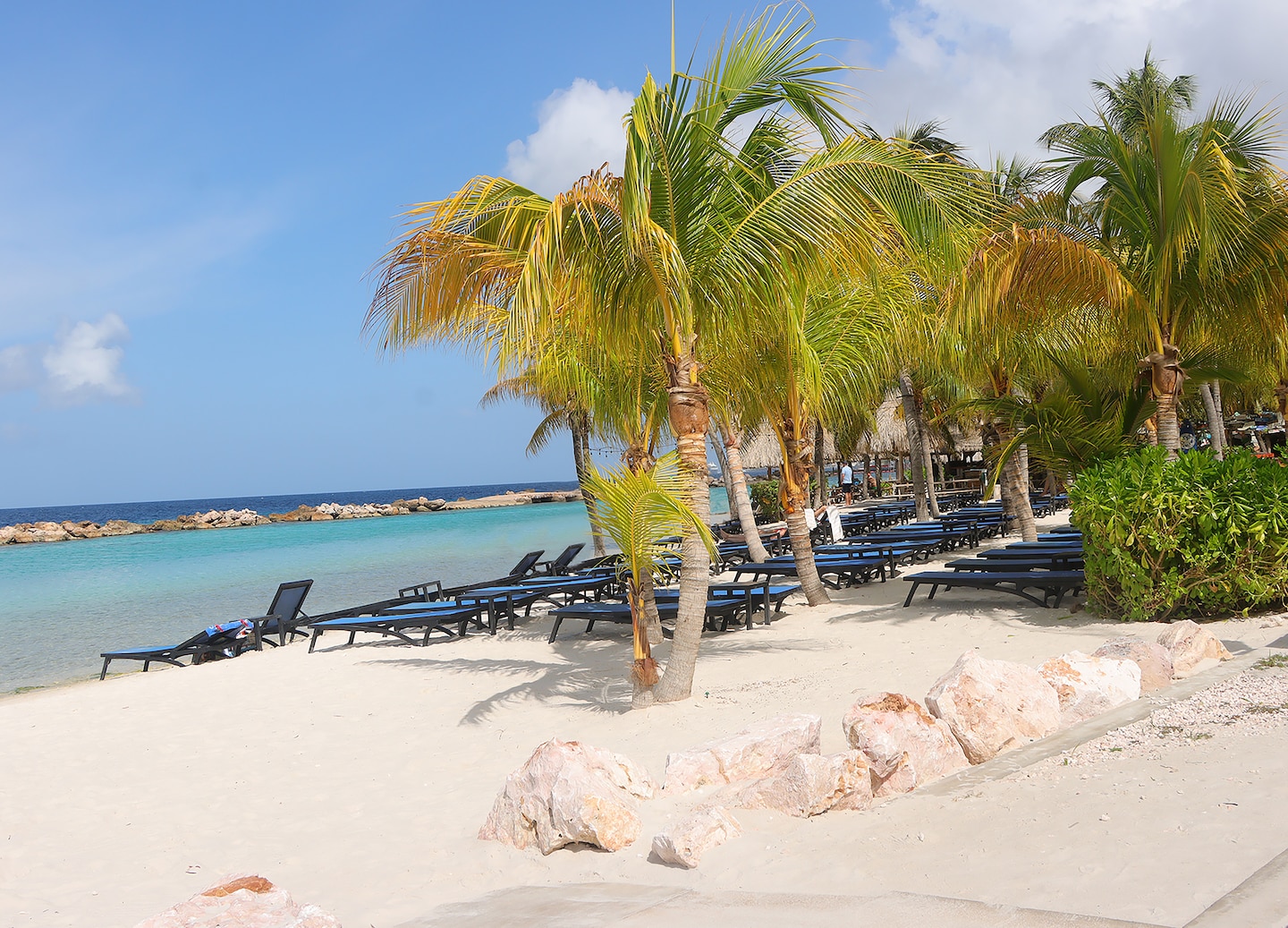
The Santa Catalina Arch is the yellow landmark spanning a cobblestone street in Antigua Guatemala. Its clock tower, white trim and views toward Agua Volcano create one of the country’s most recognizable scenes. Built as part of the Santa Catalina convent complex, the arch introduces the city’s religious history while framing a lively street of shops, restaurants and colorful facades.
- Fun Fact: The arch originally contained a passage that allowed cloistered nuns to cross between convent buildings without entering the street.
3. La Merced Church
La Merced Church is a Baroque church in Antigua, known for its yellow facade and elaborate white decoration. Columns, niches and scrolling details cover the front of the building, rewarding a closer look after the first photograph. The adjoining convent ruins add another layer of history, with an expansive fountain providing a striking centerpiece among the surviving walls.
- Fun Fact: The church’s present building was completed in 1767.
4. Lake Atitlán
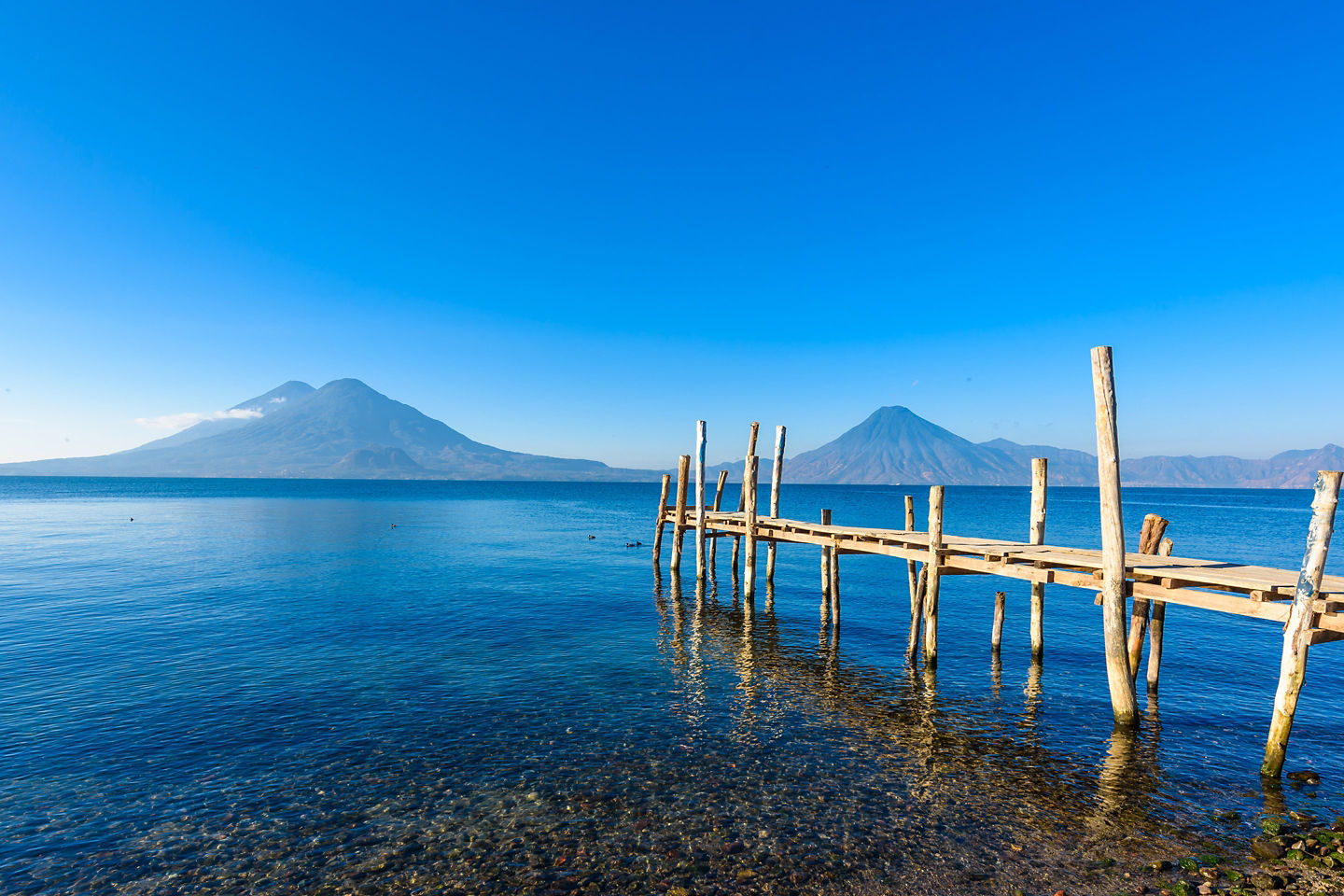
Lake Atitlán is a volcanic lake in Guatemala’s western highlands, surrounded by steep slopes, Maya communities and the cones of San Pedro, Tolimán and Atitlán volcanoes. Boats cross the deep blue water between lakeside towns, where markets, weaving workshops and waterfront paths offer different perspectives on the landscape. Panajachel is a popular starting point, while a longer stay gives you time to explore several communities.
- Fun Fact: Lake Atitlán occupies a volcanic caldera formed by a massive eruption approximately 84,000 years ago.
5. Semuc Champey
Semuc Champey is a natural limestone formation near Lanquín in Alta Verapaz, famous for its stepped turquoise pools. Forested slopes surround the water, creating a vivid contrast between the pale stone, clear pools and deep green vegetation. A hillside viewpoint reveals the terraces from above, making it easier to appreciate the unusual shape of this landmark and its place within the surrounding valley.
- Fun Fact: The Cahabón River flows beneath the natural limestone bridge that supports Semuc Champey’s pools.
6. Pacaya Volcano
Pacaya is an active volcanic complex south of Guatemala City, known for dark lava fields and a landscape shaped by repeated eruptions. Guided outings introduce the contrast between vegetated slopes and exposed volcanic rock, with views toward the cone along approved routes. The hardened lava is a reminder that Guatemala’s dramatic mountains are part of a changing landscape; visible molten lava depends on current activity.
- Fun Fact: Pacaya’s active Mackenney cone is named after Alfredo MacKenney, a Guatemalan physician who documented the volcano.
7. Quiriguá Archaeological Park
Quiriguá Archaeological Park in eastern Guatemala’s Izabal department is known for its monumental carved stone stelae. These upright sculptures carry images of rulers and hieroglyphic inscriptions recording dates, political events and Maya beliefs. The appeal lies in the detail: Faces, symbols and elaborate clothing emerge from the sandstone, offering a different experience from the towering temples at Tikal.
- Fun Fact: Quiriguá became a UNESCO World Heritage Site in 1981.
8. Castillo de San Felipe de Lara
Castillo de San Felipe de Lara is a restored stone fortress where Lake Izabal meets the Río Dulce in eastern Guatemala. Built to protect colonial trade against pirate attacks, it occupies a strategic position overlooking the waterway. Low walls, narrow passages and cannons reveal its defensive purpose, while the surrounding greenery and lake views make the setting as memorable as the fort itself.
- Fun Fact: The fortress also served as a prison during part of its history.
9. Yaxhá
Yaxhá is an ancient Maya city in the Petén region, set among rainforest beside a lagoon of the same name. Temples, plazas and raised ceremonial complexes are linked by paths through the trees, giving the site a strong connection with its natural surroundings. Elevated viewpoints reveal the lagoon and forest canopy, adding a broad landscape view to the stone structures below.
- Fun Fact: Temple 216 is one of Yaxhá’s best-known viewpoints over the lagoon and surrounding forest.
10. Tak’alik Ab’aj
Tak’alik Ab’aj is an archaeological site in southwestern Guatemala that preserves evidence of the transition between Olmec and early Maya cultural traditions. Stone sculptures, terraces and ceremonial spaces reflect its role along an ancient trade route. The variety of carved monuments makes the site especially rewarding for travelers interested in how ideas and artistic styles moved between communities.
- Fun Fact: Tak’alik Ab’aj joined the UNESCO World Heritage List in 2023.
Exploring the Most Famous Landmarks in Guatemala
Guatemala’s landmarks connect ancient cities with living Maya traditions, colonial streets and volcanic scenery. Antigua brings several highlights together, making it easy to pair the Santa Catalina Arch with La Merced Church and a meal in a courtyard restaurant. Lake Atitlán adds highland landscapes and lakeside communities to a longer stay.
For a cruise visit, Puerto Quetzal on the Pacific coast is the main starting point for exploring Antigua. Allow for the inland journey when planning your day. Tikal, Yaxhá, Semuc Champey and the landmarks around Lake Izabal belong in a longer land itinerary rather than a standard outing from Puerto Quetzal.
Landmark Excursions in Guatemala
Explore our shore excursions for your Puerto Quetzal sailing, with Antigua and the surrounding highlands as useful starting points for your search:
- Antigua Sightseeing: Look for an outing centered on colonial architecture, historic churches and the city’s cobblestone streets.
- Highland Cultural Experiences: Consider options featuring communities such as San Antonio Aguascalientes, known for Maya weaving traditions.
Available excursions vary by sailing. Check your cruise’s listings for confirmed tour names, specific stops, admission details and travel times. Explore cruises to Puerto Quetzal and start planning your visit.
Keep Exploring Guatemala With Royal Caribbean
Find an outing that fits your Guatemala visit and explore more destinations along the Pacific coast.
- Explore shore excursions for your cruise
- Discover Puerto Quetzal, Guatemala
- Explore Panama Canal cruises