
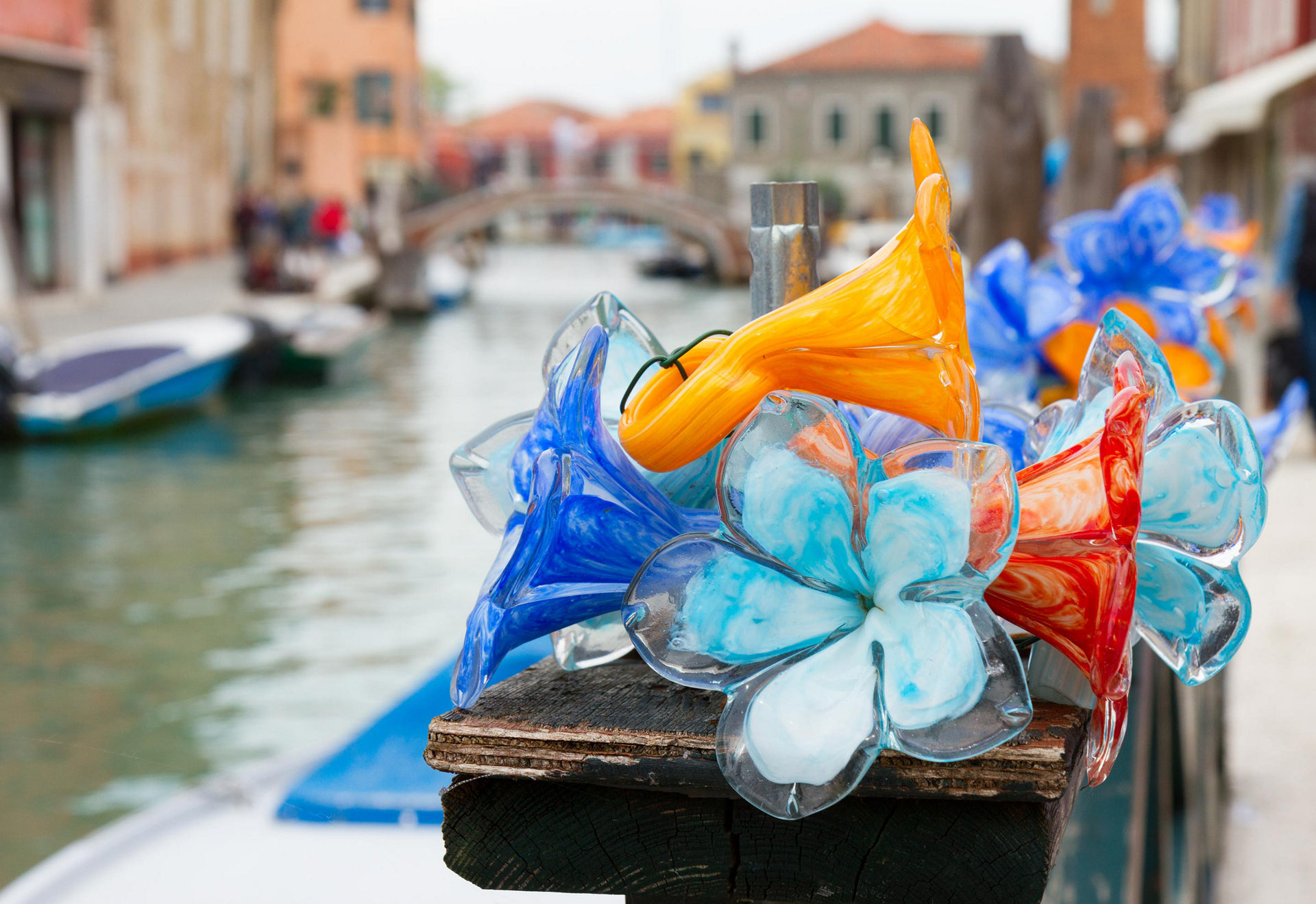
Murano glass is glass made on Murano, a group of small islands in Italy’s Venetian Lagoon. It's known for skilled handcrafting, rich colors and designs ranging from delicate jewelry to grand chandeliers. The name refers to where the glass is made, rather than one particular color or style.
A colorful bowl might catch your eye in a shop window, but watching glass take shape brings a whole new appreciation for the finished piece. A glassmaker turns glowing glass, shapes its edges and adds details while it's still soft enough to work.
Whether you love art, enjoy learning how things are made or hope to bring home a special keepsake, Murano glass offers a fascinating introduction to Venice’s creative traditions.
Where Is Murano?
Murano sits north of Venice’s historic center in the Venetian Lagoon. Its small islands are connected by bridges, with canals, workshops and waterfront paths forming part of the setting.
Visitors reach Murano by boat. Public water buses called vaporetti connect it with Venice, while guided outings may include their own transportation. The journey gives you a chance to see more of the lagoon before exploring the glassmaking community.
Why Is Murano Famous for Glass?
Murano’s glassmaking story stretches back centuries. In 1291, Venice ordered its glassmaking furnaces to move to Murano, helping reduce the danger of fires in the city. The island became a center where glassmakers developed and passed down their skills.
During the Renaissance, Murano became especially celebrated for its glass. In the 1400s, glassmaker Angelo Barovier developed cristallo, a remarkably clear glass that resembled rock crystal. Later makers created fine patterns and increasingly elaborate shapes.
That tradition continues today. Murano’s workshops produce both familiar designs and modern artwork, giving visitors a chance to discover a craft that's still changing.
What Makes Murano Glass Special?
Murano glass combines a strong connection to place with skilled craftsmanship. Its appeal comes from the ways glassmakers work with color, shape and light.
As you browse, look for:
- Fine details: Slender stems, curved handles and carefully shaped edges show the maker’s control.
- Patterns within the glass: Some designs contain delicate threads or small pieces of patterned glass.
- A wide range of styles: Clear goblets, colorful bowls, jewelry and sculptures can all belong to the Murano tradition.
- The maker’s own approach: Different workshops and artists bring their own ideas to the craft.
How Is Murano Glass Made?
Murano glassmakers use several techniques, including glassblowing, sculpting hot glass and working smaller pieces over a flame. The method depends on what they're creating.
For a blown-glass piece, the process generally includes these stages:
- Gathering the glass: The maker collects molten glass on the end of a hollow metal tube called a blowpipe.
- Blowing and shaping: Air blown through the pipe expands the glass. Turning the pipe and using tools helps form the piece.
- Adding details: The maker may add a stem, handle or decoration while the glass is hot.
- Cooling slowly: The finished piece goes into a special oven for gradual cooling, a process called annealing that helps prevent cracking.
Watching the process reveals how much timing matters. The glass must stay workable as the maker shapes it, sometimes returning it to the heat along the way. A finished goblet may look delicate and effortless, but creating it takes a practiced sequence of movements.
What Are Some Famous Murano Glass Styles?
Learning a few names makes browsing glass shops even more enjoyable. These terms describe techniques or appearances you may recognize.
Millefiori: Colorful, Flower-Like Patterns
Millefiori means “a thousand flowers.” Makers use small slices of patterned glass rods to create colorful designs that can resemble flowers or stars. The patterns are part of the glass itself.
The Corning Museum of Glass explains how millefiori glass uses these patterned slices as decoration. Look closely at a piece and you may spot the individual shapes within the larger design.
Filigrana: Delicate Glass Threads
Filigrana features fine threads of glass within clear glass. Depending on the technique, those threads can create straight lines, twists or lace-like patterns.
It's especially rewarding to examine up close. What looks like a light white swirl from across a shop may reveal an intricate arrangement of threads.
Cristallo: Clear, Refined Glass
Cristallo is associated with the clear glass developed in Renaissance Murano. Its appearance allows the shape of the object to stand out, from a thin goblet stem to a carefully formed rim.
It's a lovely reminder that Murano glass can be striking without bright colors.
What Is Murano Glass Used For?
Murano glass is used to make lighting, tableware, jewelry and decorative art. Exploring these different pieces is part of the fun of visiting a showroom, where a small pendant can share space with an elaborate chandelier.
Murano Glass Chandeliers & Lamps
Murano glass lighting ranges from grand chandeliers to smaller table lamps. Rezzonico-style chandeliers are a classic example, known for their elaborate decorations and many handcrafted parts. The style takes its name from the Venetian family that commissioned an early example for its palace in the 1700s.
For a more modern example, Venini’s Balloton lamps feature a textured glass surface that resembles quilted fabric. Seeing these different styles together shows how Murano’s glassmaking traditions continue to inspire new designs.
Murano Glass Plates & Trays
Murano glass plates and trays bring color and pattern to smaller decorative pieces. Styles you may find include:
- Millefiori plates: Colorful designs made with slices of patterned glass.
- Gold-leaf designs: Pieces that incorporate gold leaf for a shimmering finish.
- Small catchall trays: Shallow dishes for keeping jewelry or other little treasures.
- Decorative centerpieces: Larger plates or bowls designed to stand out on a table or shelf.
Murano Glass Jewelry, Vases & Sculptures
Beads, pendants, vases and sculptures offer more ways to enjoy the craft. Jewelry can make a small, personal keepsake, while a vase or sculpture gives you a piece to display at home.
Look closely at the colors and details that catch your eye. Learning about the maker and technique can make your choice feel even more connected to the visit.
What Is a Murano Glassmaking Demonstration Like?
A glassmaking demonstration lets you watch a maker shape hot glass while learning about the tools and techniques involved. What you see depends on the workshop and the piece being made.
Pay attention to how the maker turns the glass and uses small movements to change its shape. It can be surprising to see how quickly a soft form begins to look like a familiar object.
A few questions can help you get more from the visit:
- What technique are you using?
- How is the color added?
- How long did it take to learn this skill?
- What happens to the piece after the demonstration?
Choose an experience that matches your interests. A demonstration focuses on watching, while a hands-on workshop should clearly explain what visitors get to make.
How Can You Tell if Murano Glass Is Authentic?
The most useful starting point is to ask who made the piece and where it was produced. Genuine Murano glass comes from Murano, so learning about the maker is part of understanding what you're buying.
One helpful indicator is the Vetro Artistico® Murano trademark. Managed by Consorzio Promovetro, this mark certifies origin for products made by authorized participating producers on Murano.
When shopping, you can:
- Ask for the maker’s name: Learn which artist or workshop produced the piece.
- Ask about its origin: Confirm that it was made on Murano.
- Request written details: Keep the receipt and any documentation provided.
- Arrange protective packing: Ask how to transport the piece or whether shipping is available.
These questions can make choosing a souvenir more personal. Along with the glass itself, you’ll bring home the story of who made it.
Exploring Murano Before or After a Cruise
A stay in Venice before or after a Royal Caribbean sailing from Ravenna offers a way to include Murano in a wider Italian vacation. Ravenna and Venice are separate cities, so plan transportation between them as part of your trip. Royal Caribbean offers sailings from Ravenna, listed as Ravenna (Venice), Italy.
With time in Venice, you can arrange a boat trip to Murano, watch a glassmaking demonstration and browse the island’s workshops. The Murano Glass Museum offers another way to explore the craft through historic pieces and changing styles.
If you're considering a Venice excursion, look for the specific places included in its itinerary. Choosing an outing that names Murano and a glassmaking visit will help you plan the day you have in mind.
Why Discover Murano Glass in Venice?
Murano glass offers a chance to connect a beautiful object with the people and skills behind it. Watching a maker at work can change the way you see every curved stem, fine thread and colorful pattern afterward.
You can enjoy the experience, whether you’re choosing a keepsake, exploring with family or simply curious about the craft. Consider adding a Venice stay to one of Royal Caribbean’s cruises from Ravenna, Italy, with time to discover Murano’s glassmaking traditions before or after your sailing.
Frequently Asked Questions About Murano Glass
-
Is Murano glass still made by hand?
Traditional Murano glassmaking remains a skilled craft, with makers shaping and decorating glass by hand using tools and, for some pieces, molds. Techniques vary depending on whether they're creating a vessel, sculpture, bead or another object.
-
Is all Murano glass blown?
No. Glassblowing is one technique used on Murano. Makers also sculpt hot glass and use other methods to create smaller objects and decorative patterns. The technique depends on the design.
-
Is millefiori the same as Murano glass?
Millefiori is a decorative technique, while Murano glass refers to glass made on Murano. A Murano piece may feature millefiori patterns, but the pattern alone does not establish where an object was made.
-
Why can Murano glass be expensive?
Prices can reflect the maker’s skill, the complexity of the design and the work involved in producing and finishing it. A small, simple piece and a large, detailed artwork involve different amounts of labor.
-
Can you watch glassmaking on Murano?
Yes. Visitors can watch glassmaking at workshops that offer demonstrations. Check the workshop’s visitor arrangements before going, including whether a reservation is needed and what the visit includes.
-
Do you need to visit Murano to buy Murano glass?
No. Authentic Murano glass is also sold in Venice and elsewhere. Ask for information about the maker and place of production, just as you would when shopping on Murano itself.
-
Are there guided tours of Murano glass factories in Venice?
Yes. Some glass factories on Murano, in the Venetian Lagoon, offer guided visits where you can watch glassmakers work and learn about their tools and techniques. Experiences range from short demonstrations to tours that explain more of the production process. Hands-on classes are a separate option for visitors who want to try the craft themselves.
Planning a Trip to Ravenna and Venice?
Want to learn more about the region? Check out these guides to plan your next trip:
- Ravenna, Italy Shore Excursions - Explore mosaic-filled churches, regional flavors and options for discovering the surrounding area.
- What Is Ravenna, Italy Known For? - Get to know Ravenna through its mosaics, historic landmarks and artistic heritage.
- What To Buy in Ravenna - Discover local souvenirs, from mosaic artwork and ceramics to regional foods.


/overview/scenic-panorama-view-historic-town-perast-famous-bay-kotor.jpg?$800x450$)


/things-to-do/aerial-view-island-sveti-stefan-kotor-bay-montenegro.jpg?$800x450$)


