
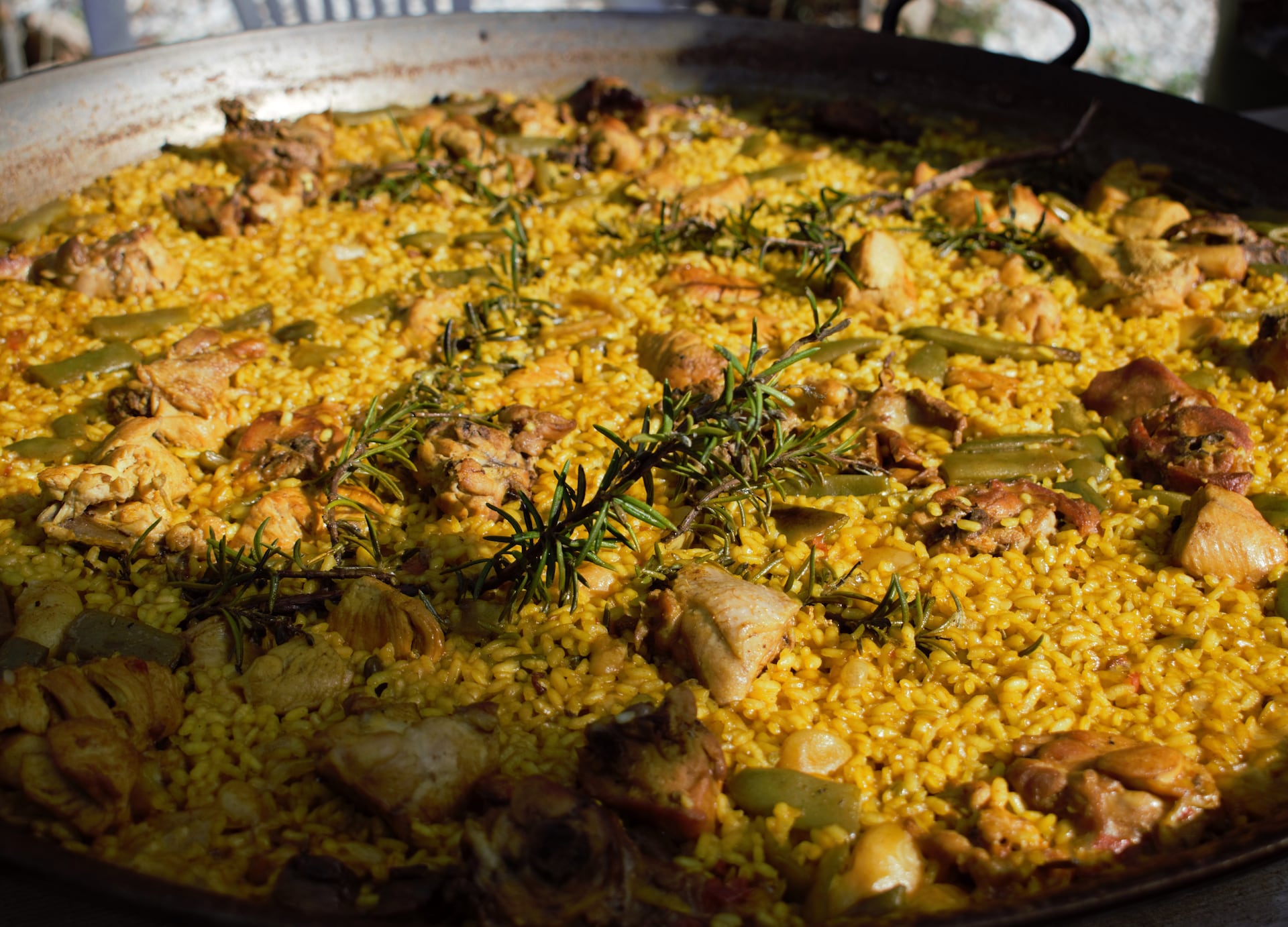
Paella is a Spanish rice dish that originated in the Valencia region. It’s cooked in a wide, shallow pan with ingredients that may include meat, seafood or vegetables. Traditional Valencian paella features chicken, rabbit and beans, while seafood versions often include shrimp, mussels or squid.
For food lovers, getting to know paella is a delicious reason to explore Valencia. You can taste a local recipe, learn why the rice matters and discover the countryside where the dish began. Here’s what to know before your first bite.
Where Did Paella Originate?
Paella began in the countryside around Valencia, on Spain’s eastern coast. It has close ties to Albufera, a rice-growing area just south of the city.
Farm workers prepared filling meals with ingredients they could find nearby, including rice, vegetables and rabbit. Over time, particularly from the mid-1800s, those simple meals developed into the paella now enjoyed around the world.
The name has a simple story, too. In Valencian, paella refers to the frying pan used to cook it. Over time, the same word became the name of the meal.
Today, preparing paella is also a way to bring people together. Friends and families gather while the food cooks, making the time around the pan part of the occasion. It’s a meal made for sharing, with plenty of room for conversation while everyone waits to eat.
What Ingredients Are in Paella?
Paella ingredients vary by recipe. The traditional Valencian version combines rice with meat, beans, vegetables and seasonings.
Some of its main ingredients include:
- Rice: Absorbs the flavors of the cooking liquid.
- Chicken and rabbit: Give the dish a rich, savory base.
- Green beans: Add color and a fresh vegetable flavor.
- Garrofó: Large white beans often used in Valencian paella.
- Tomato and olive oil: Help build flavor as the ingredients cook.
- Saffron and sweet paprika: Add color, aroma and seasoning.
Local recipes may also include ingredients such as snails, duck or artichokes. These variations reflect the cook, the season and the part of the region you’re visiting.
What Rice Is Used in Paella?
Paella uses short, round rice that can take in flavor as it cooks. Bomba is a well-known choice, and other varieties grown around Valencia include Senia and Albufera.
The pan matters, too. Its wide, shallow shape allows the rice to spread out in an even layer. That helps it cook evenly and makes the rice an important part of every serving.
What Does Paella Taste Like?
Paella is generally savory, with its flavor shaped by the ingredients cooked with the rice. A chicken-and-rabbit version has a hearty, meaty taste, while seafood paella brings flavors from the sea. Tomato, olive oil and seasonings add to the mix.
Texture is part of the appeal. You’ll find tender rice, bites of meat or vegetables and, in many paellas, a crisp layer underneath called socarrat.
What Is Socarrat?
Socarrat is the thin layer of toasted rice that forms where the rice meets the bottom of the pan. It adds a little crunch and a deeper, toasted flavor.
If you're watching paella being made, pay attention near the end. The cook carefully manages the heat as the liquid disappears, helping that prized layer develop. Valencia's tourism board's recipe suggests cooking a little longer over low heat once the liquid has evaporated to form the socarrat. Some chefs finish with a brief burst of higher heat instead, so techniques vary from kitchen to kitchen.
What Are the Different Types of Paella?
Reading the name on the menu can help you find a version you’ll enjoy. Common choices include:
- Paella Valenciana: The traditional local style, made with chicken, rabbit and beans.
- Seafood paella: A version featuring seafood, which may include shrimp, mussels and squid.
- Mixed paella: Combines meat and seafood in the same pan. It's popular on many menus, though it isn't considered part of the traditional Valencian recipe.
Each offers a different flavor, so paella can be worth trying more than once during a trip. The Valencian version is a good starting point if you’d like to explore the dish’s local roots.
Why Is Valencia a Special Place to Try Paella?
In Valencia, you can explore the places and traditions behind the meal. Albufera’s rice fields help explain why rice became such an important part of local cooking.
The village of El Palmar has long-standing ties to fishing and rice farming. It’s also known for restaurants serving regional rice dishes. A visit can pair time around the lagoon with a closer look at the food grown and prepared nearby.
Whether you enjoy paella at a restaurant or learn how it’s made, Valencia gives you a chance to connect a familiar dish with the place it calls home.
Discover Cooking Experiences in Valencia
Learning about paella can be just as enjoyable as ordering it. A cooking experience gives you time to watch the process, meet a local host and ask questions about the ingredients.
Royal Caribbean offers different ways to explore Valencia’s cooking traditions:
- Albufera Boat and Paella Cooking Experience: Travel through Albufera’s wetlands on a traditional Valencian boat, then visit El Palmar to learn how paella is prepared. The outing also includes a photo stop at the City of Arts and Sciences.
- Culinary Experience with a Private Chef: Enjoy an intimate cooking demonstration and wine pairing with a private chef. This offers a broader introduction to Valencia’s flavors, with the chef leading the preparation.
The Albufera outing puts paella and its surroundings at the center of the visit. The private-chef experience focuses on watching a cook at work and enjoying food and wine together. Explore the options for your sailing for full details and availability.
Why Try Paella in Valencia?
Trying paella in Valencia is a chance to enjoy a famous dish while getting to know the people and traditions behind it. You might discover a new favorite ingredient, try your first bite of socarrat or leave eager to gather friends around a pan of your own.
Explore cruises to Valencia, Spain and make local food part of your next adventure.
Frequently Asked Questions About Paella
-
Is paella spicy?
Traditional Valencian paella is generally savory rather than hot. Saffron and sweet paprika add flavor without the heat you might expect from chili peppers. Recipes vary, so you can ask about the seasoning when ordering.
-
Is paella the same as risotto?
Both are rice dishes, but their textures and cooking methods differ. Risotto is usually creamy and stirred during cooking. Paella is cooked in a broad pan, with the rice spread out and generally left undisturbed once it is simmering.
-
Does paella contain chorizo?
Chorizo appears in some adaptations, but it is not part of the traditional Valencian recipe. That version centers on chicken, rabbit, beans and rice.
-
Can you make paella at home?
Yes. Although paella is traditionally cooked over a wood fire, it can also be prepared in a home kitchen. A suitable pan and a recipe matched to your equipment are helpful starting points. A cooking experience in Valencia can give you ideas and techniques to bring home.
Planning a Trip to Valencia?
Want to learn more about Valencia? Check out these guides to plan your next trip:
- What to Eat in Valencia - Discover local favorites, from fideuà (a seafood noodle dish) and savory tapas to horchata and sweet treats.
- Valencia, Spain Shore Excursions - Explore the Old Quarter, modern landmarks and local food experiences.
- What Is Valencia, Spain Known For? - Get to know the city through its history, architecture, food and coastal setting.
- The Best Time to Visit Valencia - Explore the seasons and find the right time for your getaway.