By Cassie Bailey | Published on September 29, 2025


When you sail to the Caribbean, you quickly learn stories about the people who are perhaps the most famous seafarers of all: pirates. You might think you already know their swashbuckling stories from popular films, books and TV shows, but the entertainment industry only scratches the surface of the history of pirates and what was, at one point, one of the most lucrative and legendary business endeavors on earth.
Quick Takeaways: Meet the Pirates of the Caribbean Ships
- ● The Caribbean was once the epicenter of the Golden Age of Piracy, spanning 1650–1730.
- ● Historic ports like Nassau and Port Royal, Jamaica were pirate havens filled with real-life legends.
- ● Many real pirates began as privateers before turning rogue, including infamous figures like Blackbeard.
- ● You can still explore pirate ships in the Caribbean, underwater wrecks and immersive museums today.
- ● Cruise to the Caribbean and trace the footsteps of the famous Caribbean pirates who once ruled the sea.
Taking the Pirates’ Path
I looked out from my cabin's window and tried to take in the vast ocean. We were on a cruise to the Caribbean, where I would later swim in clear waters, try delicious new foods and traverse historic streets. People have different reasons for going on a cruise, and mine was likely different from most: I wanted to follow the pirates. I wanted to swim where they swam, play where they played and drink what they drank.
I planned my trip with the help of the vacation planners on board. Some of the major pirating ports are in St. Thomas, Jamaica, Barbados and The Bahamas. Haiti, Cuba, St. Croix and Puerto Rico also all have a history of pirate mythology nearby.
The Golden Years
My travels took me to many of the most well-known pirate hubs in the Caribbean, all of which preserve the history of the Golden Age of Piracy from 1650 to 1730.
Caribbean colonization led to a strong trade industry starting in the 15th century. Spain had control of the Americas, and the country's goal was to mine huge amounts of silver and gold. To protect their ships from attack, the Spanish adopted a convoy system known as a flota, or treasure fleet, that protected the cargo-carrying ships. These were harder to attack because they were surrounded by other ships. However, any straggling boats were often in danger of being intercepted and looted.
English, French and Dutch colonists and traders ignored the treaties established with Spain and invaded its territories, which led to smuggling and privateering in the Caribbean. Many of the men and women working as pirates during the Golden Age of Piracy originally worked for their country’s navy as privateers. "Privateer" was an official title that allowed sailors to sack enemy ships with the government’s permission.
Once privateering became less popular and the sailors were left without jobs, many turned to the lucrative career of piracy. They were already highly skilled sailors and ready for battle on the high seas. Not only were the fleets that traveled from the Americas back to Europe looted, but the pirates attacked the Caribbean islands as well, sacking ships and ports close to the strongholds I would visit.
Buccaneering In Nassau
Historians say real pirate ships were like floating cities, much like the cruise ship I was traveling on. Many ports weren't designed for vessels of that magnitude, so they would anchor their ships farther out and hop on smaller boats to row to shore. I felt lucky my ship slid comfortably into port, with a ramp available for reaching land.
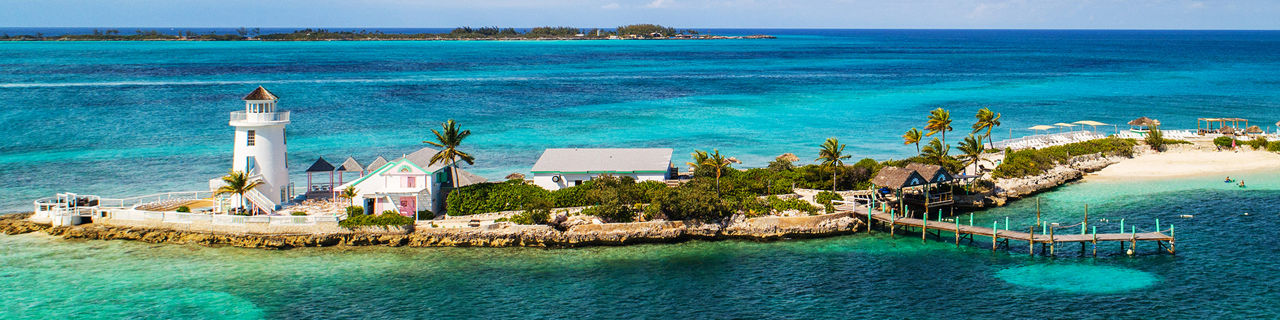
For my first pirate stop, I landed in Nassau. The capital of The Bahamas was a favorite of 17th- and 18th-century pirates because the coastal waters were shallow. Many larger ships ran aground and sank on its shores, but pirate boats with shorter drafts could make it to port.
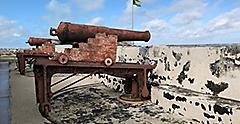
I headed straight to Fort Charlotte and the Pirates of Nassau Museum. Here are a few fast facts I learned:
- ● The fort is a colonial citadel by the harbor named after King George III's wife, with underground tunnels and dark dungeons.
- ● The museum brings pirates to life with interactive exhibits and examples of their campsites and traditional pirate clothing.
- ●The tour guide took us to a replica sailing ship and talked about a popular punishment in the Golden Age known as being "marooned," in which someone would be abandoned on an island without any food, water or possessions
I also heard stories about Edward "Blackbeard" Teach — one of history’s most famous Caribbean pirates. He was known for intimidating his enemies with smoke that would billow from his long beard and hair. (He accomplished the theatrical effect by nestling slow-burning fuses in his hair). He also strapped pistols around his body to surprise his enemies in battle.
Many real pirates made it to Nassau besides Blackbeard, including Calico Jack, Mary Read, Charles Vane, Anne Bonny and others. I was thrilled to have stood on the shore where the pirates might have landed.
In A Pirate's Shoes
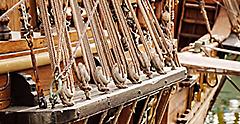
For my next stop at Bridgetown, Barbados, I wanted to get closer to buccaneering by sailing on an actual sloop. Fortunately, I was able to board the Black Pearl Cruise, an experience which included walking the plank.
Swimming in the water beside the ship, I had a better view of its wood panels and red sail with a white cross, all of which evoked a different century. I snorkeled around the ship and then went back on board — this time laughing out loud as I swung from a rope into the water.
Jamaica’s Underwater Diving Ship Wreck
I was excited to visit one of the most famous pirate ports in the Caribbean: Port Royal, Jamaica. The British navy headquarters were here for a while, which attracted privateers like Henry Morgan (who later became its governor) and naval officers like Christopher Myngs. The city became a pirate hideout and was later described by some as "the most wicked and sinful town in the world” — probably because Blackbeard was a permanent resident.
I looked out to the water's edge and imagined the pirate ships coming in and out. The town is sleepy today, but the remains of a different era show how active this town used to be. There's still a strong seafaring tradition today.
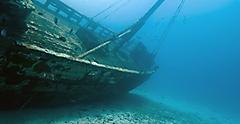
An earthquake in 1692 sank two-thirds of the old city, and I took a tour of the underwater world, witnessing many archeological treasures such as a sunken ship and parts of the town. The wreck is now the home of thousands of fish and other sea creatures. The city looks like a ghost town, filled with water instead of people.
Finding Treasure
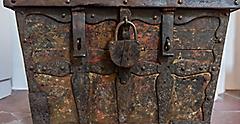
Perhaps the most iconic pirate’s possession is their treasure chest. The lure of buried treasure is yet another reason why many visit the islands. While it's not likely that you'll come across a chest full of emeralds while hanging out on the beach, some people have been lucky enough to find them.
One confirmed treasure is that of a Spanish galleon ship named San Jose, which sank near the coast of Colombia in 1708. Its contents have been authenticated and are worth over $17 billion today. I didn't find any treasure myself, at least not in the form of jewels and gold — but I did encounter plenty of history.
Beginning in the 1720s the demise of mercenaries and the establishment of European armies led to the decline of Caribbean pirates. European navies and the United States fought against piracy to gain control over the Caribbean. Several countries started to imprison pirates, while others executed them. Pirates began fleeing to other parts of the world.
‘Avast, Me Hearties!’
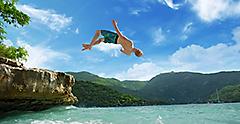
Pirate slang is difficult to understand, but in St. Thomas, the captain of the pirate ship and skeleton crew I was visiting explained this classic phrase.It means 'Stop and listen, my underlings!'
His schooner was a beautiful vessel with bright red sails, and it was one of the 'gaff-rigged schooners' that resemble the ones used by real pirates of history. This time, I didn't walk the plank, but the captain did. He jumped and then called us swashbucklers to join him on land. We all went ashore for food and drinks, and I remembered that in between all the stealing and fighting, pirates always found time for a drink and a song. I drank some rum, sang to my heart's content and finally felt like a real pirate.
My pirate journey continues, but yours could just be beginning.