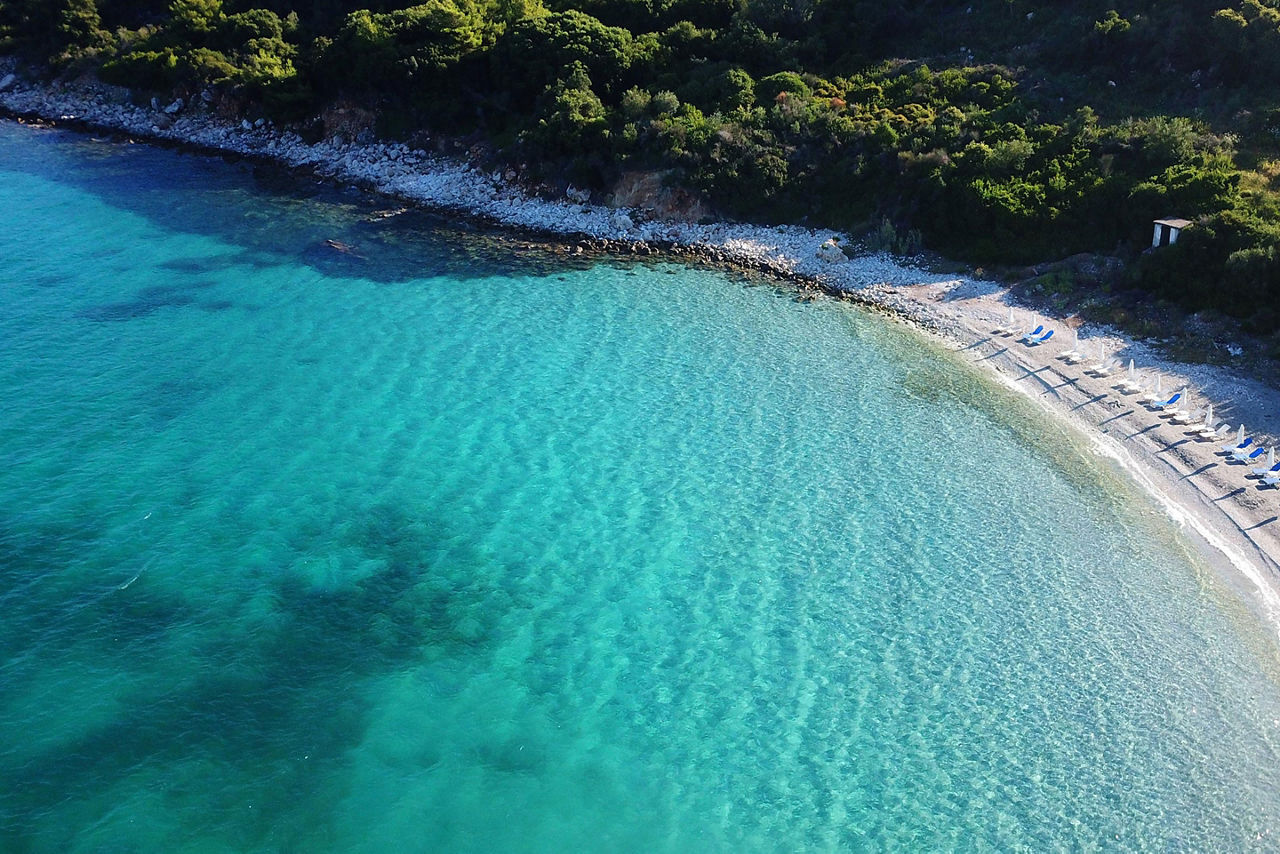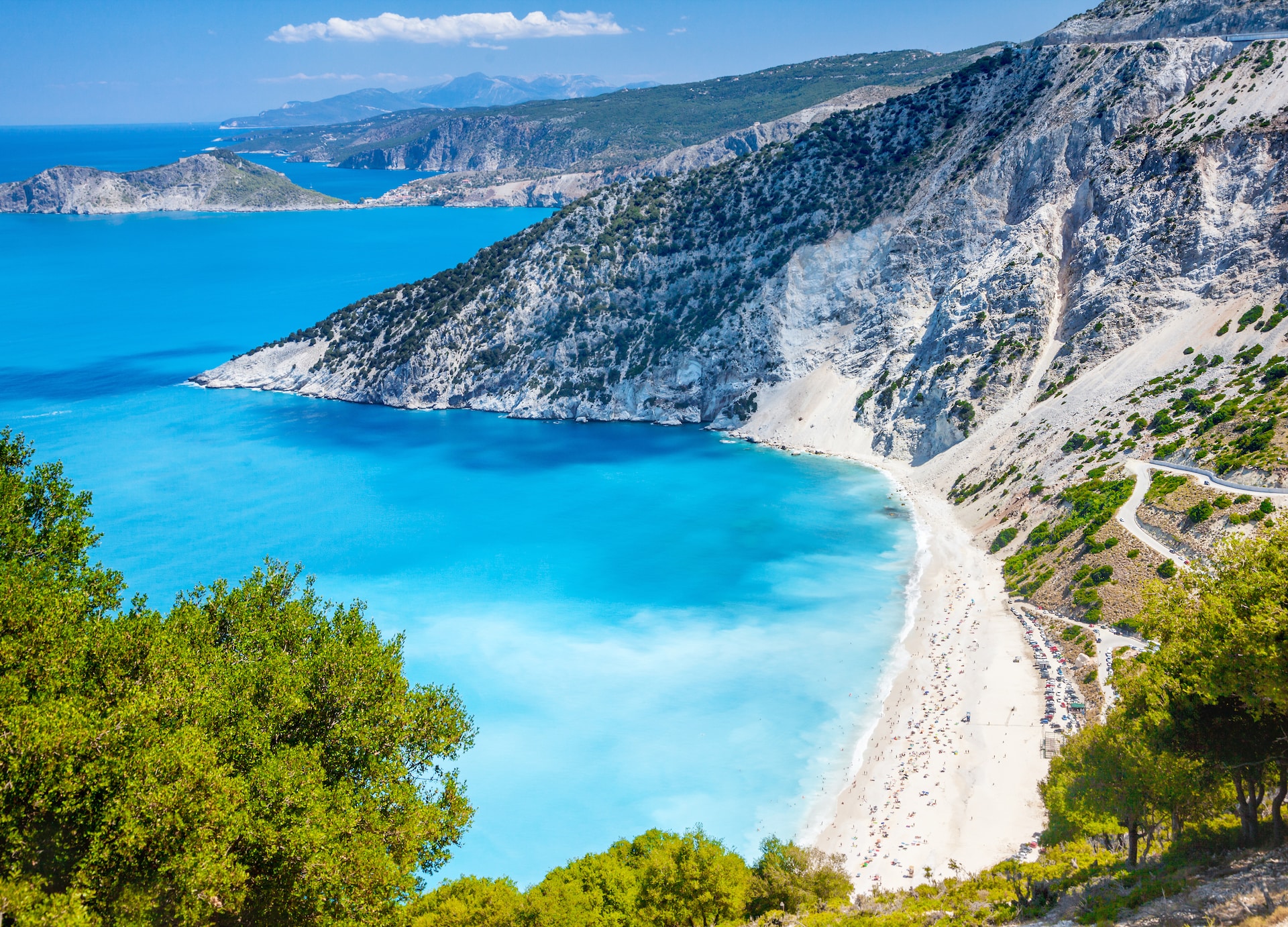
The best time to visit Cephalonia is from May to October, when the Ionian island shines with sunshine, warm waters and stunning coastal scenery. Known for its dramatic cliffs, turquoise bays and quaint villages like Assos and Fiskardo, Cephalonia (also spelled Kefalonia) is one of Greece’s most photogenic islands — and each season offers something unique to experience.
Whether you’re snorkeling in Myrtos Bay, hiking through Mount Ainos National Park or tasting local Robola wine in a hillside taverna, the weather in Cephalonia plays a big role in shaping your trip. Here's how each season feels on the island and what makes it worth visiting year-round.
Spring in Cephalonia (April to June)

Best for: Wildflowers, hiking & peaceful beaches
Average temperatures: 60°F (16°C) in April to 79°F (26°C) in June
Spring brings a quiet charm to Cephalonia. The island shakes off winter with blooming olive groves, bright poppies and clear skies. April and May are shoulder-season gems — offering tranquility, mild temperatures and lush green landscapes that are perfect for exploring on foot.
By late May and into June, the sea becomes warm enough for swimming and boat trips around the coastline. Ferries start running more frequently to and from the mainland and other Ionian islands, making spring an ideal time to experience Cephalonia before peak season sets in.
Seasonal Highlights:
- Melissani Cave Lake: Visit before the summer crowds and see the famous blue light reflect in near silence.
- Mount Ainos trails: Spring is ideal for hiking to panoramic viewpoints surrounded by Cyprus forests and wild orchids.
- Greek Easter (dates vary): Traditional village celebrations often include candlelight processions and community feasts.
Summer in Cephalonia (July to August)

Best for: Beach days, nightlife & vibrant island life
Average temperatures: 86°F (30°C) in July & August
Summer is when Cephalonia reaches its most iconic self — sun-drenched, social and spectacular. The weather in Cephalonia is at its hottest and driest, with long, sunny days perfect for lounging at beaches like Myrtos, Antisamos and Petani. The sea is at its warmest and clearest, ideal for snorkeling, kayaking and boat excursions.
This is also the busiest time of year, especially in August when both international tourists and Greek families flock to the island. Restaurants stay open late, local festivals pop up in villages and the air is filled with music, grilled seafood and celebration.
Seasonal Highlights:
- Saristra Festival (August): Delight in a creative arts and music festival held in an abandoned mountain village.
- Robola Wine Festival (August): Celebrate Cephalonia’s famous local wine with tastings, music and dancing.
- Assos and Fiskardo harbors: These harbors are ideal for people-watching, boutique shopping and sunset dinners by the sea.
Tip: If visiting during summer, book accommodations, car rentals and tours well in advance, especially for August travel.
Fall in Cephalonia (September to October)
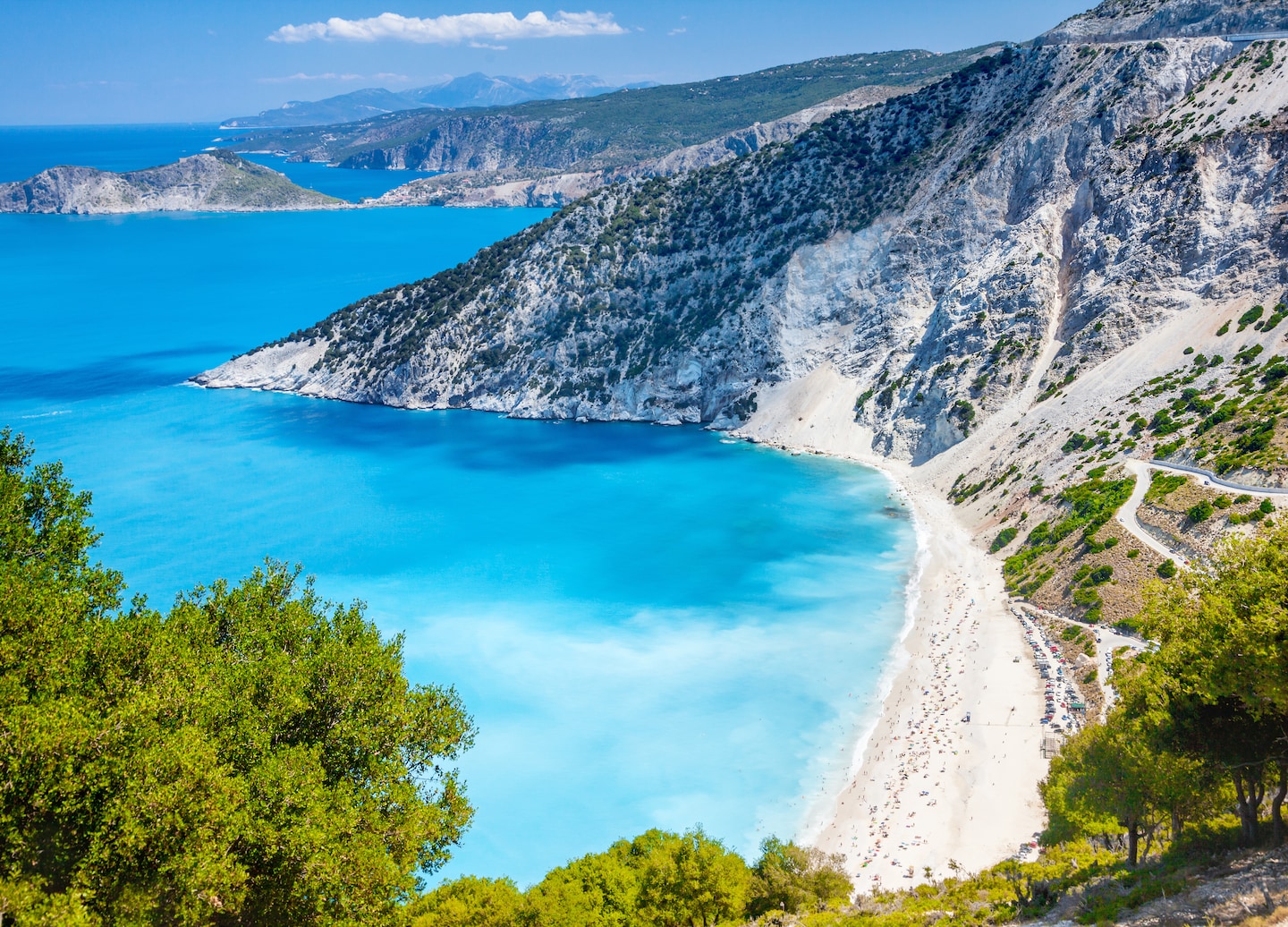
Best for: Warm water, fewer crowds & wine season
Average temperatures: 81°F (27°C) in September to 72°F (22°C) in October
Fall might just be the island’s best-kept secret. September in Cephalonia still feels like summer, but with a slower pace. The beaches are less crowded, the sea remains warm and the golden light over the Ionian Sea makes for unforgettable sunsets.
By October, the landscape shifts with autumn hues, but the weather remains pleasant for outdoor adventures. This is also the grape harvest season in Cephalonia, and many villages celebrate with local wine tastings and small food festivals.
Seasonal Highlights:
- Post-summer beach time: Enjoy the best beaches in peaceful serenity — especially Myrtos, Emblisi and Skala.
- Wine tasting: Fall is ideal for visiting Robola vineyards and local wineries.
- Turtle sightings: Loggerhead sea turtles nest on Cephalonia’s beaches from May to October, with hatchlings appearing in early fall.
Winter in Cephalonia (November to March)

Best for: Authentic village life, nature & budget travel
Average temperatures: 60°F (16°C) in November to 50°F (10°C) in January
Winter is the quietest season in Cephalonia. Many beach bars and hotels close for the season, but the island remains beautiful in a rugged, moody kind of way. The weather in Cephalonia is mild compared to northern Europe, but it’s wetter and cooler, with green hills and dramatic skies.
This is a great time to explore Cephalonia’s inland villages, take scenic drives along the cliffs and enjoy the company of locals at slow-paced tavernas. Winter also offers great value on accommodations for those looking to experience Greece without the summer bustle.
Seasonal Highlights:
- Local festivals: Christmas and Epiphany are celebrated with traditional Greek customs and feasts.
- Village hikes: Explore lesser-known inland trails near places like Poros and Sami.
- Peace and solitude: Visit monasteries, caves and viewpoints without another traveler in sight.
When is the Best Time to Visit Cephalonia?
The best time to visit Cephalonia is from May to October, when the island offers warm, sunny days, swimmable seas and a range of festivals, food and outdoor activities. For fewer crowds and cooler weather, late spring (May to June) and early fall (September) offer an ideal balance. Summer (July to August) is perfect for beach lovers and nightlife, while winter is quiet and best for slow travel and nature lovers.
FAQs: Visiting Cephalonia
1. What is the best month to visit Cephalonia?
September is one of the best months to visit. The weather in Cephalonia is still warm, the sea is ideal for swimming and the island is quieter after peak summer.
2. What is the hottest month in Cephalonia?
TAugust is typically the hottest month, with daytime highs averaging around 86°F (30°C) and peak sunshine hours.
3. What is the coldest month in Kefalonia?
January is usually the coldest month in Kefalonia, with average lows around 48°F (9°C) and highs near 57°F (14°C). While snow is rare near the coast, the inland mountains may see light snow in winter.
4. Can you swim in Cephalonia in October?
Yes. The sea remains warm in early October, especially after the long summer season. Many travelers swim well into mid-fall.
5. Does Cephalonia get crowded in summer?
Yes. July and August are the busiest months, particularly in beach towns and at major attractions like Myrtos Beach and Melissani Cave.
6. How long should you stay in Cephalonia?
A stay of three to five days is ideal for exploring beaches, villages, caves and local cuisine. For a more relaxed pace, a full week lets you explore more of the island.
7. Is Cephalonia open year-round?
Yes, but many tourist services close from November to March. The island remains accessible for slower, more local-focused travel in winter.