By Erica Moody | Published on November 11, 2025
Archimedes’ Principle And The Science Of Buoyancy
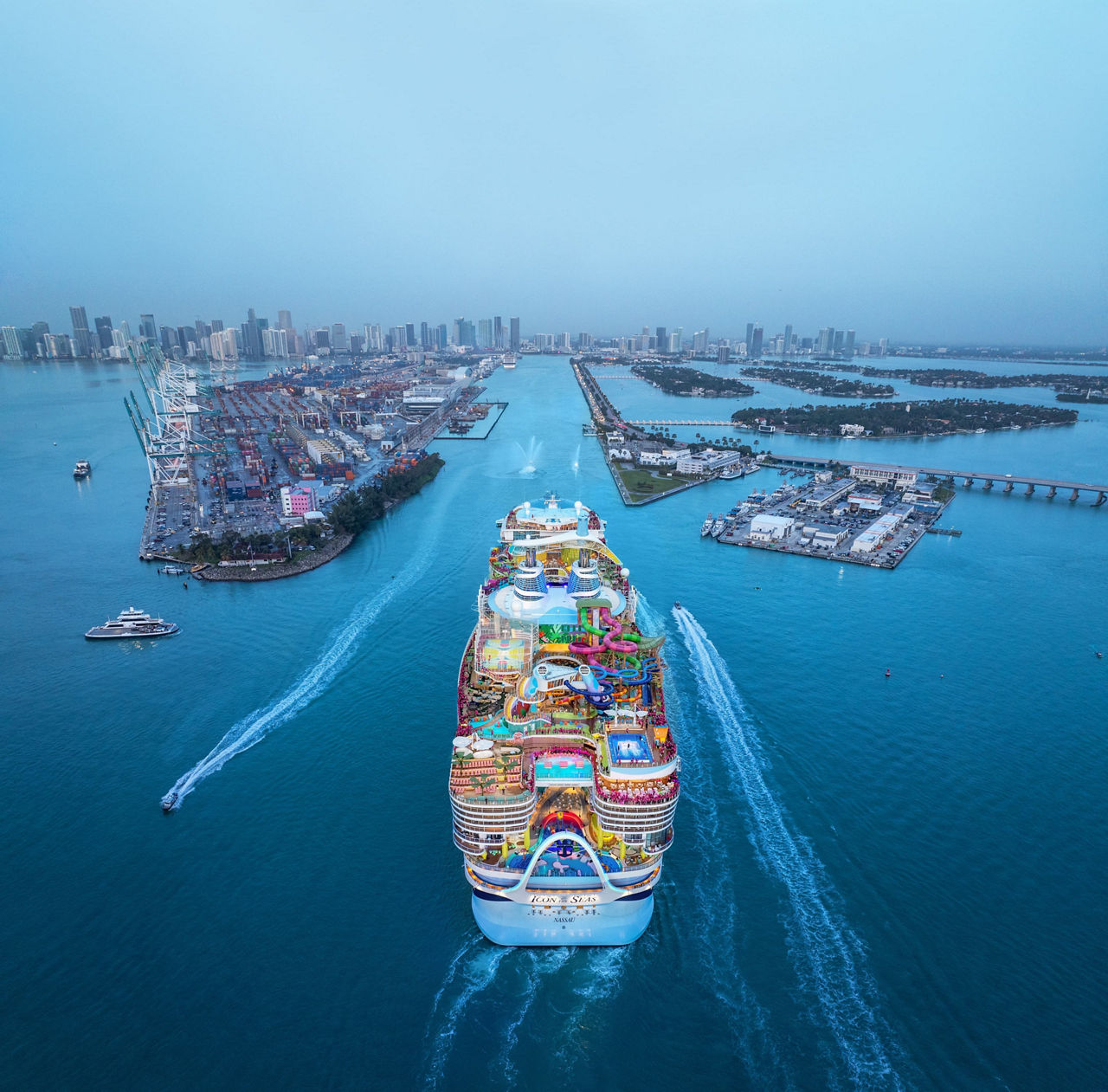
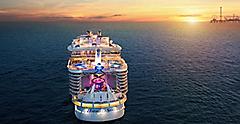
The law of physics behind the flotation of cruise ships can be traced back about 2,250 years to the Greek mathematician and physicist Archimedes, who discovered that any object in a fluid is pushed upward by a force matching the weight of the fluid it displaces. Simply put, when a ship is placed in water, it takes the place of a volume of water that equals the weight of the ship. The surrounding water creates an upward force called buoyancy. Because the buoyant force equals the ship’s weight, the ship floats in equilibrium. This law of buoyancy, known as Archimedes’ principle, is one of the core ideas behind how ships are designed.
Ship designers calculate how much water the hull must push aside to support the ship’s total weight — including the vessel itself, cargo, fuel and passengers. Hulls are designed to displace enough water to generate a buoyant force equal to their enormous weight. The shape of the hull helps spread the ship’s weight over a large area, allowing it to push aside more water without sinking too deeply. Designers carefully fine-tune hull dimensions to balance buoyancy, stability and fuel efficiency, ensuring the vessel can float smoothly even under heavy loads. This precise shaping also keeps the ship stable, minimizing rolling (the side-to-side rocking motion of the ship) and pitching (the up-and-down tilting motion of the bow and stern) in rough seas.
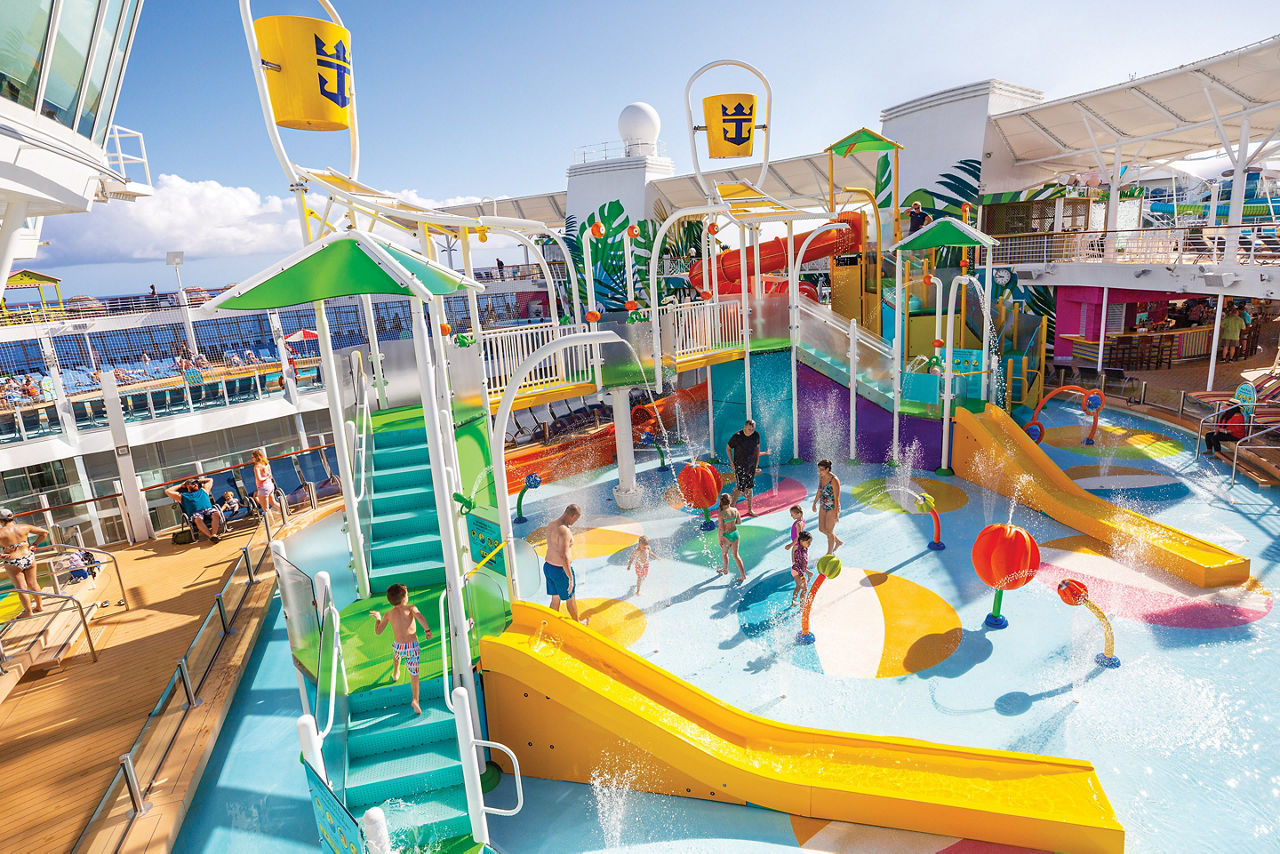
While the principle of buoyancy has been around for thousands of years, modern cruise ship design didn’t take off until the 1960s, the decade that many of today’s most prominent cruise companies were formed. With air travel making ocean liners obsolete for many travelers, a new business model emerged that prioritized the journey as a vacation in itself with hotel-like amenities and luxury features. Now, cruise ships dazzle with features including record-breaking amusement parks, fine dining restaurants, rejuvenating spas and Broadway-style shows.
Engineering And Design Features That Keep Cruise Ships Afloat
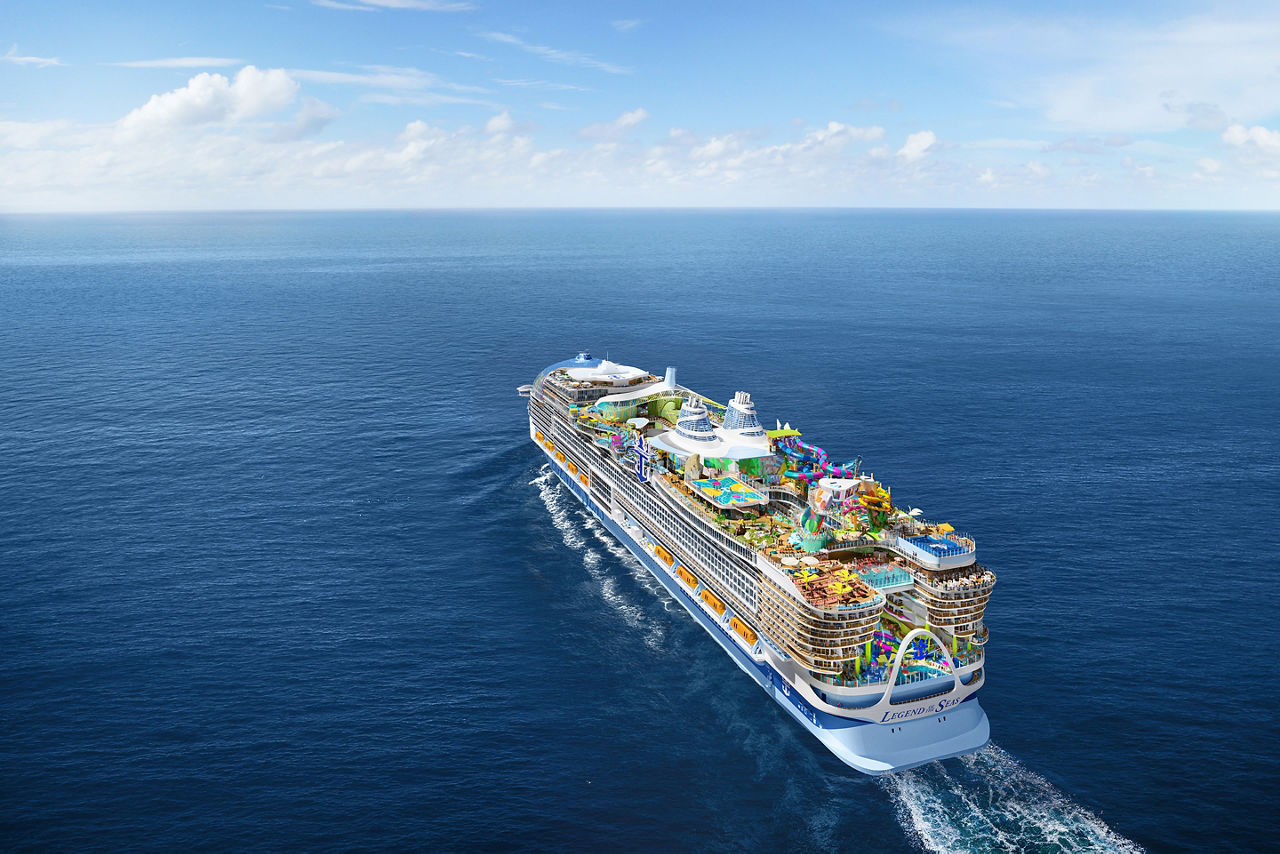
Buoyancy alone isn’t enough to keep a ship stable and safe. Other engineering elements work hand in hand with the hull design, including ballast tanks, bulkheads and materials.
The hull’s curved, wide shape is crucial, allowing the vessel to displace enough water to remain stable while minimizing drag. Inside the hull, bulkheads (watertight walls that divide the hull into multiple compartments) can contain the water if one section is damaged or flooded, which serves to prevent the entire ship from taking on too much weight at once.
Weight distribution is a key factor in ship safety. Cruise ships are designed so that their heaviest components, such as engines and fuel tanks, sit low in the vessel, lowering the center of gravity and making the ship more resistant to tipping. Above them on the cruise ship are staterooms, restaurants, theaters and open decks, which are much lighter.
Ballast tanks (large, hollow compartments built into the lower part of a ship’s hull that can be filled or emptied as needed) help maintain balance and counteract uneven weight. Modern ships are also built with strong, lightweight materials — like high-grade steel and advanced composites — that make the structure both durable and buoyant. This design spreads the weight across a huge area and lowers the ship’s average density, making it less dense than solid steel and allowing it to displace enough water to stay afloat.
Before a ship welcomes its first guests, it undergoes thorough sea trials. These construction milestones bring on experts across naval architecture, engineering, design and navigation to test the waters on trial getaways to make sure a ship is ready for sailing.
Misconceptions About How Cruise Ships Float
Passengers may have concerns around cruise ship safety: Will a ship remain stable in rough waters? Can a big wave flip a ship? What happens if the generator fails? In actuality, experts say that the careful construction, operation and regulation of cruise ships make them extremely safe places to be.
Maritime meteorologist James Van Fleet says it’s even safe to take a cruise during hurricane season, one reason being the constant observation on the ship. “There are officers on board always monitoring information provided by the National Oceanic and Atmospheric Administration (NOAA). They’re stationed throughout the ship to make sure everyone is safe should inclement weather arise,” he says. And in rough waters, cruise ships make use of “stabilizers that act like airplane wings,” Van Fleet says. “These stabilizers essentially lift the ship over waves the same way a wing lifts a plane over rough air. This keeps the ‘rise and fall’ from being too noticeable.”
In the rare event that part of the main system fails, backup power and propulsion systems keep modern cruise ships resilient. They use multiple diesel generators (or hybrid systems) to produce electricity for everything on board, and if one fails, the others automatically pick up the load. Emergency generators, placed high in the ship, provide power to critical systems like navigation, lighting and communications during a blackout.
Many ships use azimuth thrusters, which can rotate 360 degrees, for propulsion and precise steering. If one unit malfunctions, others keep the ship moving and maneuverable, a key technology used on larger ships. This built-in redundancy means that even in the event of an equipment failure, cruise ships can maintain essential operations and continue to safely navigate the seas.
Experience The Science Of Cruising On Your Next Vacation
Eager to experience these marvels firsthand? Book a Royal Caribbean cruise to see science in action. You’ll get an up-close look at how careful design and development turns a ship into a vacation experience, complete with entertainment, dining, once-in-a-lifetime experiences and incredible port stops.

Get Royal Deals, Sign Up Today

Getting There
Explore Our Most Affordable Itineraries
Explore cruises and discover how ship science brings vacations to life.
Related Articles
How To Plan A Cruise For The First Time
READ MORE
What Is Included On A Cruise?
READ MORE

7 Ways To Use Onboard Credit
READ MORE
10 Things You Can Only Do On A Royal Caribbean Cruise
READ MORE