What Is a Speakeasy Bar? History and Modern Popularity
Experience Speakeasy Bars: More than 1920s Relics
By Eben Diskin | Published on November 13, 2025
Prohibition isn’t a popular period of U.S. history. No one's exactly looking back fondly on the days when alcohol was illegal. You'd have to tiptoe down a sketchy stairwell in an ill-lit alleyway and duck into a speakeasy bar to enjoy it — all while hoping the police didn't show up. All that said, it appears that people are more nostalgic for a Prohibition-era drinking experience than you might think. Speakeasy bars are more popular now than ever.
Key Takeaways
- ● Historically, speakeasies were hidden, undercover or underground bars where patrons enjoyed alcohol illegally during the 1920s Prohibition era.
- ● Smartly dressed patrons would have to use secret passwords, knocks or handshakes to gain entry and literally “speak easy” (be as quiet as possible) to evade police attention.
- ● In the modern era, Prohibition era-inspired speakeasies still exist and may incorporate more creative mixology creations and casual atmospheres where the dress code is less strict.
- ● The speakeasy experience is exciting, and it's made all the more interesting when you experience real speakeasy history on an ultimate world cruise.
A Brief History of the Speakeasy Bar
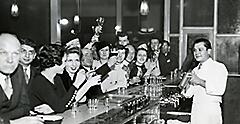
Speakeasies arose in the early 1920s, after the U.S. government passed the 18th Amendment prohibiting the manufacture, sale or transportation of liquor. In the wake of World War I, demand for liquor skyrocketed, and a bootleg industry quickly emerged to meet the demand. Alcohol smugglers continued to supply a thirsty nation its drinks of choice — undercover and underground.
While some bars appeared to close up shop, many merely shifted their business to basements, cellars and attics. These spots came to be known as speakeasies because patrons often needed to whisper — or "speak easy" — to avoid drawing attention to the illegal operation. Customers would often enter by uttering a password or performing a secret handshake (or knock) to prove that they weren't law enforcement. Speakeasies soon became hubs for jazz music, dancing and gambling.
These spots were also a boon for women, who had previously been barred from traditional bars. Newly emboldened by the right to vote, women ventured into the subterranean world of speakeasies. This period of relaxed morals and carefree fun became known as the Jazz Age, and there's no doubt speakeasies helped to cultivate the predominant mood of the era.
Prohibition ended in 1933, and with it, the need for underground bars, famous speakeasy passwords and secret handshakes. So, why are speakeasies still so popular in the 21st century?
The Allure of Modern-Day Speakeasies
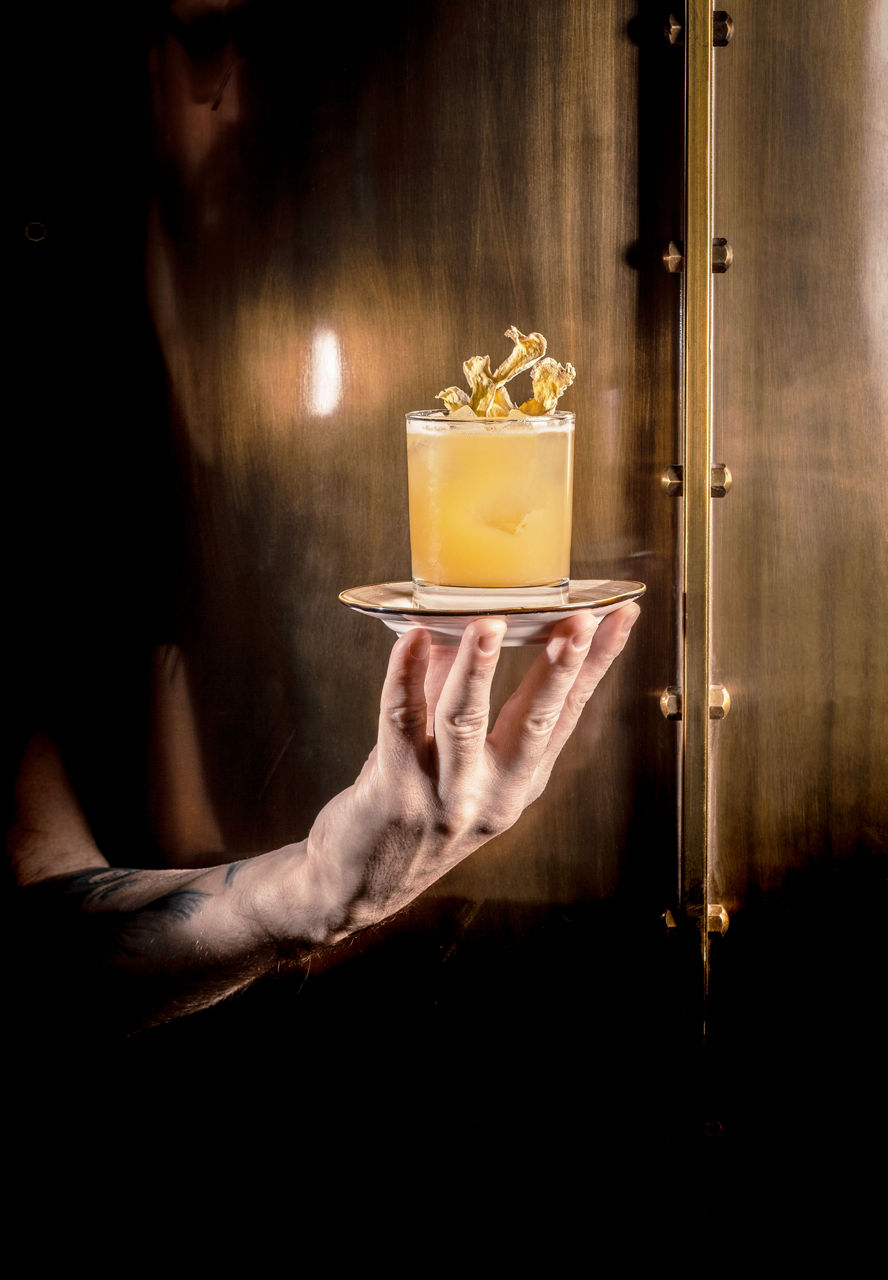
The modern speakeasy bar didn't come into vogue until 1999, when Milk & Honey opened in New York City. The brainchild of bartender Sasha Petraske, Milk & Honey ushered in a revitalization of the speakeasy concept, introducing many fixtures of the modern speakeasy aesthetic. These include:
- ● A quiet atmosphere.
- ● Rules of entry (e.g. "gentlemen must remove their hats").
- ● A hidden entrance behind a refrigerator, bookcase or other seemingly mundane object.
- ● Bartenders that look the part.
- ● Drinks with giant ice cubes.
Jazz Age speakeasies were home to raucous crowds and debauchery, but Milk & Honey was conceived as a quieter alternative to Manhattan's more boisterous bars.
Nowadays, speakeasies aren't just about imbibing in secret. They've played a major role in reviving cocktail culture, making mixology and specialty cocktails a key part of their formula. At Milk & Honey, for example, Petraske wanted to use only high-quality liquors and mixers, and even ice was customized for each cocktail.
Speakeasy bartenders are something like celebrity chefs, mixing up unique creations you wouldn't find at the typical Irish pub down the street. It's all part of the speakeasy ethos — discover something others don't know about, which can't be replicated.
Speakeasy Bar Vs. Alchemist Bar
What, exactly, differentiates a speakeasy bar from a regular bar? After all, there are tons of watering holes trying to capitalize on the speakeasy trend right now. Be warned: Just because a bar is located in a basement with a craft cocktail menu, that doesn't make it a speakeasy. Craft cocktail bars — often called "alchemist bars" due to the focus on mixology — are commonly confused with speakeasies.
Speakeasy Bars
Speakeasies may offer craft cocktails. The real differentiator is a more comprehensive, immersive experience. An authentic speakeasy evokes the atmosphere of Prohibition-era America. Often, they're tucked away behind a hidden staircase, an unassuming bookcase or refrigerator door, and may require a secret password or knock to enter. Once inside, it feels like stepping onto the set of a movie set in the 1920s, with period decor and staff decked out in outfits from the early 20th century. To find a proper speakeasy, you may even need to rely on word of mouth, much like in the old days.
Alchemist Bars
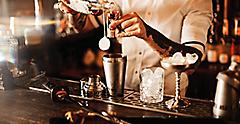
An alchemist bar can be located pretty much anywhere, has a wide range of interior and exterior aesthetics and likely doesn't require a dress code or any other custom rules of conduct. An alchemist bar hinges primarily on one thing: the drinks. While speakeasies may share this focus on mixology, it's the cornerstone of the whole alchemist bar experience.
Here, specialty cocktails are both the product and the entertainment. Patrons come to sample a variety of unique concoctions they likely can't find anywhere else, and more than that, they come to watch the bartender make it. On an alchemist bar menu, you'll find familiar liquors mixed with ingredients you may find unconventional, like cardamom, stone pine liqueur, apricot, cassis and fig leaf. The fine craft of cocktail concocting and presentation is the name of the game at alchemist bars.
Famous Speakeasies To Visit Near You
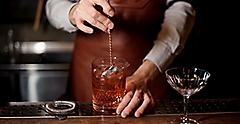
From California to Florida
Modern-day speakeasies have fun with the secrecy of this culture. Take, for example, Lock & Key in Los Angeles. You probably won't be able to find it on your first stroll down the street. Its location is only evident by an inconspicuous sign of a neon key. After you enter, you'll find yourself opposite a wall of doorknobs, only one of which opens the hidden door to the 20s-themed bar.
Apothecary 330 in Fort Lauderdale, Florida, is similarly tucked away. Sure, you wouldn't expect to find a speakeasy inside a pizzeria — that's exactly what makes this place so alluring. The high-end bar serves over 300 types of whiskey and is defined by its crystal chandeliers and red leather booths.
Luckily, not all speakeasies are only discoverable through whispers and secret handshakes. Many have become so popular that they're practically fixtures of the cities in which they're located. Simply searching the local maps for your city plus the word speakeasy will most likely return helpful results..
From New York to Illinois
Typically, when you think of speakeasies, you may imagine cities like New York and Chicago, where clandestine Prohibition-era drinking exploded in popularity. Fittingly, the PDT speakeasy in New York City is a cheeky acronym that stands for "Please Don't Tell." Located behind a phone booth in an East Village hot dog restaurant, the speakeasy is both upscale and incredibly popular with those in the know. To get in, you must enter the phone booth and dial 1 for the door to open.
In Chicago, keep an eye out for Violet Hour once the temporary closure is lifted. It’s hidden behind a beautiful painted mural in an alleyway. This high-end speakeasy is surrounded by plush decor and velvet curtains, with a wide range of craft cocktails to choose from.
Speakeasies on the International Stage
Don't forget about the international speakeasy scene, either. Ladies & Gents in London appears to be located in a public restroom, as with most speakeasies. Before you worry, not all is as it first seems. Enter through a repurposed Victorian public bathroom and treat yourself to craft cocktails made from the bar's own copper still. Once you see the immersive interior aesthetic, you won't believe you entered through a bathroom.
Speakeasy culture has made its way to Asia, too. Located behind a plain white door with no signage in Singapore, 28 HongKong Street is known for its true-to-history 20s-era decor and its drinks. Its bartenders are famous for their mixology skills and for signature cocktails such as the Galactic Booze Cruise — a drink with gin, Earl Grey tea, citrus, coconut milk and apple juice.
It’s Time to Cruise and Sip, the (Speak)Easy Way
Prohibition isn’t just a memory of American history; there are iconic speakeasies located all around the world. Step into a secret velvet-draped bar, and hearken back to the glitz and glamour of the roaring twenties. Sail and savor new tastes at the destination of your choice. Need a little help exploring? Start here:
- ● East Coast cruises
- ● West Coast cruises
- ● British Isles cruises