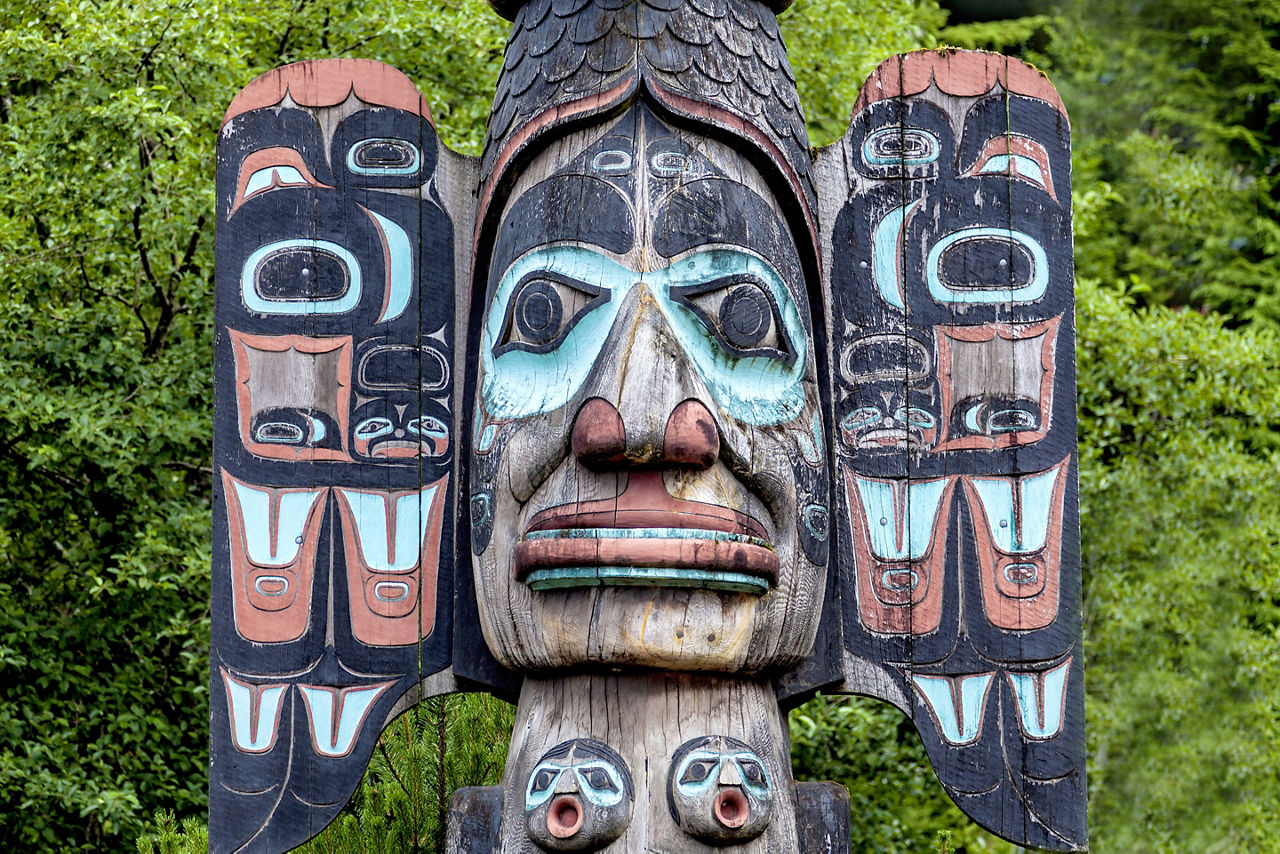
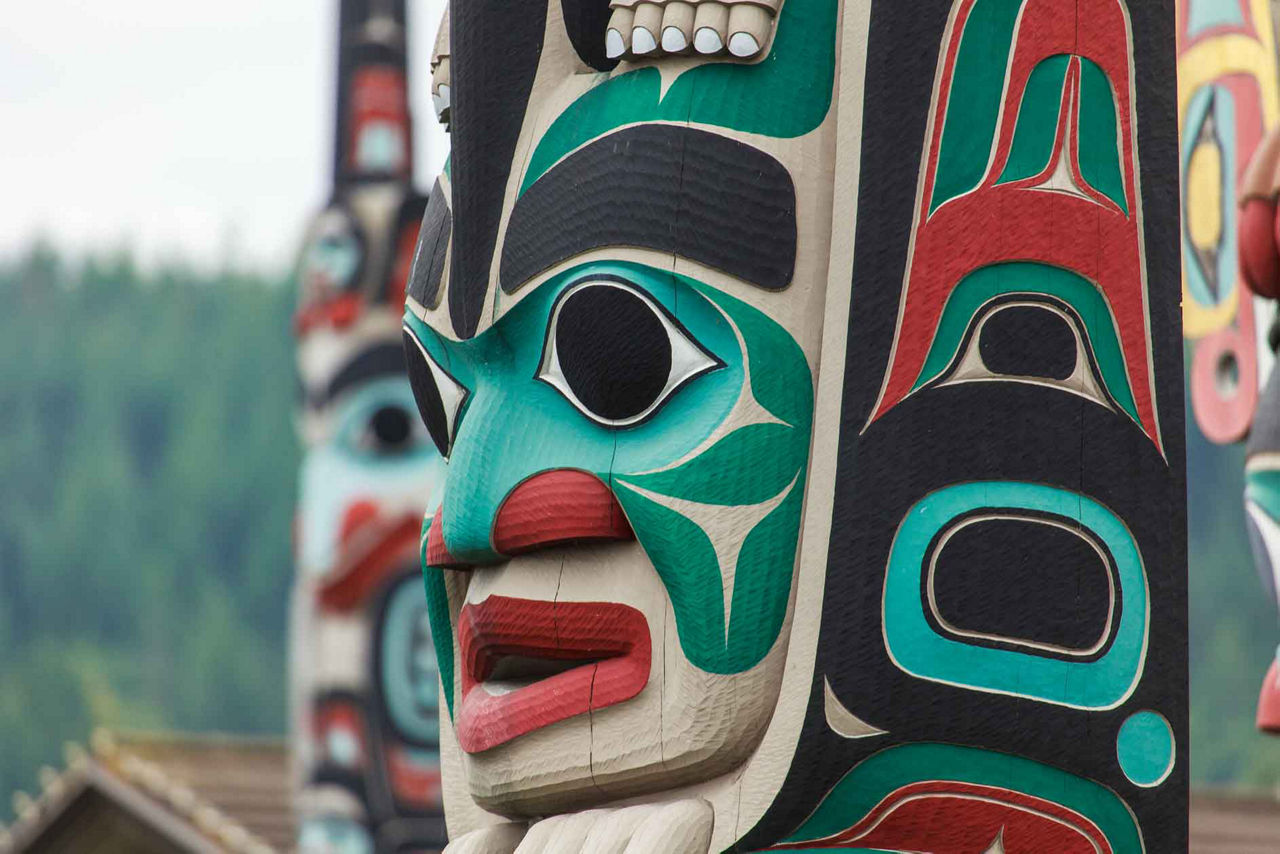
A totem pole is a carved wooden monument made by Indigenous peoples of North America’s Northwest Coast. Its figures can represent family crests, ancestors, important events or stories connected to a particular community. Each pole has its own purpose and meaning.
In Southeast Alaska, seeing these works of art can be a memorable part of your visit. A bear’s broad face, a bird’s curved beak or a carefully carved human figure may catch your eye first. Learning whose history the pole represents brings those details to life.
From understanding the carvings to finding places to see them, here’s an introduction to totem poles and the people who continue to create them.
What Do Totem Poles Represent?
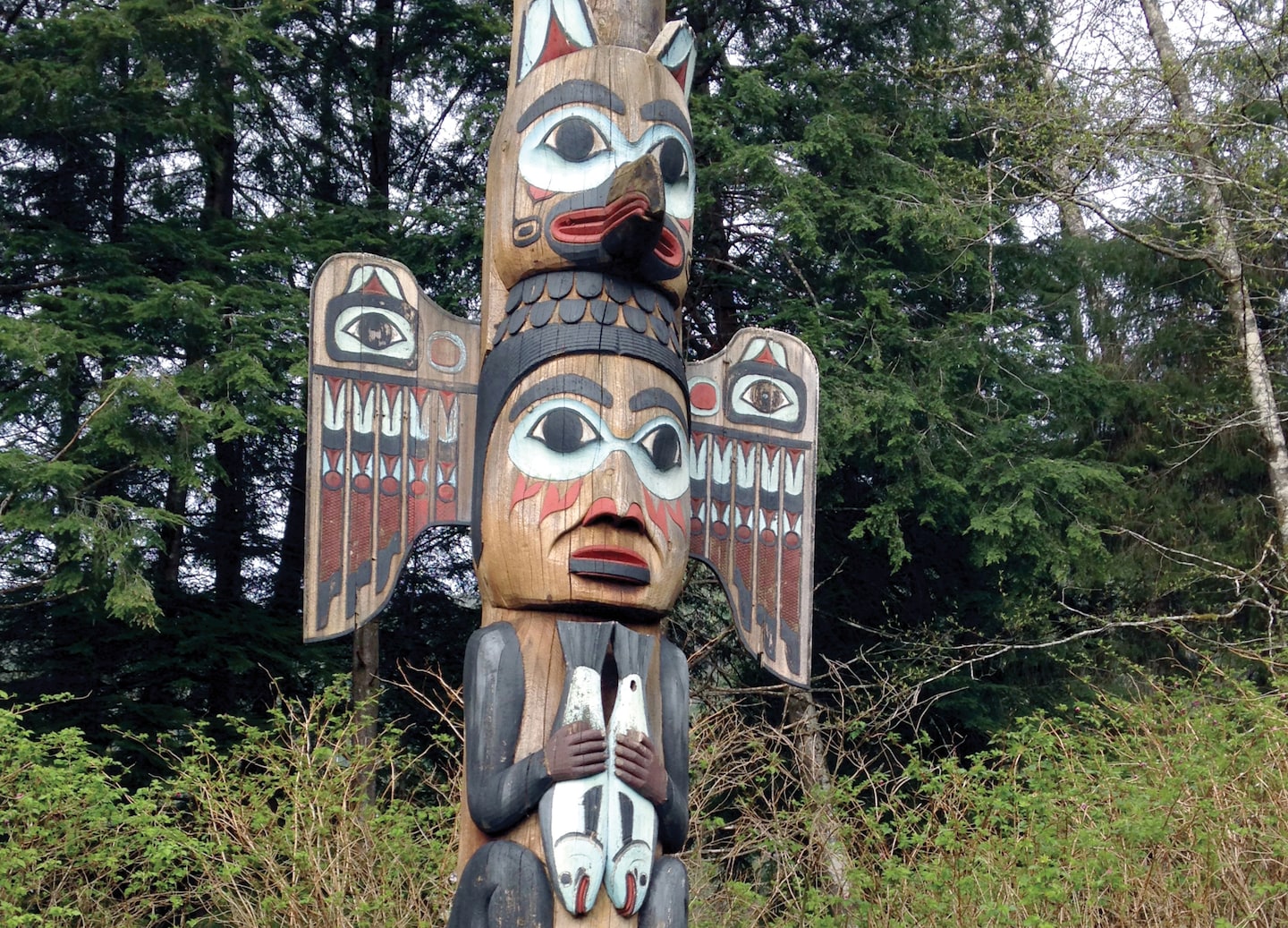
Totem poles can record ancestry, honor a person or share a family’s history. Some display crests, which are figures or designs associated with a particular clan or family.
Their purposes include:
- Showing family connections: Crests can identify ancestry and relationships.
- Honoring someone: Memorial poles commemorate a person and their life.
- Preserving histories: Carvings can refer to events important to a community.
- Sharing stories: Figures may connect to accounts passed between generations.
A pole’s meaning comes from the people and history behind it. Learning its name and listening to its story helps you appreciate much more than the carving alone.
Which Indigenous Peoples Make Totem Poles?
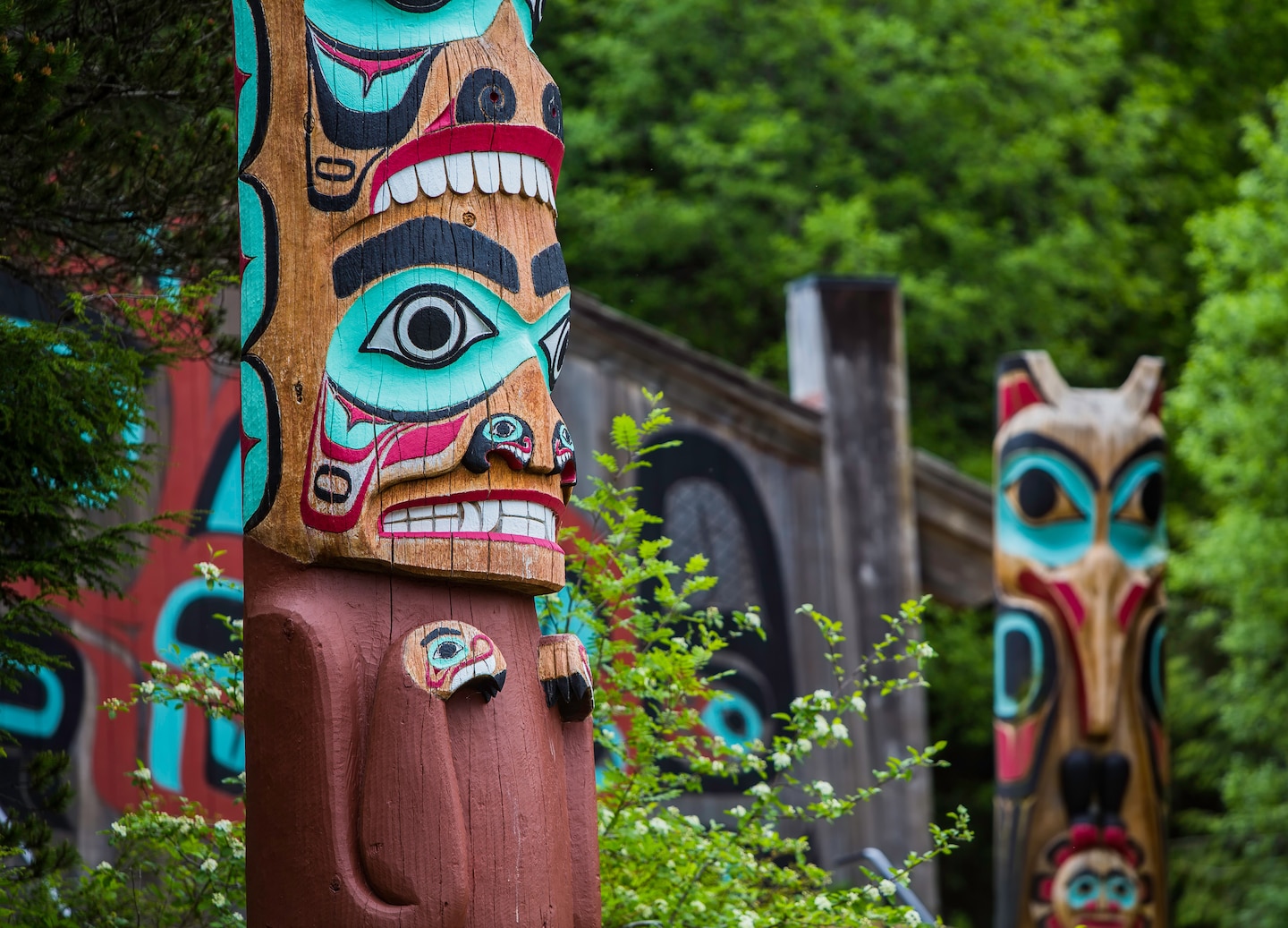
Totem pole carving is associated with several Indigenous peoples of the Northwest Coast, including the Tlingit, Haida and Tsimshian. The tradition extends through parts of Southeast Alaska and British Columbia, with distinct styles and practices among communities.
These are specific cultural traditions, rather than a custom shared by every Indigenous nation. A visit becomes more meaningful when you learn which people, clan and artist are connected to the work in front of you. The Burke Museum’s introduction to Northwest Coast totem poles explores these regional connections.
What Do the Animals on Totem Poles Mean?
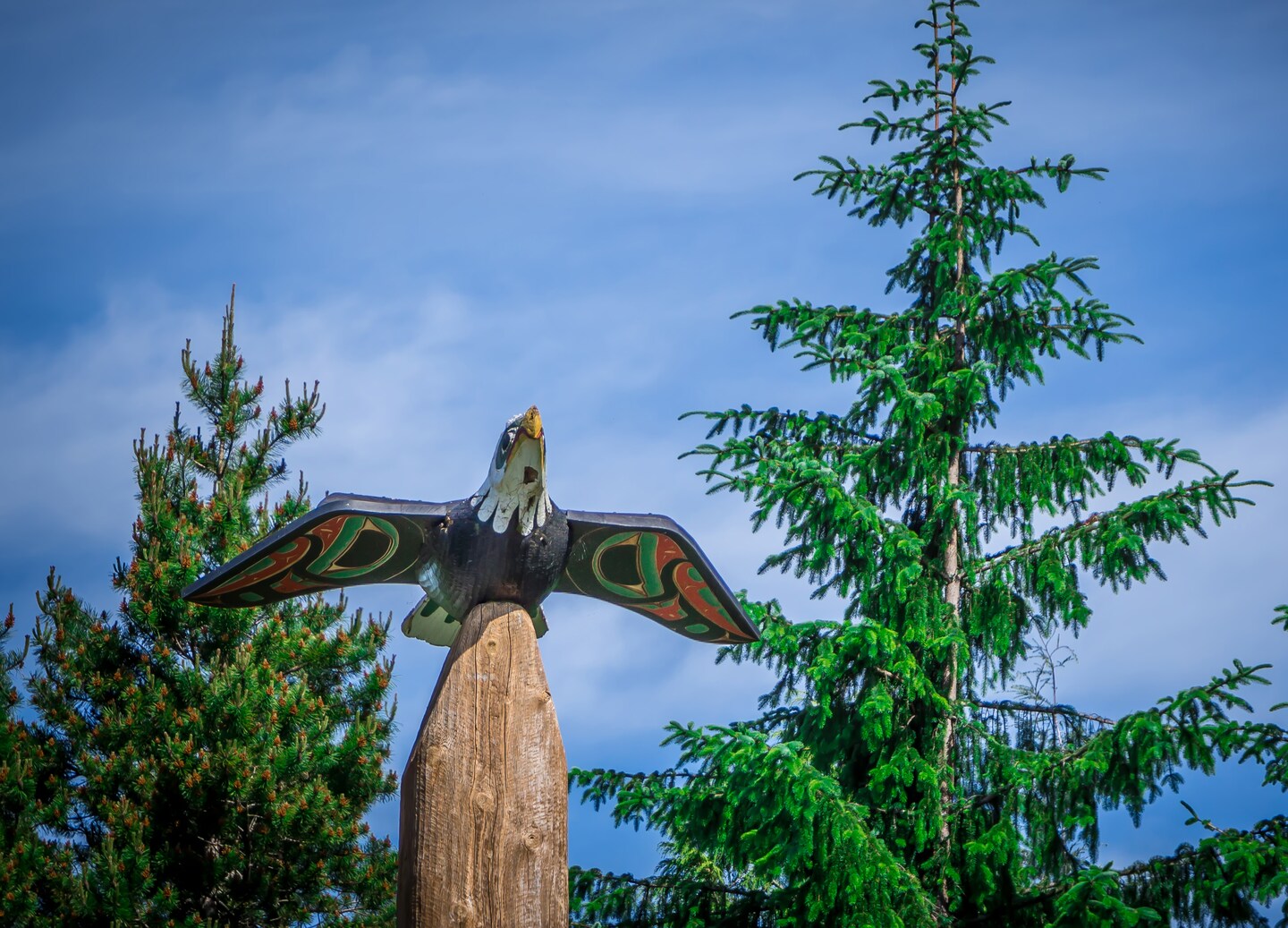
Animal figures on totem poles can represent clan crests or characters in a particular story. Their meanings depend on the community, family and pole, so there isn’t one simple animal-symbol guide that explains them all.
For example, a bear can be part of a family’s ancestry or a story connected to that family. Recognizing the animal is a starting point; learning why it appears on that pole reveals its significance.
A specific example comes from Juneau’s Sukteeneidí clan pole. Its crest depicts a dog salmon swimming through tall grass near a creek’s mouth. Clan members helped choose the crests for the pole, showing how closely the design connects to the people it represents.
When you visit, try asking your guide:
- Which clan or family does this pole represent?
- Who carved it?
- What story connects the figures?
- Why was it raised here?
These questions can turn a quick photo stop into one of the most interesting conversations of your day.
What Is the History of Totem Poles?
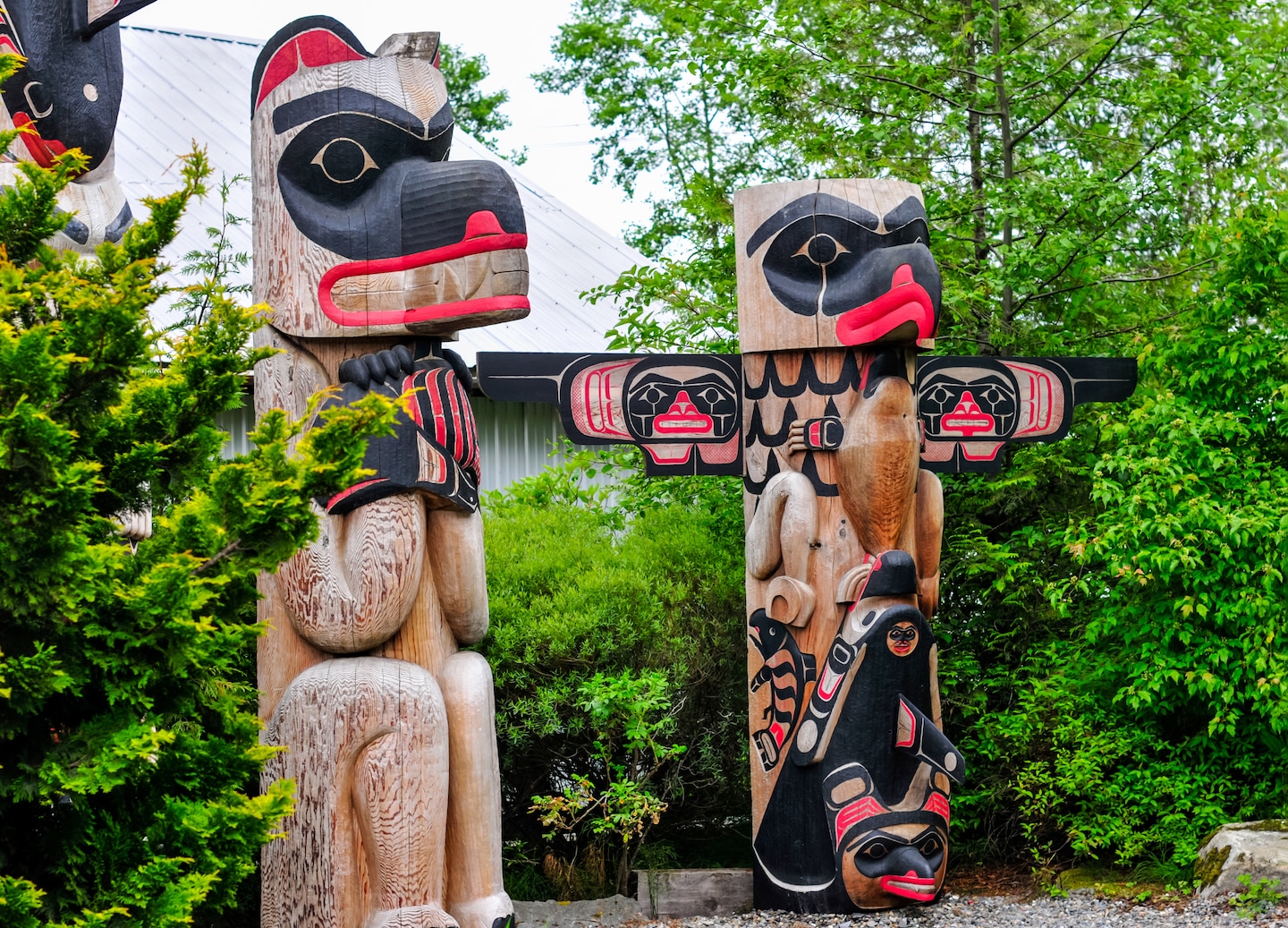
Totem poles belong to longstanding Northwest Coast carving traditions. Historic communities used monumental carvings to express family identity, honor people and mark important occasions. Carved posts also formed part of large houses.
Colonization disrupted these traditions. Disease, the removal of cultural belongings and pressure against Native ceremonies harmed communities and their ways of life. Artists and families continued working to preserve and renew their knowledge.
In Alaska during the 1930s, government-supported projects employed Native carvers to restore or recreate poles for public parks. At Totem Bight near Ketchikan, a project begun in 1938 also gave younger workers opportunities to learn from experienced carvers.
Today, new poles continue to be commissioned, carved and raised. They are part of living cultures, with artists passing their skills to the next generation.
How Are Totem Poles Made?
Totem poles are often carved from large cedar logs. Creating one involves both artistic skill and knowledge of the figures and histories it will represent.
The work may include:
- Planning the design: Artists work with the people commissioning the pole to establish its purpose and figures.
- Preparing the log: The wood is shaped into a surface ready for carving.
- Carving the figures: The artist develops faces, bodies and other details in the wood.
- Finishing the work: Depending on the design, paint may highlight parts of the carving.
- Raising the pole: The completed work is installed, sometimes with a community ceremony.
Projects can also bring master carvers and apprentices together. Juneau’s Kootéeyaa Deiyí Totem Pole Trail project includes this kind of teaching, helping younger artists build their skills through hands-on work.
Where Can You See Totem Poles in Alaska?
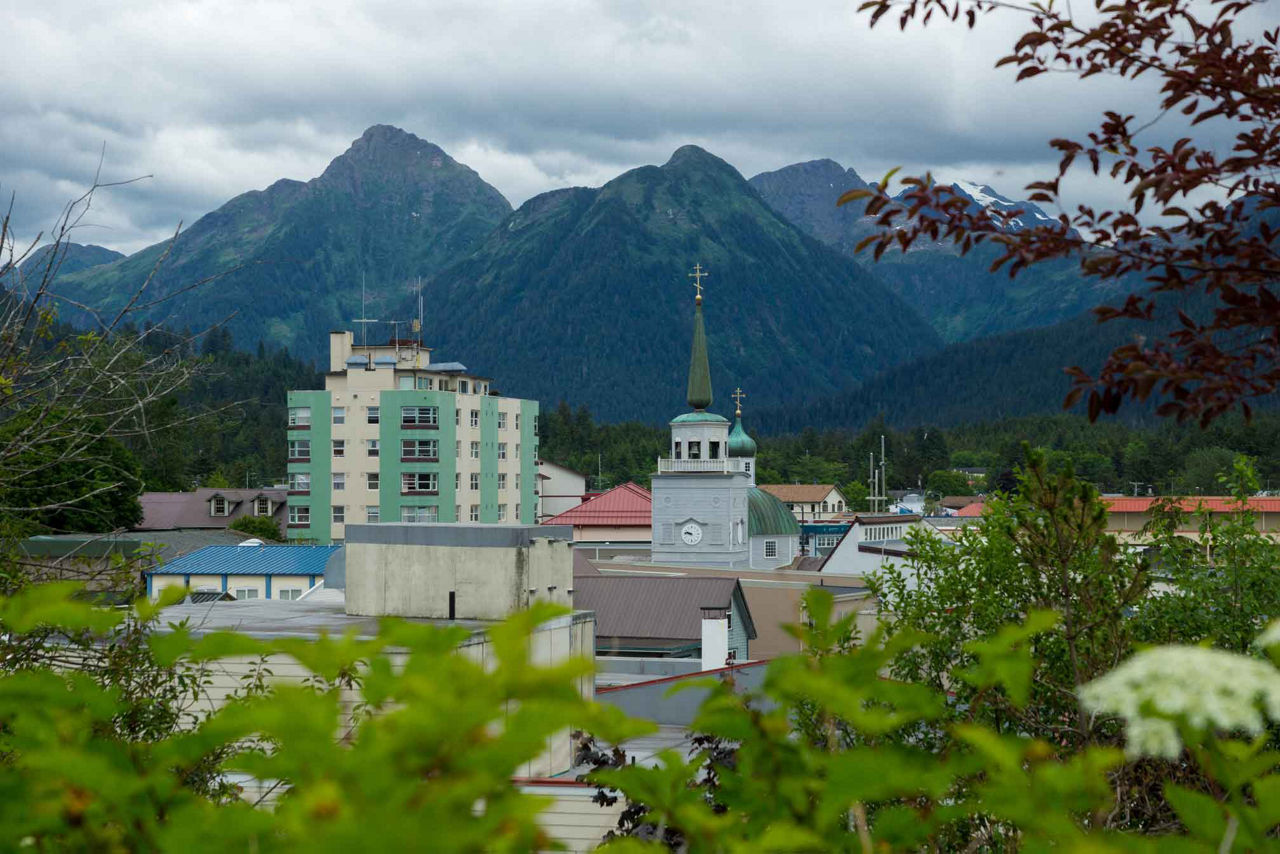
Southeast Alaska offers several places to see totem poles and learn about the cultures behind them. Ketchikan, Sitka and Juneau each provide different experiences.
Ketchikan and Saxman
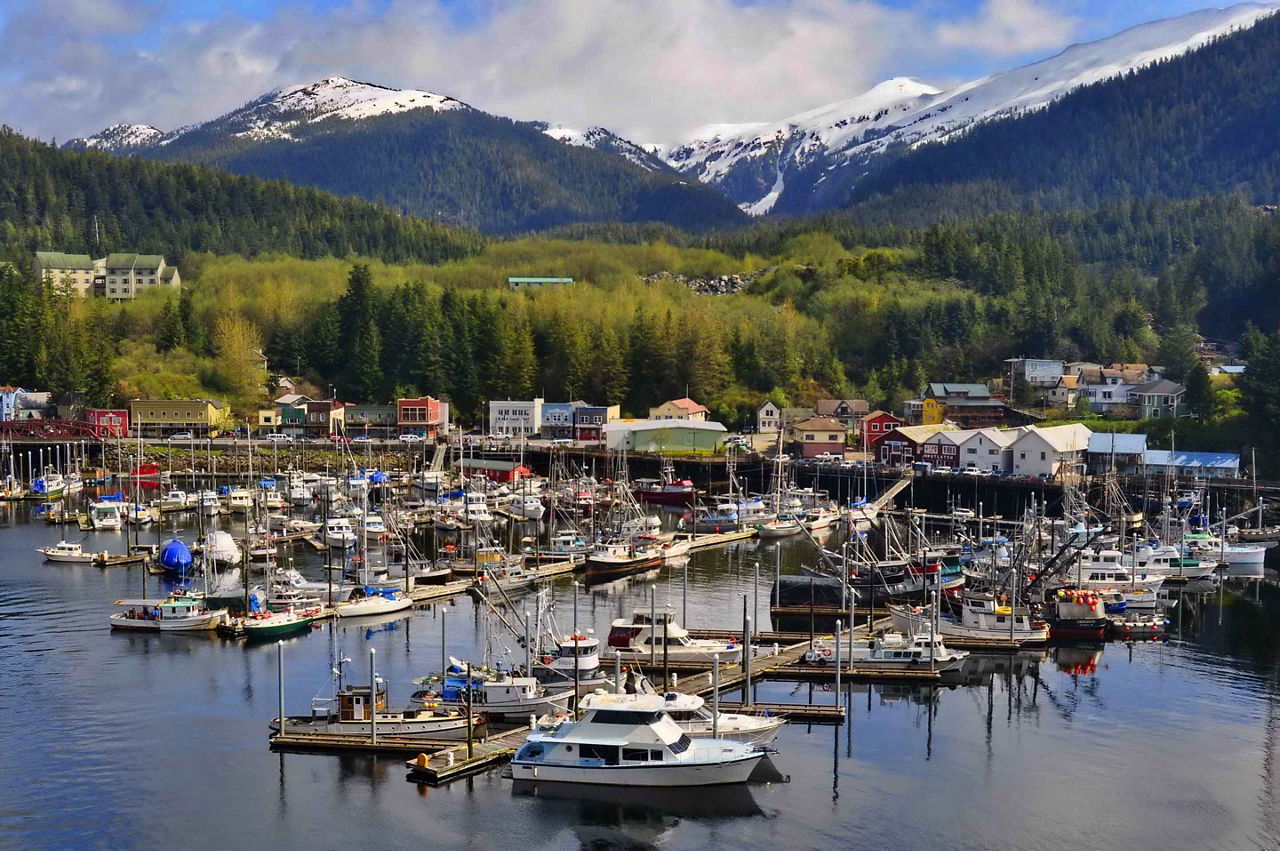
The Ketchikan area is known for its totem poles and cultural attractions. Visits to Saxman Native Village and local totem parks can introduce travelers to carvings and their histories.
Totem Bight State Historical Park combines poles with a community house in a coastal setting. Learning about the park’s carving and restoration history adds another layer to the visit.
Sitka National Historical Park

At Sitka National Historical Park, poles carved by Tlingit and Haida artists stand along wooded trails. The setting offers a chance to combine an outdoor walk with time spent learning about individual carvings.
Interpretive information helps explain the poles and the histories connected to them.
Juneau’s Totem Pole Trail
Juneau’s Kootéeyaa Deiyí, or Totem Pole Trail, features work by Tlingit, Haida and Tsimshian artists. The waterfront project shares clan histories, crests and migrations through monumental carvings and interpretive signs.
It’s also an example of how new public art continues to celebrate Indigenous culture in Alaska today.
Seeing Totem Poles on a Ketchikan Shore Excursion
A guided excursion can help you understand the carvings while exploring more of the surrounding area. Royal Caribbean’s Ketchikan options include outings that combine totem parks with local sightseeing.
Potlatch Totem Park and City Highlights
Potlatch Totem Park and City Highlights includes a visit to the park on the Tongass Narrows, where guests explore carvings and learn about local Native culture.
The outing also includes a narrated drive through downtown Ketchikan. It’s an option for travelers who want to combine an introduction to the artwork with a broader look at the city.
Historic Ketchikan Trolley
Historic Ketchikan Trolley combines a narrated trolley ride with a visit to Potlatch Totem Park. During the park stop, the driver-guide shares stories about the poles as guests take a short trail walk.
This outing brings together local history, photography and time among the carvings. Excursion availability and inclusions vary by sailing.
Why Learn About Totem Poles in Alaska?
Seeing a totem pole is a chance to appreciate both the artist’s work and the history it carries. A guide’s explanation can draw your attention to a small detail, introduce you to a clan’s story or help you understand why a pole matters to its community.
As you explore cruises to Ketchikan, Alaska, consider making time for a cultural outing. The carvings may be what first catch your eye, but the stories can be what you remember most.
Frequently Asked Questions About Totem Poles
-
Are totem poles only found in Alaska?
No. Totem pole traditions extend across parts of the Northwest Coast, including British Columbia. Poles also appear in museums and public spaces elsewhere, so their location today may differ from the home community of the artist or family they represent.
-
Does every totem pole tell a story?
Many poles refer to stories or histories, while others emphasize ancestry, commemorate a person or display family crests. Learning why a particular pole was created is the best way to understand its purpose.
-
Are totem poles still made today?
Yes. Indigenous artists continue to carve and raise new poles. Projects such as Juneau’s Totem Pole Trail bring experienced artists and apprentices together, supporting both new artwork and the sharing of traditional skills.
-
Can you see totem poles on an Alaska cruise?
Yes. Depending on your itinerary, ports such as Ketchikan, Sitka and Juneau offer opportunities to see totem poles. Royal Caribbean’s Ketchikan excursions include visits to local totem parks, with options that combine the visit with city sightseeing.
-
What happens on a totem pole excursion?
A totem pole excursion typically includes time viewing carvings while a guide explains their background. Some outings also include a trail walk or sightseeing. Royal Caribbean’s Historic Ketchikan Trolley includes a park visit and a short walk with stories shared by the driver-guide.
-
Can you watch an artist carve a totem pole?
Some experiences include a carving center or an opportunity to see an artist at work. Other visits focus on completed poles. Choose an excursion that specifically lists a carving demonstration if watching the process is a priority.
Planning a Trip to Ketchikan?
Want to learn more about Ketchikan? Check out these guides to plan your next trip:
- Ketchikan, Alaska Shore Excursions - Explore cultural outings, wildlife encounters and outdoor adventures.
- Cultural Excursions in Ketchikan - Discover Native heritage, totem poles and local traditions.
- Historical Excursions in Ketchikan - Learn about the city through its cultural sites and historic attractions.