By Chantae Reden | Published on January 29, 2026
Sailing the Caribbean, you'll discover hundreds of sunken ships scattered throughout the seas with hulls taken over by marine life. The original Caribbean shipwrecks date back to the 17th and 18th centuries and are relics from the Golden Age of Piracy. Today, their wooden structures have been largely reclaimed by the sea. Other famous underwater shipwrecks include the surviving steel hulls of mighty warships, super yachts, humble tugboats and giant freighters that linger on the seabed. If you’re curious to see some old pirate shipwrecks for yourself, keep reading to learn about wreck diving in the Caribbean and how to get there on a Royal Caribbean cruise.
Key Takeaways
- ● The Caribbean offers some of the world’s best wreck diving, from shallow snorkel sites to deep-water explorations.
- ● Many shipwrecks have transformed into artificial reefs, creating thriving habitats for sea turtles, reef fish, corals and more.
- ● Both beginner and advanced divers can find shipwrecks suited to their skill level.
- ● Exploring shipwrecks isn’t just about diving — it’s a way to connect with history, marine life and Caribbean culture.
- ● A Royal Caribbean cruise to the Caribbean gives you the chance to visit multiple world-famous wreck sites in one unforgettable trip.
Top Shipwrecks of the Caribbean
The Caribbean is one of the best places in the world to go wreck diving, either as a free diver or scuba diver. From century-old warships with coral-encrusted cannons to modern freighters with barely an algae patch on their hull, there are many types of shipwrecks to admire.
Here are some of the must-see shipwrecks you can explore on your Royal Caribbean cruise:
- ● SS Stavronikita, Barbados: 365-foot freighter turned artificial reef, cloaked in marine life. Best for: Intermediate to advanced divers.
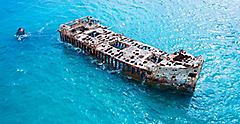
- ● SS Sapona, The Bahamas: Hurricane-wrecked cargo steamer, partly above water and easy to access. Best for: Snorkelers and beginner divers.
- ● SS Kittiwake, Cayman Islands: Submarine rescue ship with crystal-clear waters and multiple decks to explore. Best for: All levels — snorkelers, free divers and scuba divers.
- ● MV Captain Keith Tibbetts, Cayman Islands: Dramatic 330-foot frigate with hurricane damage and vibrant reef life. Best for: Experienced divers.
- ● Antilla “Ghost Ship,” Aruba: 400-foot German freighter scuttled in WWII, one of the largest wrecks in the Caribbean. Best for: History buffs and underwater photographers.
- ● Carlisle Bay Wrecks, Barbados: A collection of tugboats and freighters close together in shallow waters. Best for: Beginner divers and snorkelers.
The SS Stavronikita Freighter, Barbados
Barbados is often called the shipwreck capital of the Caribbean. It has some of the best diving in the Caribbean, too! Perhaps the most famous Barbados shipwreck out of the hundreds in its waters is the SS Stavronikita, a 365-foot Greek freighter that was sunk in the late 1970s as an artificial reef. It has since been a refuge for all types of marine life. Impressive gorgonian fans cloak the ship's upright hull, with reef fish of all sizes swimming throughout the wreck alongside sea turtles and barracudas nearby. The ship’s mast starts at a depth of 30 feet, with the stern at 100 feet, making it an ideal wreck dive for intermediate to experienced divers.
The SS Sapona, The Bahamas
The SS Sapona was once a powerful 282-foot cargo steamer, cruising the waters of the Caribbean during World War I. In 1926, a severe hurricane caused the ship to veer off course and run aground near Bimini, where it has rested since. Now, it's one of the most fascinating shipwrecks in The Bahamas.
Above water, the creaking, rusty hull of SS Sapona looks like a skeleton of its former self, but peer underneath the water and you’ll find it teeming with sea life. Because the wreck dive starts at the water's surface, it's a perfect place for free divers and snorkelers to warm up before going deeper. Scuba divers can scour the bottom in search of frog fish, nudibranchs, starfish and crabs. Reef sharks, grouper, sea turtles and rays of various types can also be spotted, often checking out the wreck.
The SS Kittiwake, Cayman Islands
To many ocean goers, the SS Kittiwake is the Goldilocks of Caribbean shipwrecks. It's shallow enough for recreational free divers and snorkelers to explore, yet it has enough swim-throughs to keep even the most well-travelled scuba divers interested. The SS Kittiwake is one of the most famous shipwrecks underwater due to its intact condition. Open-water divers can penetrate three of the five decks, while experienced wreck divers can venture to all five. In its former life, the 251-foot SS Kittiwake was a submarine rescue ship built in 1949 and retired in 1994. In 2011, the ship was cleared of potential environmental contaminants and sunk in the white sands off Seven Mile Beach, Grand Cayman. Visibility here is often crystal clear, so save space in your luggage for an underwater camera.
My Captain Keith Tibbetts, Cayman Islands
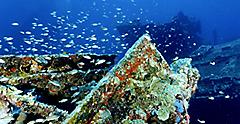
The MV Captain Keith Tibbetts is one of the giant shipwrecks in the Caribbean. This 330-foot frigate was built by the Soviet Union in 1984 to be used by the Cuban navy. In 1996, it was sold to the Cayman Islands, which sank the ship between the islands of Little Cayman and Cayman Brac. The wreck was later hit by a hurricane in the early 2000s, further adding to its old shipwreck appeal. Strong swimmers can reach the wreck on a calm day from the north side of Cayman Brac, where regular boat trips depart from the islands.
While this shipwreck was seemingly unwanted by its former owners, it's become a beloved home to the groupers, scorpionfish, corals, sponges, reef fish and rays who have taken a liking to the security that the ship's turret guns provide. Experienced divers can penetrate the wreck via large entry points in its sides.
Antilla: The Ghost Ship of Aruba
What is the largest shipwreck in the Caribbean? At 400 feet long, the Antilla is thought to be one of the largest and most famous Caribbean shipwrecks. It's often referred to as the Ghost Ship by the dive community thanks to its odd demise. It was built in 1939 in Germany for one of the largest German shipping companies at the time. In 1940, the Antilla was anchored off Aruba, which was then a Dutch colony. Over on Europe's mainland, Germany invaded the Netherlands, and the Antilla suddenly found itself in hot water. Dutch mariners attempted to board the Antilla, though the German captain refused to let them on board. Instead, the captain ordered all valves to be open and then set fire to his own ship. Crew members on board quickly abandoned the ship and were promptly arrested by the Dutch. No lives were lost in this shipwreck fiasco.
Today, the Antilla is one of the most scenic underwater shipwrecks to explore. A few parts of it teeter just above the ocean's surface, serving as a haven for seafaring birds. From the water, you can watch as pelicans dive for fish, and on the wreck, you'll find an array of corals, carpets of anemones, crustaceans, moray eels and octopus. Reef sharks regularly cruise by, too.
Carlisle Bay Wrecks, Barbados
Beginner divers (both scuba and free divers) can hop from one wreck to another at Carlisle Bay. Here, you'll find many famous sunken ships, such as the Berwyn, Cornwallis, Bajan Queen, Fox, Eilon and C-Trek. The Berwyn, a French tugboat, was sunk over a century ago after coming under fire during World War I. Rumors claim the crew onboard wrecked the boat intentionally, fleeing the ship and taking refuge in the pubs of Barbados. It's customary to toast to the former crewmates with a rum punch after your dive.
For free divers and snorkelers, there are few better shipwrecks in the Caribbean to discover than the Bajan Queen. Also in Carlisle Bay, this 120-foot tugboat was sunk in 2002 and has yet to fully be overtaken by the elements. Bajan Queen is also one of the most accessible shipwrecks in the Caribbean, starting just a few feet under the ocean's surface. Sea turtles, rays and reef sharks often cruise around its hull, and experienced divers can venture to its engine room.
Diving Among Shipwrecks: An Inside Look
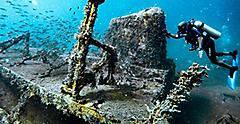
It's eerie to see a sunken ship on the sea floor. On a clear day, rays of sunlight pierce the blue water like fishing line, wrapping around the shipwreck's hull as if to lure the ship back to where it belongs. After a ship sinks in the Caribbean, it becomes a new habitat for aquatic life. Coral frags attach themselves to the hull, and fish take shelter in their shadows.
As a scuba diver and free diver with hundreds of dives under my fins, I've learned that diving among shipwrecks can offer wildly different perspectives of the same ship. No matter how you do it, exploring a wreck dive site feels like a humbling journey to a bygone era.
With a tank of air, scuba divers can examine the finer details of a ship, often penetrating its interior. It's a peek into the past, with clues of what life on board was like hidden around every corner. The weightlessness as you move through the vessel feels almost otherworldly. Dive with scuba gear to linger and admire the various corals, anemones and critters tucked between the crags of the ship reef. You'll feel like you're examining the ship through the lens of a magnifying glass.
Free divers only explore shipwrecks one breath at a time, taking a break at the water's surface in between each dive. With no loud breathing apparatus or bubbles to scare marine life away, sea creatures often come much closer to free divers than scuba divers. If visibility is good, you can often see the full scale of the ship from the surface. Because free divers must be mindful of their bodies at every moment, diving at a shipwreck is as much of an inner journey as it is an outer one.
I only experienced the difference between the two types of diving after I'd been free diving at the same shipwreck for weeks. I thought I knew the outline well and could envision every major part of the wreck with my mind's eye. Once I put on my scuba gear, I realized I didn't know the layout of the ship as well as I'd thought. Reef sharks and sea turtles who'd swum close to me as a free diver now gave a wide berth thanks to my bubbles. With a tank, I could slow down and watch small happenings in the reef, like anemonefish protecting their young in the safety of their anemone, tucked behind the ship's wheel.
What To Know About Wreck Diving
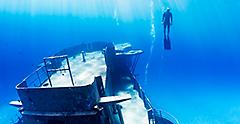
No matter if you're a seasoned free diver or a snorkeler who feels best while wearing a life vest, there are shipwrecks for you to enjoy. Nearly every port of call in the Caribbean is home to a scuba diving center, where you can take a range of courses, including one-day discovery sessions and dive instructor training. Likewise, free diving is becoming popular throughout the archipelago, with free diving schools on Bonaire, Belize, Roatán, The Bahamas and the Cayman Islands. Best of all, many dive centers conduct their dives at one of the nearby wreck sites — a win for anyone who enjoys a bit of culture with their coursework.
When you're looking for a shipwreck to dive, depth is usually the most important factor. Choose a shipwreck that is well within your diving limits, so you can venture out without worrying about whether you'll run out of air. Diving with a trusted guide will help you discover nuances of the wreck that you might not be able to find on your own.
Discover Top Shipwrecks on Your Next Cruise
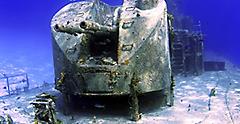
Exploring famous pirate shipwrecks in the Caribbean is more than just a dive — it’s a chance to step back in time, discover vibrant marine life and create unforgettable memories beneath the waves. Whether you’re snorkeling a shallow wreck or venturing deep into a sunken freighter, every site tells a unique story of adventure and resilience.
With a Royal Caribbean cruise, you don’t just sail the Caribbean — you unlock access to some of the region’s most legendary shipwrecks, all while enjoying world-class comfort on board. Ready to add a little mystery and wonder to your next vacation?

Get Royal Deals, Sign Up Today

Getting There
Explore Our Most Affordable Itineraries
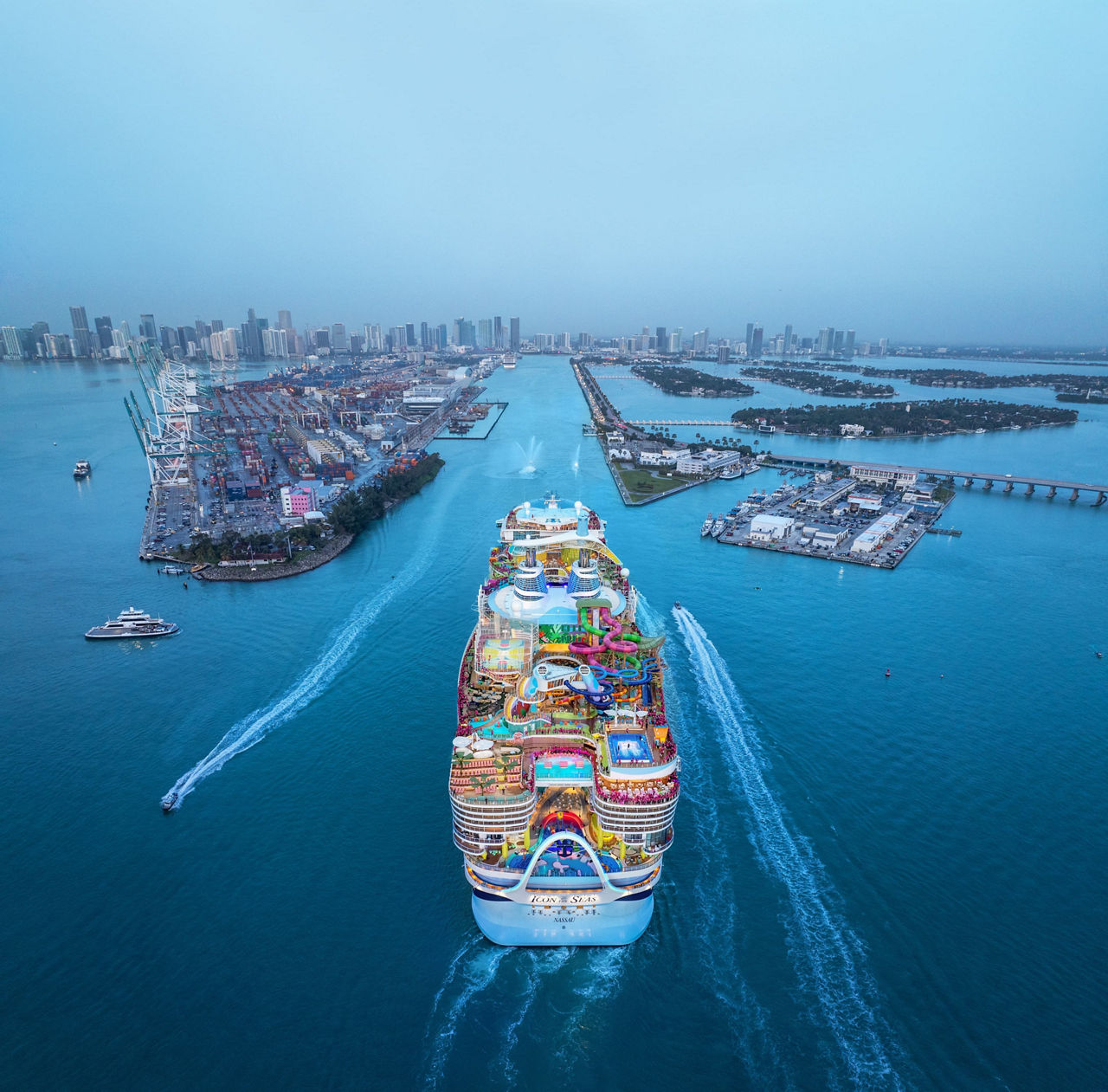
Ready to dive these shipwrecks for yourself? Set off on a cruise to the Caribbean onboard Icon of the Seas℠.
RELATED ARTICLES