By Taylor Fuller | Published: July 8, 2022 | Updated: February 24, 2026
The wind is blowing around you. The sky is clear and you can see all of Antigua, the capital of Guatemala, below. You're 12,340 feet above sea level, and while the air is thin because of the altitude, it's the view that's taking your breath away. You've just spent the day hiking up Volcán de Agua and are feeling highly accomplished and content.
If you want to experience Antigua hiking, Volcán de Agua is one for the bucket list. This guide explores the volcanoes in Antigua, how to plan a hike and what to expect when you arrive at the port.
Key Takeaways: Explore the Volcanoes in Antigua
- ● Fuego: Volcán de Fuego, or Chi Q'aq, is an active stratovolcano. Today, it erupts with small bouts of ash emissions and lava flow approximately every 15 minutes, making it a spectacular sight.
- ● Acatenango: Acatenango is a dormant stratovolcano that began forming over 200,000 years ago. There are plenty of opportunities to hike Acatenango, but standing at 13,045 feet above sea level, come prepared.
- ● Volcán de Agua: Agua was called Hunahpu by the Maya and was considered sacred. It got the name Agua ("water" in Spanish) after a mudslide in the 1500s destroyed Ciudad Vieja.
- ● Explore cruises to Guatemala to experience the micro-eruptions and macro hikes on these volcanoes.
The History of Volcanoes in Antigua
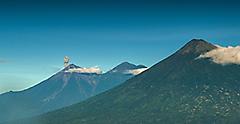
Guatemala is a Central American country known for its mountains, beaches and volcanoes. So, just how many volcanoes are in Guatemala? There’s a total of 37, of which 22 have been active in the last 10,000 years. An active volcano is either erupting or is likely to erupt in the near future.
The Volcano Santa Maria in Guatemala was one of the significant eruptions of the 20th century, occurring in October 1902, following a series of earthquakes in the months preceding it. Guatemala also has extinct volcanoes, meaning it hasn't had an eruption in the last 10,000 years of recorded history. An extinct volcano often no longer has a lava supply and isn’t considered a geological “hot spot.”
Finally, there are also dormant volcanoes in Guatemala, which are still technically active but have not erupted for a very long time. However, they could still erupt again in the future, in a few years or a few centuries.
The area near Antigua has a number of volcanoes you can visit: Agua, Fuego and Acatenango.
Fuego
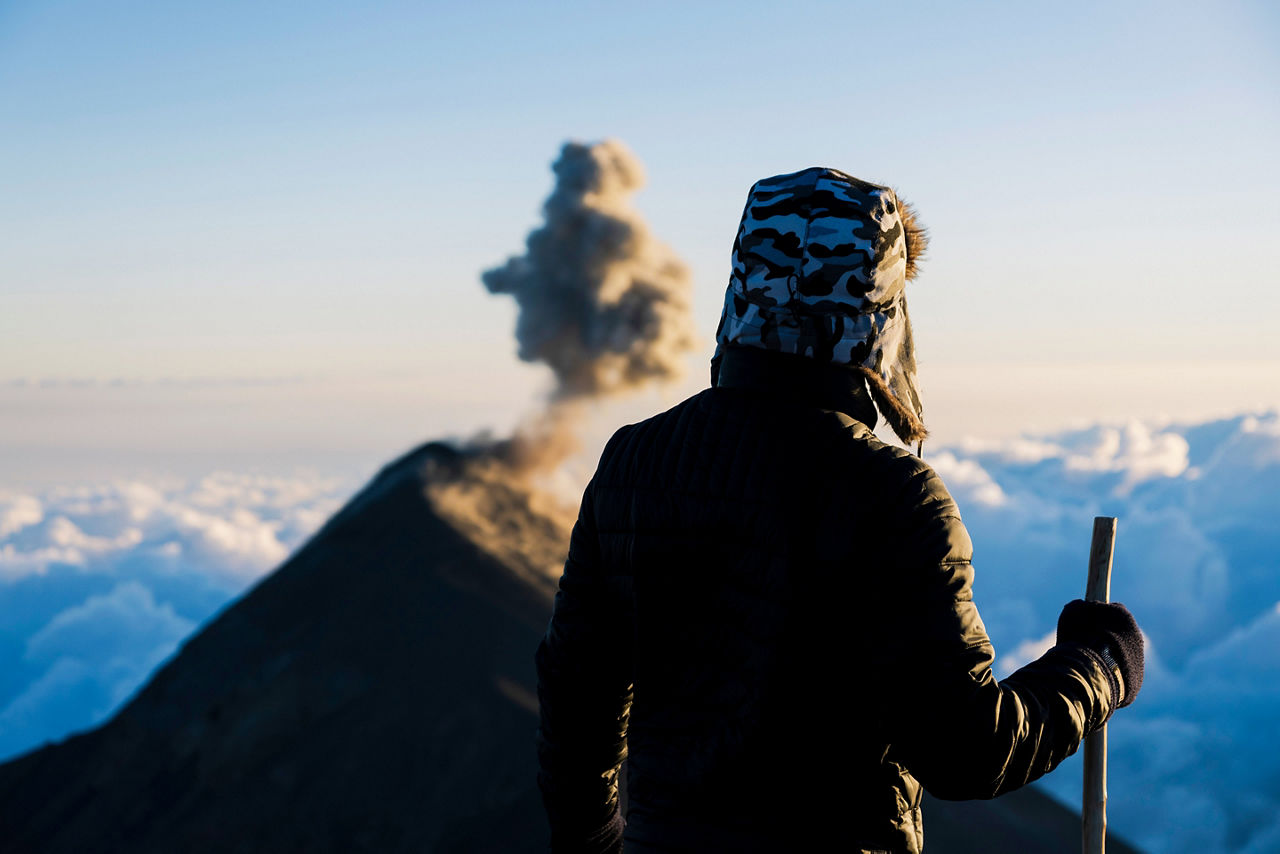
Volcán de Fuego, or Chi Q'aq, is an active volcano in Guatemala. It’s classified as a stratovolcano (made up of alternate layers of lava and ash) and is located on the borders of Chimaltenango, Escuintla and Sacatepéquez departments.
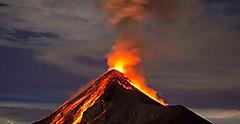
Fuego’s most recent period of activity began in 1999, and even today, it erupts with small bouts of ash emissions and lava flows approximately every 15 minutes, making it a spectacular sight. While tours still visit Fuego, there are safety concerns around hiking on this active volcano.
Acatenango
Acatenango is a dormant stratovolcano located within the Sierra Madre mountain range near Antigua. Its formation began over 200,000 years ago and has had numerous eruptions during its history. Double-peaked Acatenango and Fuego are considered twin volcanoes because of their proximity within the same volcano complex.
There are plenty of opportunities to hike Acatenango, but standing at 13,045 feet above sea level, it’s not for the faint-hearted.
Volcán de Agua
Volcán de Agua was called Hunahpu by the Maya and was considered sacred. It got the name Agua ("water" in Spanish) after a mudslide in the 1500s destroyed Ciudad Vieja, the original capital of Guatemala.
People historically believed a small crater lake was once atop Agua: They theorized that an earthquake caused the lake to empty out, which then caused the mudslide. In 1895, however, archaeologists Anne Cary Maudslay and Alfred Percival Maudslay hiked the volcano and determined that this was geologically impossible.
If you’re cruising to Antigua, Volcán de Agua is a popular hike — and a great way to experience the surrounding oceanic, mountainous and volcanic views. Here’s what to expect.
How To Visit Guatemala: Agua Volcano Hike
When deciding on an Antigua, Guatemala, volcano hike, Agua is a popular choice because you can do it in a day. It's a little bit complicated to visit this volcano, as you have to register at the Santa Maria de Jesus before beginning your hike. You’ll need either a tour guide or a police officer accompanying you due to the robbers who often target climbers. (Most people who have climbed the volcano report no incidents of this kind.) If you’re cruising to Guatemala for the first time, keep in mind it’s better to reserve a few days early to confirm the trip ahead of time.
There is a trail that starts behind a cemetery. You'll follow a paved road for a bit, and then it will change into a small path. Keep in mind, this isn't the easiest hike — it’s often considered extreme hiking. Volcanic terrain is steep, and the last mile or so is filled with switchbacks and vertical climbs. If you've never hiked before, you shouldn't partake in this hike as the altitude and steepness require some experience.
It takes an average of eight hours to complete the Volcán de Agua hike and you’ll likely reach the summit in about five. It's much faster on your return — just be mindful of the rocks beneath your feet so you don't slip. If you're not interested in hiking the entire way, you can take a 4x4 up the side of the volcano to a parking lot where you begin climbing. You will have to pay to leave your vehicle.
When To Visit: Antigua Travel Vacation
If you want to get involved in Antigua hiking and plan it with your getaway cruise to Guatemala, the ideal time for visiting Volcán de Agua is between November and April. This is the dry season, and while it may be a bit cooler, you have better chances of clear weather. If you choose to hike during the wet season, which runs between May and October, the hike will be much more difficult as the trail gets muddy and slippery.
What To Wear
Layers are key! It will be a lot warmer at the base of the hike. A windbreaker, good base layers and hiking boots are important. If you're hiking in the winter, be sure to check the weather ahead of time. You need to make sure you're wearing the correct clothes to keep you warm at the summit.
View From the Top
During your ascent to the top of Volcán de Agua, you'll see insanely beautiful views. If you are blessed with blue skies, you might see Volcan de Fuego erupting and the double peaks of Volcan de Pacaya in the distance. When you arrive at the summit, you will probably notice a lot of power lines, but don't let that discourage you! If you continue walking around, you will find uninterrupted views.
Remember that the air will be incredibly thin on the top due to the altitude. Make sure you take your time and drink plenty of water, and if you need cover, there is a small shelter where you can avoid the wind for a bit.
What To Do After Your Hike In Antigua

Thankfully, Antigua is only a 30-minute drive from Volcán de Agua. Don't miss out on spending some time in the capital city as part of your Guatemala cruise vacation.
Fuel Up
You'll likely be hungry after your hike, so be sure to fill up on some tasty local dishes. The food in Antigua is pretty diverse. Go for a few Guatemalan classics like plato tipico, corn tortillas served with black beans, rice and chicken or beef.
Sink your teeth into pepián, an indulgent chicken stew with a distinctive smoky taste. It's made with a variety of spices and pumpkin seeds and served with rice. If you didn't fill up on that stew, why not try another one? Jocón is a delicious chicken and tomatillo stew. Tamales and fried plantains are the perfect choices to accompany any dish.
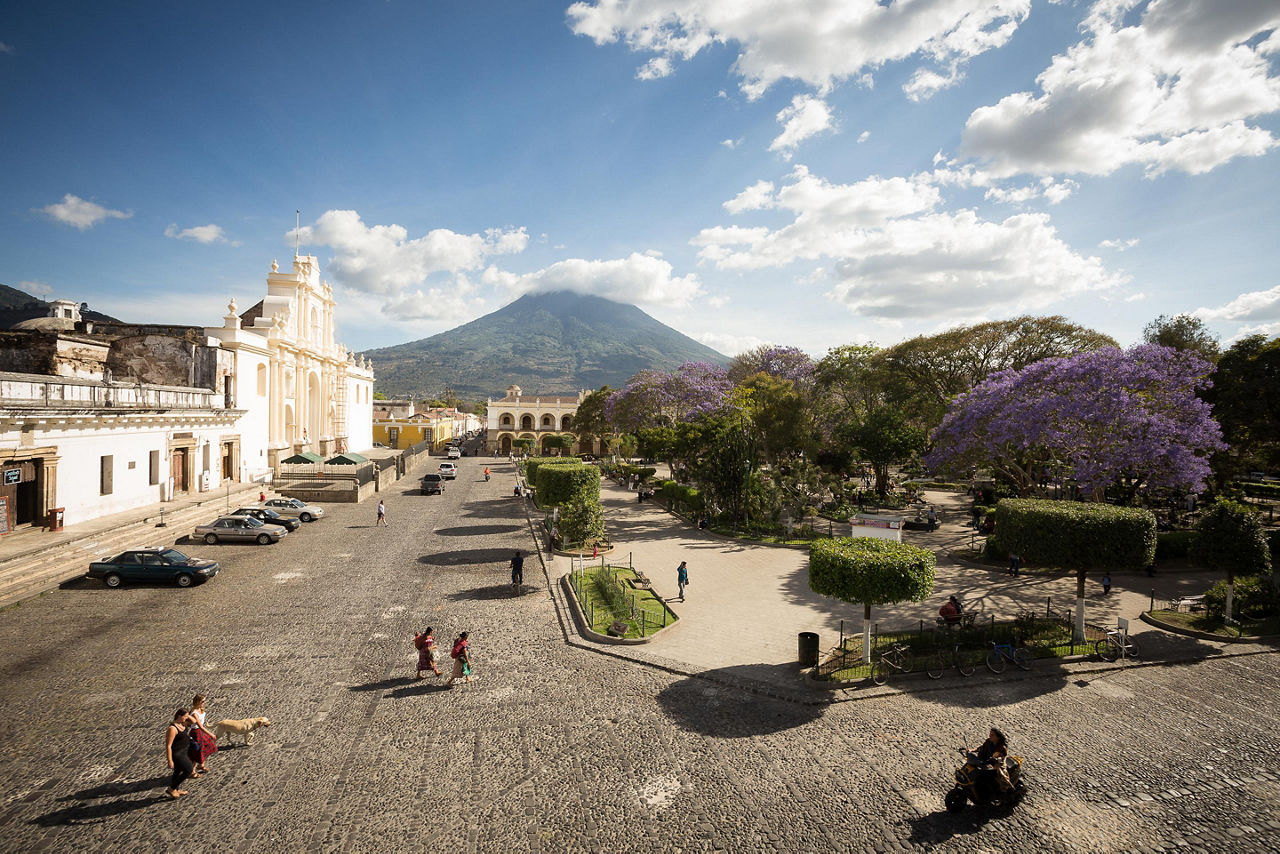
Get Some Culture And History In
If you have a few days on either end of your Guatemala cruise, why not spend it learning about the culture and history of Antigua? Visit San Francisco Church, a significant religious center for the region. Or head to the Hotel Casa Domingo, which is not only a five-star hotel but also a museum located on the grounds of an old monastery.
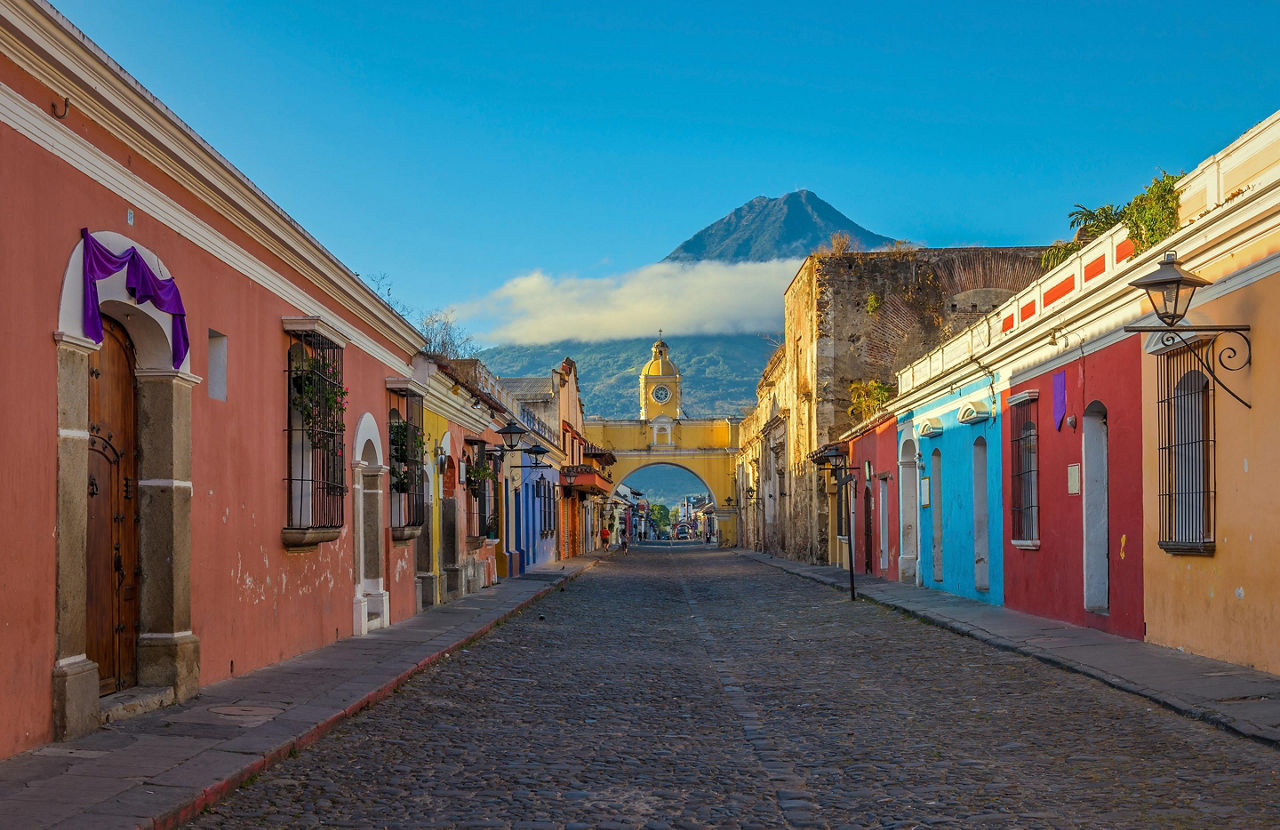
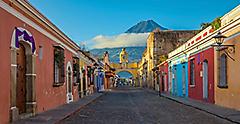
You can also take a stroll to the remains of Catedral de Santiago, which was originally built in 1542 but has since been destroyed by a number of earthquakes. Nonetheless, it is still gorgeous and worth exploring. Visit Santa Catalina Arch, where you can snap a photo with Volcán de Fuego in the background. And if you're looking to bring home a souvenir, you can head to one of the many artisan markets to pick up some handmade treasures from your Central America cruise vacation.
Tour Some More
If you're in Guatemala, you have to take a coffee tour. There are several tours, ranging from very touristy to off-the-beaten-path. Try to choose one that allows you to explore a coffee farm from a local perspective and enjoy a tasting.
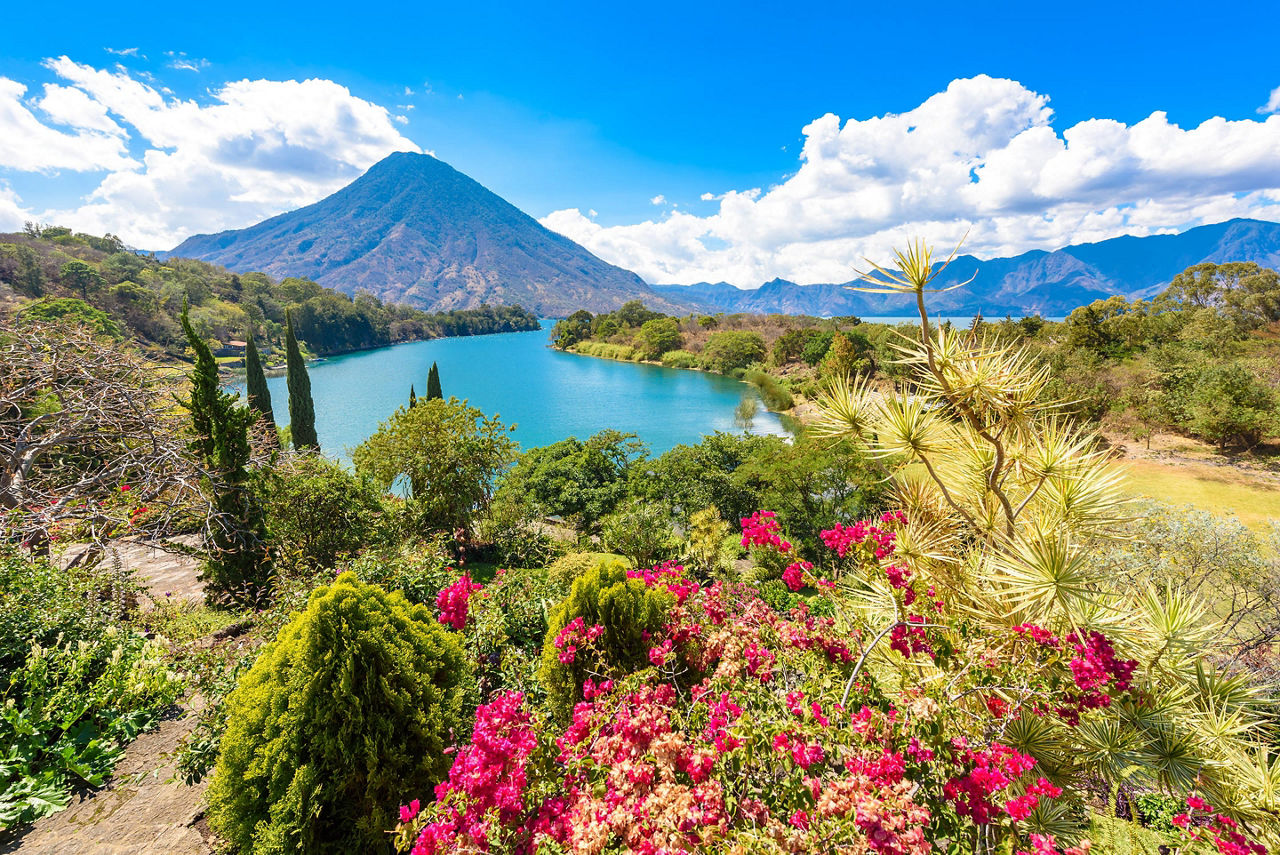
You can also head to Lake Atitlán for a day trip. It's a lake in a massive volcanic crater, surrounded by Guatemala's gorgeous southwestern highlands. The lake is known as the eternal spring because it's always 77 degrees. The views are magnificent and worth the trip alone, but it's also an excellent chance to spend time with some local people and experience a different part of Guatemala.
If you didn't get your fill of volcanoes, you could always visit another one. For an easier hike, head to Volcán de Pacaya, where you can literally roast marshmallows over the lava vents. It's about an hour and a half drive from Antigua, but it doesn't take nearly as much time to hike to the top.
From Coastlines to Craters: Explore Guatemala by Cruise
If you're seeking thrills on your next cruise, Guatemala will satisfy. You could book an entire trip based around Guatemala's beautiful nature and hiking opportunities and you still wouldn't scratch the surface. It's time to grab your hiking boots, Guatemala is calling your name.

Get Royal Deals, Sign Up Today

Getting There
Explore Our Most Affordable Itineraries
Looking for a unique travel vacation experience? Book a Central and South America cruise to visit some beautiful and interesting places and experience the trip of a lifetime onboard Icon of the Seas℠.