The History of Surfing in Hawaii and Where to Ride the Waves
Exploring Hawaii’s Legendary Surf Culture
By Claire Heginbotham | Published on December 3, 2025
Hawaii is a dreamy vision of white sand beaches and tropical flowers, and this quiet island paradise quickly became a hotspot for surfing. Its warm waters and consistent waves have attracted surfers for centuries, making it the birthplace of a deeply rooted surf culture. Whether you’re new to the sport or an experienced rider, Hawaii’s waves offer an unforgettable experience.
Key Takeaways: Hawaii and Surfing
- ● Surfing was once a royal sport, with ali’i reserving prime surf spots and using special wooden boards.
- ● Some of the best surf spots today are on Oʻahu’s North Shore, Maui’s Cove Beach and iconic Waikīkī Beach.
- ● Beginners can find surf lessons in Waikīkī and Lahaina with professional instructors.
- ● The history of surfboards evolved from heavy wooden boards into lighter, modern designs.
- ● Explore our Hawaiian cruises to experience Hawaii’s surf culture firsthand.
What Is the History of Surfing in Hawaii?
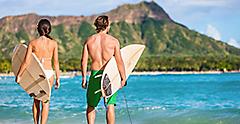
The history of surfing in Hawaii goes back to when the Polynesians arrived on the Hawaiian islands as early as 400 A.D. They rowed their canoes for days from Polynesian Islands like Tahiti to touch down on new tropical shores. Drawn to the excitement of waves, a culture of surfing slowly emerged and soon exploded.
Hundreds of years later, in 1779, Captain James Cook's successor, Lieutenant James King, took the first written records of surfing. On seeing the local surfers, King wrote, "They lay themselves at length upon their boards … their first object is to place themselves on the summit of the largest surge, by which they are driven along with amazing rapidity toward the shore. The boldness and address with which we saw them perform these difficult and dangerous maneuvers was altogether astonishing."
As a surfer myself, I'm happy to say that not much has changed with this spiritual practice of surfing in Hawaii. Unsurprisingly, Hawaii is at the center of why this sport remains so popular today.
Royal Surf Culture In Hawaii
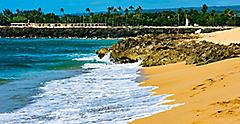
If you’ve ever heard someone called the "King of the Waves,” it’s because Hawaiian surfing was originally a royal sport. Aliʻi (Hawaiian royalty) claimed prime surf spots throughout the islands, reserved for royalty alone. Commoners weren’t permitted to surf these areas under the traditional kapu system. And if a royal was surfing, you'd have to be extra careful when wave riding — if you dropped in on a king, the punishment could be severe under kapu law.
Fun fact: Traditional Hawaiian surfboards were made of solid wood and weighed over 150 pounds. That's heavy enough to do some serious damage to an unsuspecting king or queen.
Don’t feel too bad for the non-royal residents of Hawaii, though. Thanks to Hawaii's fertile land, they lived a better lifestyle than their European counterparts. They had ample time for rest and relaxation, and the surf culture thrived. When Hawaii surf conditions were just right, Hawaiians would take to the waves on their longboards.
Where To Find the Best Surfing in Hawaii
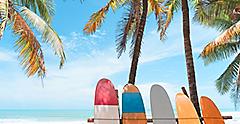
Some of the best surfing in Hawaii can be found on Oʻahu’s legendary North Shore. If you're new to the sport, there are plenty of spots where gentler waves and a welcoming surf culture make it ideal for beginners. On your next cruise through the islands, here are some top beaches for your Hawaiian surfing adventures:
- ● Pua'ena Point, Oʻahu: A beginner-friendly surf break near Haleʻiwa on the North Shore. Known for mellow waves, it's great for learning but also fun for intermediate surfers.
- ● Cove Beach Park, Maui: When you think of Maui surf culture, you may think of adrenaline-addicted surfers rushing down gnarly waves. Cove Beach isn't like that; it's a great destination for longboarders and beginners looking for a mellow, long ride to shore. If you're looking for big waves in Maui, head to the Pe’ahi or "Jaws" break.
- ● Haleʻiwa Beach Park, Oʻahu: Situated near the historic Haleʻiwa Town, this beach has calmer surf conditions ideal for beginner surfers and casual swimmers.
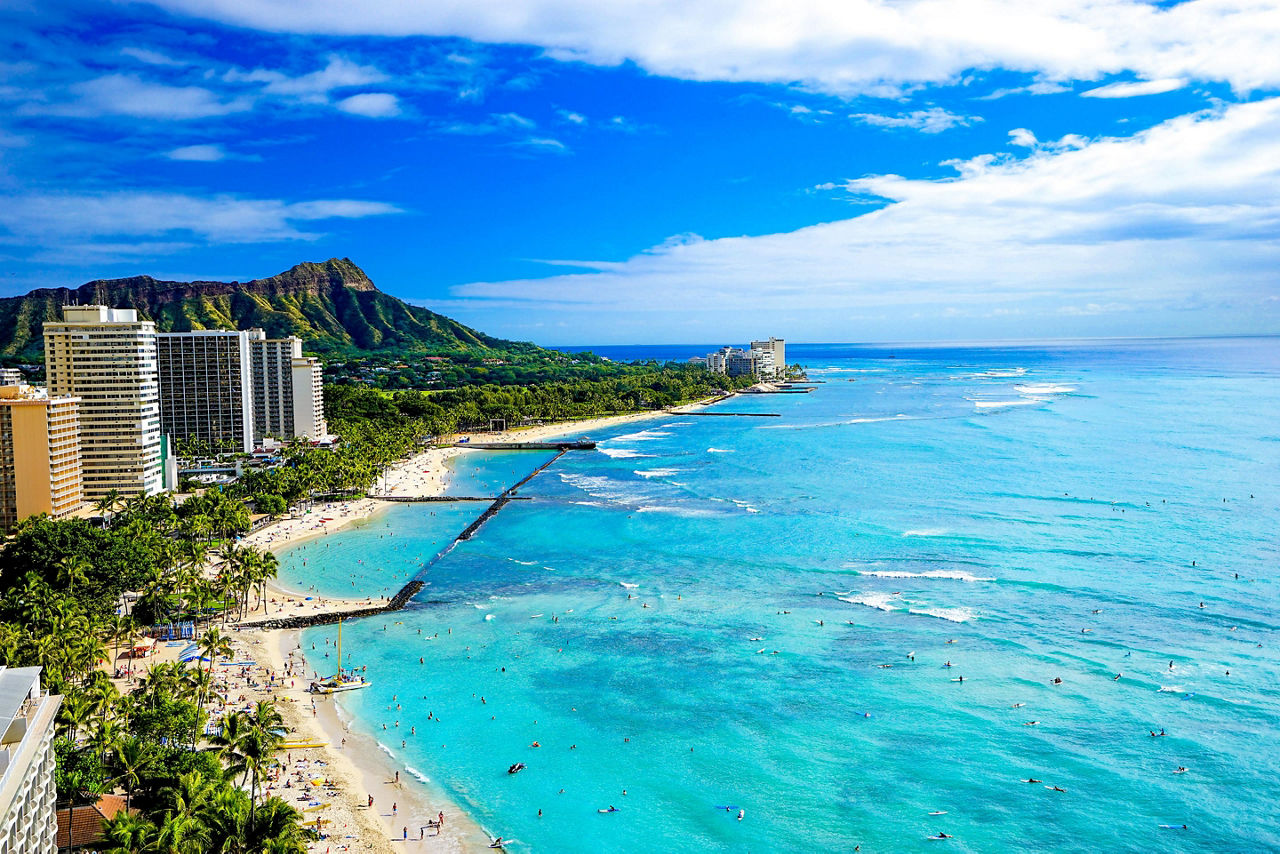
- ● Diamond Head, Honolulu: Known for its scenic views and rolling waves, Diamond Head is popular with intermediate surfers. It’s a slightly more challenging break than nearby Waikīkī.
- ● Waikīkī Beach, Oʻahu: Perhaps the most iconic surf spot in Hawaii, Waikīkī has gentle, consistent waves and a long sandy bottom, making it perfect for first-timers. It’s also home to many surf schools and rental stands.
- ● Waimea Bay, Oʻahu: Famous for its monster winter waves and big-wave surf competitions, Waimea Bay is for experienced surfers only during the big-swell season.
Hawaii Surf Conditions
Interested in the Surf Lessons Hawaii Offers?
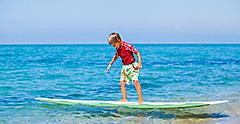
Whether you’re a beginner or looking to brush up on your skills, you may be interested in the surf lessons Hawaii has to offer. It’s the perfect introduction to wave riding, where professional instructors make learning safe, fun and approachable.
The calm, rolling waves of Waikīkī Beach on Oʻahu are especially popular for first-timers, while Lahaina in Maui also offers great beginner-friendly spots. Many schools provide all the gear you need, so all you have to bring is your sense of adventure.
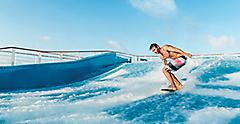
Practicing Surfing on a Royal Caribbean Cruise
The History of Surfboards
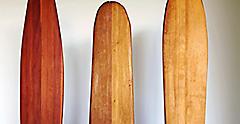
Sculpting a surfboard was sacred to the first surfers of Hawaii. The process of making a board began with offering a ritualistic fish called a kumu (goatfish) to the roots of a tree. The tree was then cut and roughly shaped using a basalt or bone adze (a tool similar to an axe) and refined with coral and stone. The board was blackened using natural materials like burned kukui nuts, ti plant roots or banana buds. A craftsman's final step was to coat the board with kukui nut oil to seal the wood and provide a shiny finish.
Much like today, a good surfboard was a treasured possession that required time and effort to maintain. Instead of wax, ancient Hawaiians would rub the board with coconut oil and wrap it in a tapa cloth to preserve the wood. Native Hawaiians made three types of surfboards:
- ● Alaia boards: Seven to 12 feet long and made from heavy Koa wood, alaia boards were considered the boards of commoners. This was the very same board Captain Cook first witnessed in 1778.
- ● Olo boards: These surfboards were exclusively used by royalty who were expert surfers. Measuring 14–20 feet, they were giant compared to alaia boards. They were made with lower-density wood from the wiliwili trees to compensate for their length, but still weighed up to 150–175 pounds.
- ● Paipo boards: Only about three to six feet long, these round-nosed boards were ridden mainly by children and commoners.
The Evolution of the Surfboard Design
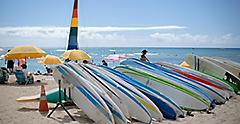
During the 19th century, missionaries arrived in Hawaii, and the development of wooden boards slowly declined and nearly stopped altogether. But a core faction of secret surfers kept the tradition and culture of sport alive. In the early 1900s, Duke Kahanamoku and friends helped revive Hawaiian surf culture.
Kahanamoku was primarily known for his excellent swimming style, but he also tirelessly contributed to surfboard design. In 1907, George Freeth famously cut a 16-foot board in half to create one of the first modern shortboards. Then, surfboard design continued to evolve throughout the early 20th century:
- ● In 1929, a U.S. surfer, Tom Blake, created the first hollow surfboard — the Cigar Box — and revolutionized production and DIY projects.
- ● In 1934, Jon Kelly and Fran Heath shaved off parts of their rail and tail for more controlled turns.
- ● In 1935, Blake added a skeg to the tail of his board, creating what's widely accepted as the first fin.
- ● By the 1940s, surfboard design began to resemble what we see today, using materials like balsa wood, fiberglass and polyurethane foam.
Where To Explore the History of Surfboards
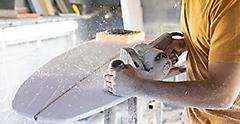
In my experience, the best place to experience surf history is in every single surf shop you walk past. Forget pricey museum admissions, because these shops have dozens of old boards from locals lining their walls. For example, the North Shore Surf Shop in Haleʻiwa Town has impressive historic boards stored in the rafters along with signed displays.
Hotels also pay tribute to the history of surfing in Hawaii with boards, photos and memorabilia installations. Check out Moana Surfrider Hotel in Honolulu and Outrigger Waikīkī Beach Resort in Waikīkī to wander through some impressive collections.
Duke Kahanamoku and Surf Culture in Hawaii
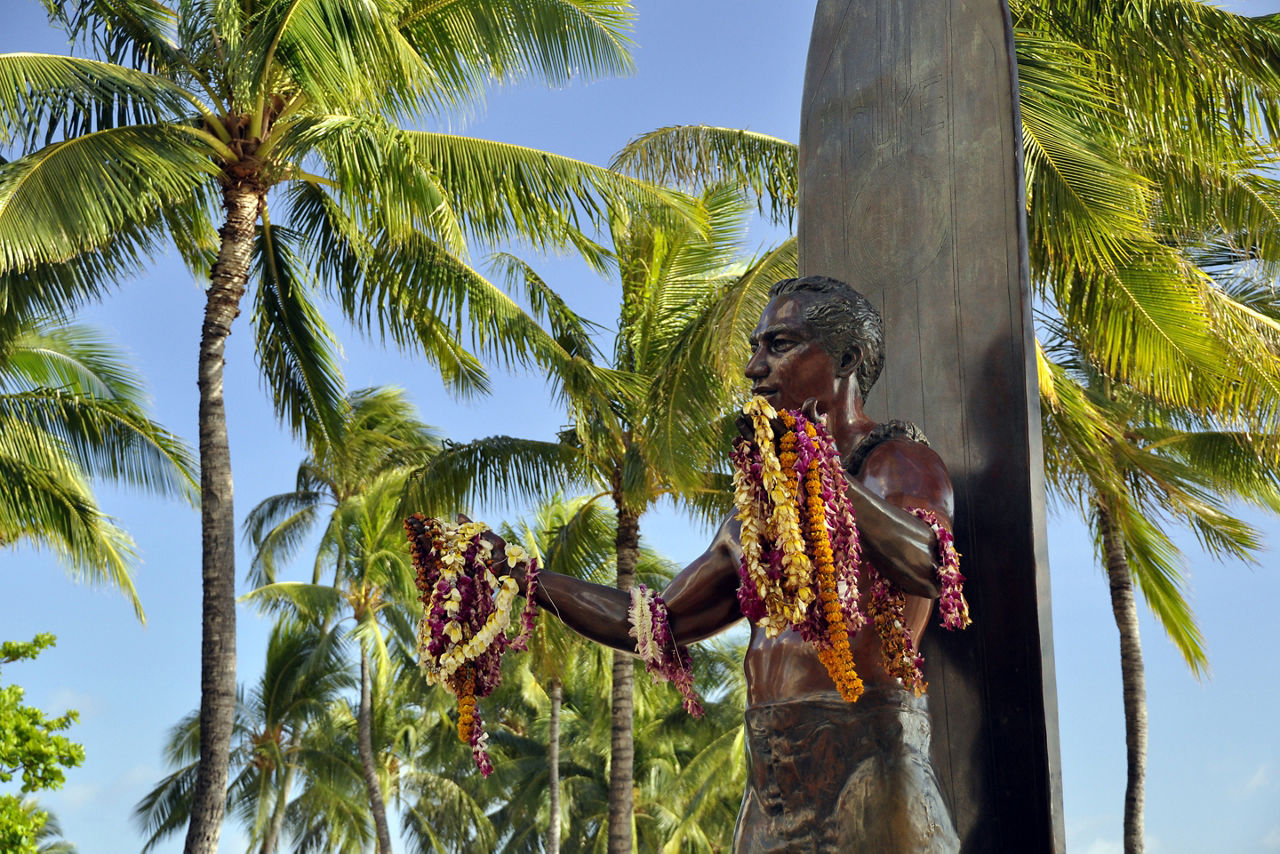
Duke Kahanamoku is the original "surfer dude" and the father of modern surfing culture. He was revered by Hawaiian society as a "waterman" and was swimming before he could walk. He won his first Olympic gold medal in 1912, in the 100-meter freestyle at the Stockholm Games — catapulting him into the spotlight.
Kahanamoku's fame grew as he went on to win five Olympic medals for swimming. He was later named Hawaii’s Ambassador of Aloha, appeared in Hollywood movies and saved eight men from drowning — helping pioneer the use of surfboards for water rescues.
Spreading Surf Culture Worldwide
Kahanamoku traveled the world with his friend George Freeth, and these Hawaiian surfing adventures spread the popularity of the sport while showing off their skills. They toured across the U.S., made waves in Southern California, starred in Australia's first-ever surfing exhibition and even traveled to New Zealand. His efforts in Australia were particularly effective, where Kahanamoku noted, "Before I left that fabulous land, the Australians had already turned to making their own boards and practicing what I had shown them in the surf."
By the 1930s, the surfing craze gripped the world, and now, a Hawaiian vacation isn’t complete without trying your hand at surfing. Even U.S. Navy officers during WWII traveled with surfboards bought from a Hawaii port of call. These officers spread surfing even further, taking the sport to far-flung destinations. As a child, my grandfather remembers seeing the first surfboards arrive with navy officers at Muizenberg Beach in South Africa during the early 1940s.
Kahanamoku’s Impact on Surfing in Hawaii Today
Kahanamoku's legend lives on. As a teenager, he helped form the Hui Nalu Club of the Waves, an inclusive water activity club on Maunalua Bay. The club still exists today and has instilled in thousands of Hawaiians and visiting tourists a love of the ocean.
Kuhio Beach in Honolulu is another popular tourist attraction for surf enthusiasts. You'll find a welcoming bronze statue of Duke Kahanamoku and his signature board. His open arms are waiting to welcome you to Hawaii with legendary Aloha spirit.
Catch the Spirit of Surfing on a Hawaiian Cruise