By Robert Schrader | Published on October 24, 2025
Everyone has different reasons for wanting to learn facts about Pablo Picasso. Some people might be preparing to visit Spain on a European cruise and want to learn more about the man behind the paintings they plan to see. Others are just curious — the name Picasso is well known, but how much do you really know about his contributions to the art world? No matter what piqued your interest in one of history's most famous artists, you're in the right place.
Key Takeaways – A Travel Guide to Experiencing Pablo Picasso
- ● Pablo Picasso began painting at age 7 and trained with his father in Spain. He became one of the most influential artists of the 20th century, co-founding Cubism and shaping modern art.
- ● Famous works include “Les Demoiselles d’Avignon,” “Guernica” and “The Weeping Woman.”
- ● His most well-known artistic phases include the Blue Period, the Rose Period, Cubism, Neoclassicism and Surrealism.
- ● Visit major Picasso collections at museums in Barcelona, Madrid, Paris and Antibes to see his work up close.
A Picasso Biography: Early Influences That Shaped the Legend
Pablo Picasso was born in Malaga, Spain, in 1881. "Pablo Picasso" was a heavily shortened version of his name; the full version is more than 23 words. It was a fittingly complex moniker for a boy who was gifted beyond his years. Although Picasso's formal art training didn't start until he was seven, he was something of a prodigy, displaying profound artistic skills evident even in the sketches he made as a toddler.
Pablo Picasso's first and most profound influence was his father, Don José. The elder Picasso was a painter in his own right, and it's said that as Picasso's father observed his young son drawing and later painting, he quickly recognized the depth of his son's talent, including that it was beyond his own. The family moved around Spain as Don José took different jobs, and they eventually settled in Barcelona, where Picasso gained admission to the San Fernando Academy of Fine Arts at only 13 years old.
Picasso’s Blue Period
Picasso’s Rose Period
As Picasso's fortunes in life began to improve, his art brightened. This began with his "Rose Period," characterized by coral and salmon hues, as well as happier imagery such as acrobats and jesters.
Picasso followed this up with a stylistic period inspired by the African art he began seeing in Paris museums. Looking back, Picasso’s African influence and the boldness of the work are striking, emulating the bright colors and sharp lines of African masks and other carvings and portraying human subjects in a more primal way. However, his contemporaries mocked and criticized him for pieces such as "Les Demoiselles d'Avignon."
They wouldn't be laughing long: One of Picasso's most groundbreaking innovations, co-created with Georges Braque, was Cubism, which changed art forever.
Introducing Cubism
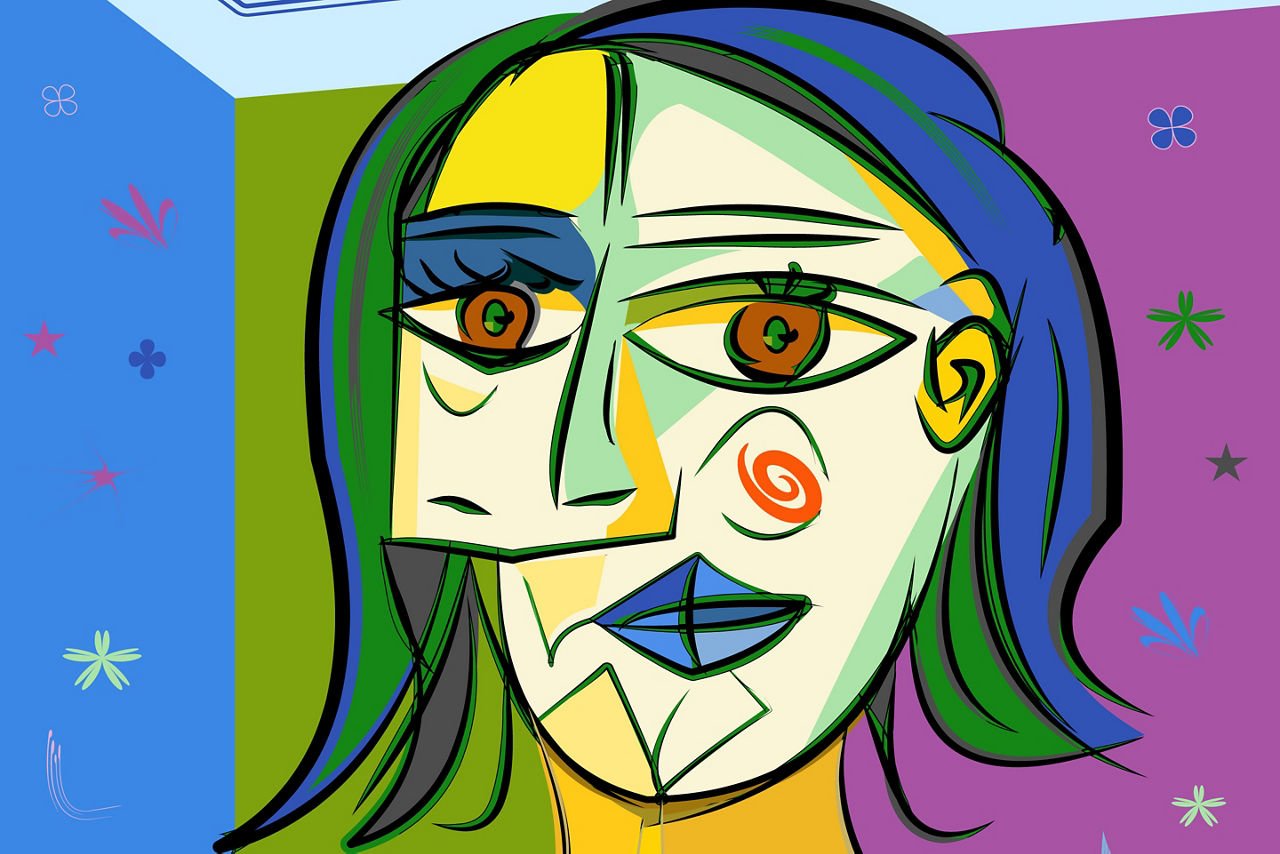
Cubism: The Pablo Picasso Style That Began Transforming Art
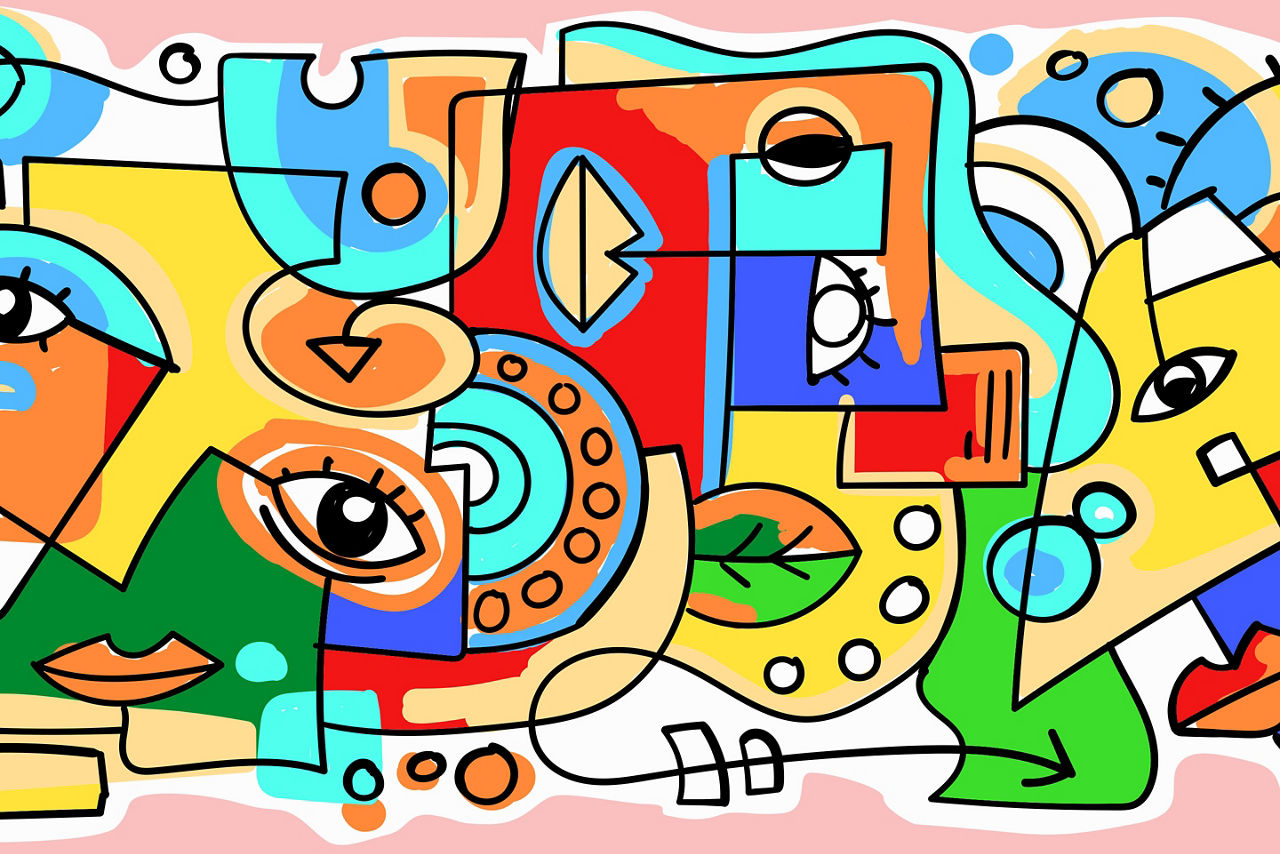
Many of Pablo Picasso's influences on art can be traced back to his foundational work in cubism, but they don't end there. After World War I, Picasso joined the neoclassical movement, which sought to restore order to the continent after the bloodiest conflict in history at that time. Although the works Picasso created during this brief period of his career weren't as identifiable as his others, his participation in the movement did serve to establish him as a mainstream art superstar.
It was during his surrealist period, which immediately followed neoclassicism in the late 1920s, that Picasso began to pick up on the threads of his earlier periods. With cubism, he developed a unique indigenous artistic language for subverting the realism that had undergirded his neoclassical works.
The most famous example of his work during this time was the “Bathers” series, characterized by exaggerated body parts in the setting of a day at the beach. It was during this period that he met his first wife, Olga, a ballet dancer whom he married in 1918 and with whom he had one child.
Art as Protest: Guernica, Politics and Picasso’s Public Legacy
Picasso's zenith, both in terms of his art and his cultural commentary, arrived in 1937 in the form of "Guernica," which many regard as his masterwork and is certainly included on any of Picasso’s most famous paintings list. The huge, wall-sized work, which debuted at the Paris World's Fair that year, is Picasso's depiction of the German bombing of Guernica, Spain, during the Spanish Civil War. Hearkening back to all of Picasso's phases, but most notably cubism, the ambitious monochrome presents both stark reality and a level of violence and cruelty that's almost indecipherable, eliciting raw emotion and difficult questions in those who see it.
One of the most interesting facts about Pablo Picasso is that he refused to allow "Guernica" to be moved to Spain until the country adopted democracy, which happened in 1981, nearly a decade after his death. Politics was always one of Pablo Picasso's influences, and "Guernica" was but one of the many ways Picasso used his art to make a statement. Notably, Picasso lived in German-occupied Paris and dealt with regular harassment by the Gestapo because his work did not conform to Nazi ideals of beauty.
Picasso's art continued to evolve during the following decades. He wrote poetry and plays and, most notably, began creating sculpted art. This was not surprising, of course, given that cubism itself had been a revolutionary form of constructed sculpture.
Interestingly, one of Picasso's most notable sculptures is located not in Europe but in Chicago, where it has stood since 1967. Known simply as the "Chicago Picasso," it stands 50 feet tall in Daley Plaza, close to Chicago City Hall.
Other Interesting Facts About Pablo Picasso
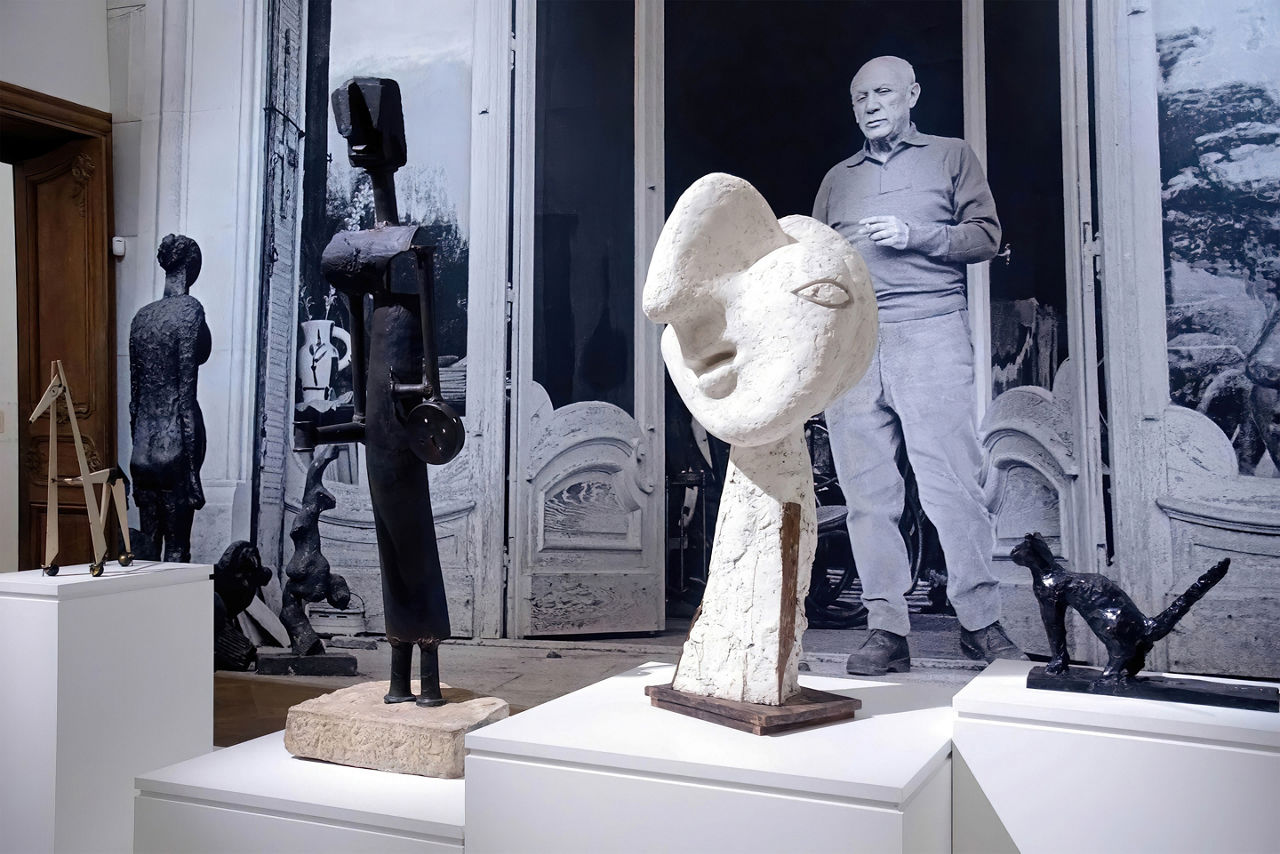
Picasso's personal life was in many ways as captivating as his art. He lived until 1973 and died in France at the age of 91. His long life is remarkable compared with the untimely deaths of many of his contemporaries.
For me, one of the most compelling facts about Pablo Picasso is that while he was known primarily as a painter, his influence on sculpture was arguably even more significant. This was because synthetic cubism literally "sculpted" together pieces of things he found elsewhere, and the fact that Picasso's later-career foray into sculpture ended up being influential. The work he created was the main reason for this, although his level of celebrity by that point in his life certainly didn't hurt.
These days, Picasso's lasting mark on the world is so great that you don't even need to recognize a single piece of his art to feel the weight of his name when it's mentioned. Likewise, while Picasso will forever be associated with high art, it’s thanks to him that the word "collage" is now mainstream So, if you've ever pasted together things you've found elsewhere into a creation of your own, you can consider yourself a student of Picasso!
Where To See Famous Pablo Picasso Artworks
Madrid: Home of Guernica and Picasso’s Spanish Legacy
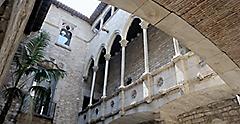
Another popular place to see Picasso's art is in Madrid at the city’s Museo Nacional Centro de Arte Reina Sofía, located in the trendy Lavapiés district close to the Puerta de Atocha train station. Note that while you can't take pictures inside the room where "Guernica" itself is housed, you can photograph all the other Picasso works throughout the museum. Numbering about 100 in total, these include those within the permanent cubism room as well as any rotating exhibitions that feature Picasso.
Madrid's other large art museum is Museo Nacional del Prado. The museum's collections once inspired a young Picasso during his trips to the capital, and it recently added one of his own works — 1943's "Buste de Femme 43" — to its collection. Appropriately, the largest Picasso museum in Spain is located in Barcelona, where Picasso laid the foundations for his career. The Picasso Museum houses around 4,000 Picasso works.
Paris: The World’s Largest Picasso Collection
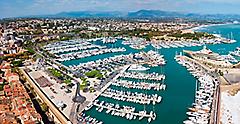
Of course, as you'll realize after reading through these facts about Picasso, his genius wasn't confined to Spain, even if that's where it was born. Many museums throughout Europe are home to original Picasso works, including the Musée National Picasso in Paris, France. Located in the bohemian Le Marais district, the sprawling museum contains more than 5,000 paintings and sculptures, and it holds the largest public collection of Picasso art in the world. Notable examples include the artist's "Self Portrait, 1901," and the 1937 masterpiece "Portrait of Dora Maar," which was inspired by the artist's former lover.
The collection of the Musée Picasso, a sun-soaked French Riviera idyll where Picasso spent a considerable amount of time, is only a fraction as extensive as its counterpart in Paris. However, what's compelling about this place is both its architecture — a medieval castle — and the fact that Picasso once used the castle as his art studio. It was the world's first Picasso museum and contains art personally donated by both the artist and his second wife, Jacqueline. The most compelling work here is arguably "Le Baiser," an ambitious 15-painting series that breaks down the pleasure and emotion of a kiss.
Málaga: Picasso’s Birthplace and Early Inspiration
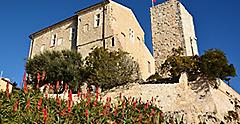
If you're interested in tracing Picasso's roots without necessarily seeing a large amount of art, you can head to the Mediterranean from Antibes to the artist's birthplace of Malaga. In addition to another Picasso museum, which houses a comparatively modest 285 pieces of art, you can visit the house where Picasso was born — 15 Plaza de la Merced — the church where he was baptized and even La Malagueta, a bullring that apparently inspired the brutality in some of Picasso's work.
If these Pablo Picasso facts don't inspire you to plan a trip to Europe, I'm not sure what will. Being able to see "Guernica" alone is enough to make a trip to Spain worth it, no matter how you get there. Picasso changed art forever, and no visit to Europe is complete without seeing some of his work in person. Thankfully, you've already done your homework, so when you get there, everything will seem even more illuminating!
Now that you know all the important facts about Pablo Picasso, are you ready to sail into the artist’s world and beyond?

Get Royal Deals, Sign Up Today

Getting There
Explore Our Most Affordable Itineraries
Admire the works of Picasso when you book a European cruise.