Gladiators of Ancient Rome: History and Highlights of the Colosseum
Discover Secrets of the Roman Colosseum
By Taylor Fuller | Published on December 3, 2025
Applause fills the air, and the roar of excited spectators reverberates around you. The clash of weapons and the clink of sword against shield echoes while a drop of sweat rolls down your face. You're a gladiator in the middle of the Roman Colosseum. Surrounded by 80,000 screaming fans and the Emperor's royal presence looming over the arena from his throne, the pressure is on! Here’s a glimpse into the gladiator battles of the Colosseum to prepare you for the ultimate visit when you cruise with us to Rome, Italy.
Key Takeaways
- ● The Colosseum in Rome was built in 80 C.E. and stands as a grand ancient stadium that once hosted epic gladiator fights, exotic animal shows and other spectacles.
- ● Gladiator fights originated from ancient Roman funeral rituals and evolved into popular spectacles used for entertainment, political distraction and displays of wealth.
- ● Aspiring gladiators underwent intense training in specialized schools, mastering combat techniques and swearing an oath to die with honor in the arena.
- ● Gladiators specialized in distinct fighting styles marked by unique armor and weapons.
- ● Victorious gladiators were celebrated as heroes, their legacy immortalized in modern culture, while the Colosseum still echoes with the glory and bloodshed of ancient battles.
Your life as a warrior is filled with long and grueling hours of training on a quest to ultimately win your freedom — to fight over and over again against other gladiators who are hoping for the same outcome. With each win comes fame and recognition from the Emperor and spectators; each fight could be your last.
Inside the Iconic Colosseum: Visit Rome To Uncover Ancient Italy

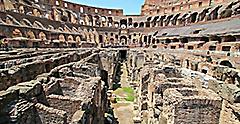
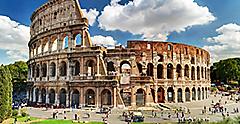
When visiting Rome, you will see that at the center of the city stands a massive and magnificently constructed stadium known as the Colosseum. How old is the Colosseum, you wonder? Also named the Flavian Amphitheater, it dates back to 80 C.E. and was built for entertainment during ancient times in what is now the country of Italy.
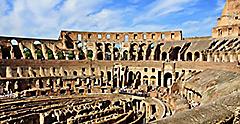
Gladiator combat was one of the favorite pastimes of ancient Rome, and thousands would pile into the arena to witness the thrilling battles. Similar to modern-day stadiums, the commoners sat high up in the stands, while the wealthy were seated in box seats, close to the action. The gladiator fights were the most popular events in Roman life. The Colosseum also held exotic animal shows, military processions and chariot races.
During the gladiatorial bouts, the audience was wild and unruly, especially when the fate of a warrior was left in their hands. If a gladiator threw down their weapon in defeat or was injured and could not get up, often the referee would defer to the spectators to decide if the fighter deserved to live or die. The crowds would erupt with cries of "Slay him!" or "Let him go!" while giving the gesture of a thumbs up or down. Ultimately, the Emperor would have the final say.
Book Now
The Life of a Roman Gladiator: Why Did the Roman Gladiators Fight?
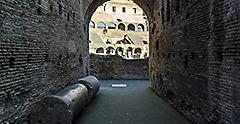
It's said that the tradition of these battles stems from an ancient funeral custom in Rome. At a funeral, Roman men would sometimes battle against each other in honor of the person who had passed. Entertained by this, the wealthy cashed in on the idea and started arranging fights and selling tickets.
Soon, the fights became a staple in Roman culture. They were often used to celebrate military victories, entertain important officials who were visiting or distract the community from political problems. Sometimes, it was just an opportunity to display great wealth, as the rich Romans would use the opportunity to bet on their warrior of choice.
A gladiator's life was hard. Typically, the Roman gladiators were enslaved people or people who had committed crimes, forced to fight for the promise of freedom. By the 1st century A.D., there was a shift in the gladiator demographic as men (and some women) willingly entered the ring. Free men became gladiators to win the prize money or for the prestige alone. These volunteer warriors were often lower-class men or ex-soldiers looking for money. Many were actually part of the upper class, inspired by delusions of grandeur, trying to prove their toughness.
How Colosseum Gladiators Trained
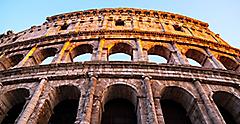
When one decided to become a gladiator, off to ‘gladiator school’ (ludi) they went to be trained by experts in combat. In these strict schools, the aspiring gladiators would eat, breathe and sleep the gladiator life. The training was cutthroat. The students learned different techniques to help them discover their strengths and perfect their fighting style.
At the end, the gladiators would swear an oath called the Sacramentum gladiatorum, stating that they would die with honor when the time came.
Different Types of Gladiators: Their Weapons and Fighting Styles
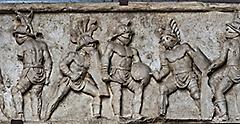
If you're going to fight for glory and freedom, you need to carefully pick what kind of fighting style you're going to train in. There were so many different types of gladiators, and you could tell the difference between them by their technique, armor and the weapons they used.
First, there was the Thraex who fought with a small rectangular shield and a curved Thracian sword (a short sword with a curved blade called a sica). They wore helmets that were decorated with a gryphon — a creature with the body, tail and back legs of a lion and the head and wings of an eagle.

Murmillo gladiators wore the same full-cover helmet as the Thraex — theirs had a fish-shaped crest on it instead. Their shields were long and oblong, and they used a sword called a gladius, which had a short steel blade, ideal for quick jabs.
The Hoplomachus gladiators are iconic due to their plumed helmets. They used throwing spears, short swords and a small round shield. Meanwhile, the Essedarius gladiators fought while mounted on chariots. Sometimes they'd drive the chariots themselves; other times they would have a designated driver, who was also risking their safety.
Most of the gladiator styles were inspired by other soldiers or laborers in their community. The most interesting is the style of the Retiarius gladiators, who were fashioned after fishermen. They didn't carry a shield; they wielded large nets and tridents. Once they trapped their opponents under their nets, they would try to finish them off with their trident.
And then there were the Gladiatrices, the female gladiators. They were trained in their own unique style, so they never faced men in combat. They didn't fight for long. Apparently, the tenacity and strength of the female gladiators led patrons to catcall and poke fun at women, including those who held high-ranking status. In 200 A.D., Emperor Septimius Severus banned all women from competing in the Roman Colosseum games.
The Legend of the Colosseum Gladiators
As you deliver the final blow and the referee raises your hands in the air in victory, the crowd explodes in applause. You're a champion gladiator, and your life is about to change forever. Bunches of palm are laid in your arms as you take a dizzying lap around the arena, soaking in the adoration of fans who will remember your name for years to come.
Today, the legend of the gladiators still lives on in sleek Hollywood movies and other popular culture.