Israeli Food: Top 10 Must-Tries
A Guide to Some of the Best Food in Israel
By Mary Luz Mejia | Published: August 7, 2025 | Updated: May 22, 2026
Israeli food is a delicious tapestry woven by the people, the surrounding countries and their shared culinary legacies. This includes foods brought by the many people who arrived from Europe, Eastern Europe and North Africa, blending their own influences into Jewish food culture. The result is a Middle Eastern feast shaped by certain Jewish dietary laws, which guide how Israeli meat products are consumed alongside dairy products. You’ll find everything from Israeli street food favorites like falafel, shawarma and typical Israeli salads to more elaborate dishes Israel has perfected over time — all commonly enhanced by fresh olive oil and a sprinkling of herbs and spices. While there's always a place for a creamy bowl of hummus or a fresh, herb-flecked Israeli salad, the food in Israel offers so much more.
Cruise to Jerusalem, Haifa and beyond to take a bite out of one of the best foodie vacations possible. You'll be glad you did! Continue reading to get a virtual taste test of 10 of the most popular Israeli food options you won’t want to miss.
Key Takeaways: Israeli Food
- ● “Shakshuka” comes in a sizzling skillet of red, spicy-tomato sauce with poached eggs, Merguez sausage, mushrooms or chicken.
- ● Israeli breakfast always over-delivers, with a spread of yogurts, cheeses, hard-boiled eggs and more.
- ● “Kunāfah” is composed of two layers of wheat dough, filled with creamy cheese, orange and cardamom.
- ● Israeli “sabich” is a sandwich with hard-boiled eggs, mango sauce, tahini, salad, hummus and parsley.
- ● Shawarma is served on pita alongside salads, pickles and sauces.
- ● “Challah” is a braided bread often served during religious rituals.
- ● Need something sweet? “Sufganiyah” is a jelly-filled dessert generally eaten during Hanukkah.
- ● “Bourekas” is a savory pastry often filled with feta, spinach, potatoes, mushrooms or squash.
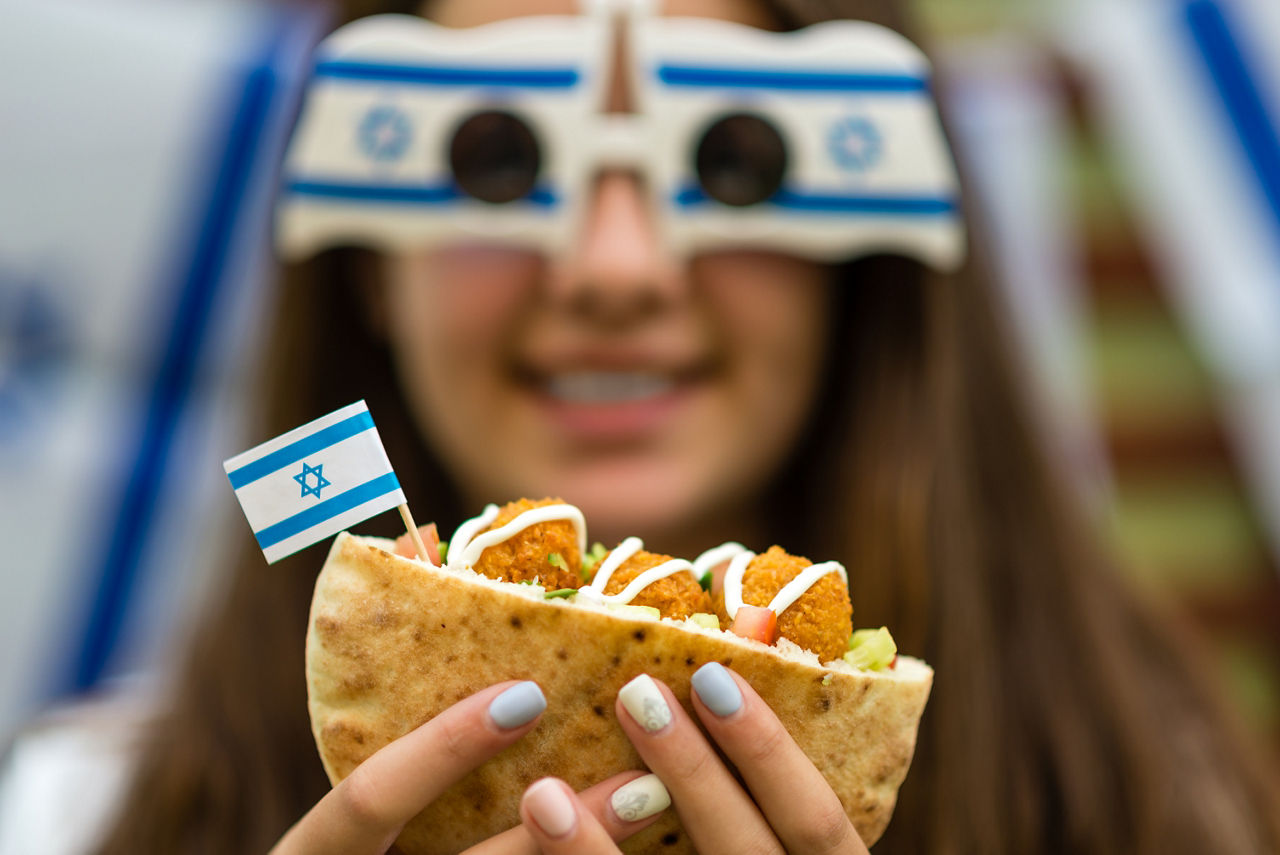
- ● Falafels are crispy, fluffy bites that you can eat in several ways: wrapped in flatbread, topping a salad or even on their own.
- ● Grab pomegranate juice, a popular pressed juice with a sweet-tart flavor.
- ● Explore cruises to taste some of these dishes on your next trip.
1. Some Like it Hot: “Shakshuka”

In a little alley connecting the Jaffa Flea Market to a main road in the old port (now Tel Aviv), you'll find the featured-on-TV Dr. Shakshuka restaurant. Long, communal tables seat hungry locals and visitors clamoring for a sizzling skillet of red, spicy tomato-onion sauce with poached eggs and a few other add-ins, such as Merguez sausage, mushrooms or chicken.
What is “Shakshuka”? Its roots trace back to North Africa, particularly Tunisia and Libya, where Jewish communities prepared similar tomato-and-egg dishes. It was brought to Israel by North African Jewish immigrants in the mid-20th century and quickly became a staple of Israel's home cooking and cafe culture. Today, it’s the perfect example of how immigrant traditions helped shape modern Israeli cuisine.
And if you’re wondering if Israeli food is healthy, the answer is yes! “Shakshuka” is often made with lots of fresh ingredients, like sweet peppers, a dash of olive oil and a handful of herbs and spices that reflect the typical Israeli love for intense flavors. The first time I had this dish, it was a revelation. Full-flavored, bold and hot, you'll want some bread to sop up the sauce and go for the fresh, seasonal salads to cool off. Many see it as one of the most popular dishes Israel has to offer, often served in homes that value hearty, Middle Eastern food traditions.
2. The Best Way To Start Your Day: Israeli Breakfast Food
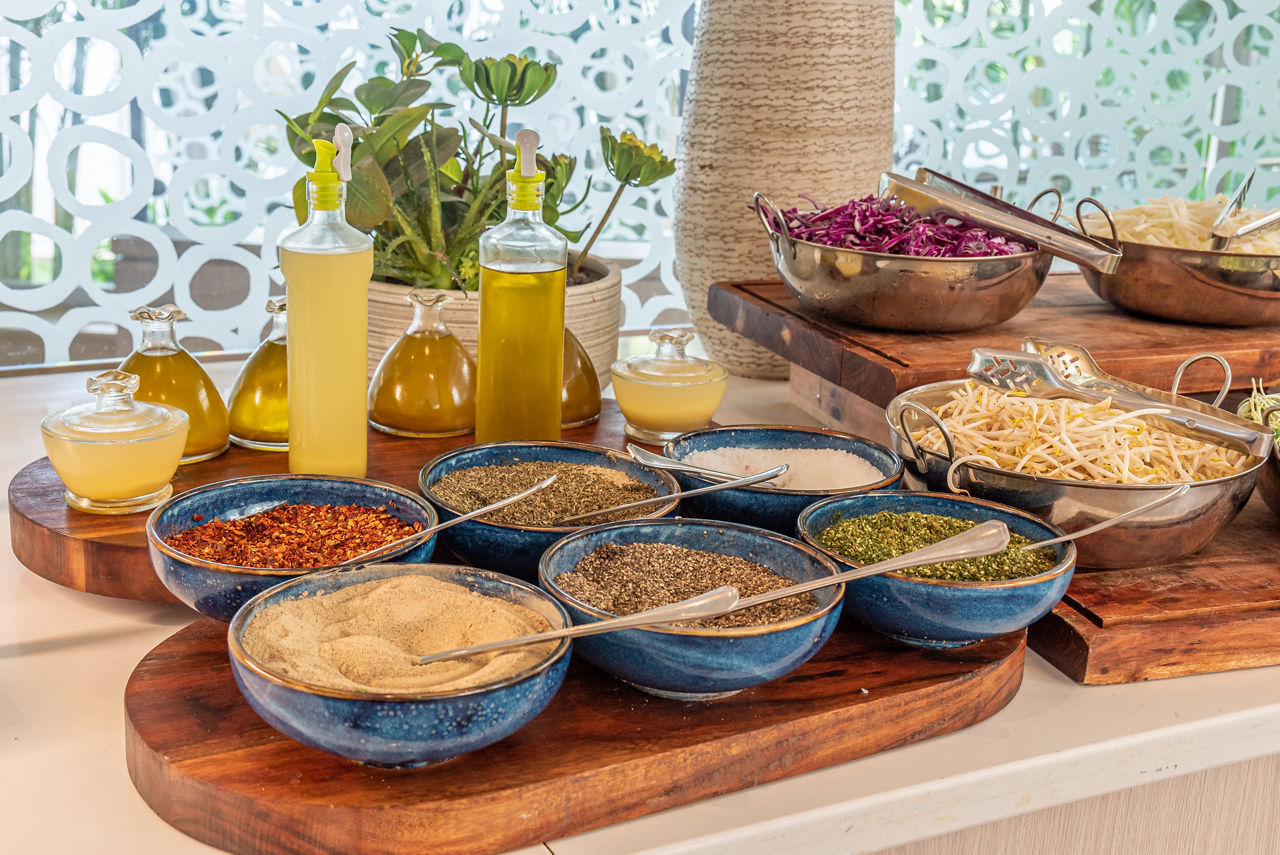
Inspired by the hearty breakfasts served on kibbutz collective farms around the country, Israeli hotels have been serving similar breakfast buffets for guests since the 1950s. Think Mediterranean grazing board without the cold cuts, and you start approximating this tasty spread. There's a usual selection of yogurts, cheeses, hard-boiled eggs, fresh juices, butter and breads — but the stars of the show, in my humble estimation, are the plethora of fresh salads (fruit and veggie) with loads of herbs, dips, olives and cured fish. Enjoy these alongside dairy products and a drizzle of olive oil and lemon dressing to elevate the flavors.
Rather than stemming from a single origin, the Israeli breakfast reflects a blend of European and Middle Eastern influences. The kibbutz dining tradition of the early 20th century helped popularize this dairy-focused, salad-rich meal, combining Eastern European Jewish customers with fresh Mediterranean ingredients available locally.
I had no idea salad for breakfast could be this delicious — and so healthy! Typical Israeli life often revolves around balanced eating, reflecting the wider Israeli food culture of the region as well as various Jewish food traditions.
3. Sweet Dreams Are Made of This: “Kunāfah”

When it comes to irresistible foods in Israel, Jerusalem's food offers something for everyone. If it's a sweet tooth you need to satisfy, head to Al Aksa in Old Town, Nablus, for one of the best desserts you've ever had: “kunāfah”. Composed of two layers of finely shredded, buttered wheat dough, the interior is filled with a creamy cheese flavored with orange and cardamom. Many versions also top the dessert with pine nuts or crushed pistachios for added crunch. The dessert is served hot, but not before receiving a final drizzle of lemon juice and orange blossom water syrup. Elegant, delicious and unique, it's a must-try with a good cup of coffee.
“Kunāfah” originates from the broader Levant region, particularly among Palestinian and Arab communities, and has long been a beloved dessert across the Middle East. Its presence in Israel reflects the shared culinary traditions of the region, where dishes transcend borders and are enjoyed by diverse cultures.
Traditional Jewish food is so unique because it blends Middle Eastern and Mediterranean culinary influences, including Sephardi and Ashkenazi origins. This dish is a great example of that, demonstrating how Middle Eastern influences blend seamlessly with Israel’s own food identity, creating popular dishes that continue to wow visitors.
4. The Best Sandwich You Never Knew You Needed: “Sabich”

The Israeli “sabich” is what foodie vacations are made of. Originally brought to Israel by Iraqi Jewish immigrants in the 1940s and 1950s, “sabich” was traditionally eaten on Shabbat mornings. Over time, it evolved into a popular Israeli street food, showcasing how Middle Eastern Jewish traditions became woven into everyday Israeli cuisine.
It's composed of perfectly fried, puffy pieces of eggplant, hard-boiled eggs, tahini, salad, hummus, parsley and sometimes even a pickled mango sauce called “amba.” It's the go-to snack or handheld breakfast of Israelis.
Find a great version of this at Sabich Tchernikhovski in Tel-Aviv — and, trust me, you want the “amba!” Although sabich might not be considered street food in every context, it highlights the fusion of Eastern European and North African influences, as well as the typical Israeli food found in Jewish heritage.
5. Israel’s Beloved Hand-Held Sandwich: Shawarma

If you’re looking for the most popular street food in Israel, shawarma is a major pit stop. Enjoyed throughout the Middle East, and likely going as far back as the Ottoman Empire, shawarma is a marinated, spit-roasted meat cooked on a huge, layered rotating skewer. Expect turkey, chicken, beef or lamb as your meat option, which gets finely shaved and can be served with salads, pickles and sauces, or neatly tucked into a tasty pita bread.
Shawarma has its roots in the Ottoman Empire, where spit-roasted meats became popular across the region. As the dish spread throughout the Middle East, it was embraced in Israel and adapted into local street food culture.
This kind of Israeli falafel shawarma is considered one of the most popular dishes in the region, often cited among the recipes Israeli falafel fans also adore. If you're in Jerusalem, head to Hello Yemen, grab a table and tuck in! Shawarma, along with falafel, is a prime representation of the dishes Israel and the rest of the Middle East share as a cultural treasure.
6. Sacred Bread: Challah

This is one of my all-time favorite Israeli foods, and it's consumed traditionally on Shabbat or special occasions. You'll find these egg-enriched, yellow-hued, leavened and beautifully braided breads often topped with poppy, sesame or coriander seeds. The seeds symbolize manna that fell from heaven, and there's nothing quite like the bronzed beauty of a fluffy, eggy, just-baked Challah bread.
This bread comes from Central and Eastern European Jewish traditions and is deeply tied to Shabbat and religious rituals. Jewish immigrants brought this braided bread to Israel, where it remains an important cultural and culinary symbol, connecting modern Israeli life to longstanding Jewish heritage.
Try it as part of a chicken sandwich or a cinnamon-nuanced bread pudding at Tel Aviv's Port Sa'id. Challah is central to many Jewish dietary laws and remains a beloved piece of Israeli cuisine, often eaten alongside other popular Israeli dishes that help celebrate special days.
7. What’s the Most Popular Dessert in Israel? “Sufganiyah”

I visited Israel during Hanukkah, which meant “sufganiyah” (hole-less donuts) were everywhere and enjoyed by everyone! Biting into these jelly-filled beauties is a delicious experience. From strawberry jam-filled to Bavarian cream, you can find a “sufganiyah” to suit your preference.
“Sufganiyot” originated in Eastern Europe as part of Hanukkah celebrations, where fried foods symbolize the miracle of oil. Jewish immigrants brought the tradition to Israel, where bakeries and chefs have since transformed these filled donuts into a modern, creative staple of the holiday season.
Some of the best food and treats in Haifa are found at Shemo Bakery, helmed by celebrity chef Miki Shemo. Try the lemon pie version — you're welcome! The use of olive oil in traditional frying methods ties back to older Middle Eastern food practices, reflecting Israel’s blend of modern and historic food culture. Other popular desserts include rugelach, halva and “malabi”.
8. Savory Snacks: “Bourekas”

These savory pastries of Sephardi Jewish origin are made with phyllo, puff pastry and a thin wheat-based dough often filled with feta or other salty cheeses, spinach, potatoes, mushrooms and even squash. Dairy-filled versions are usually shaped into triangles, while non-dairy alternatives are fashioned into circles or squares. These get sprinkled with sesame, poppy or nigella seeds and sometimes even a dusting of za'atar.
“Bourekas” trace their origins to the Ottoman Empire and were popularized by Sephardic Jews who settled in regions like Turkey and the Balkans. These communities later brought the pastries to Israel, where they became a beloved everyday snack and bakery staple.
Head to Jerusalem's Bourekas Musa for dough that's made in-house and filled with a host of craveable inclusions. This type of snack showcases the breadth of dishes Israeli cooks have inherited from various immigrant groups, all folded into the modern definition of Israeli cuisine.
9. Deep-Fried Vegetarian Perfection: Falafel

Although most people consider falafel an Israeli food, its origins are likely rooted in Egypt, Lebanon or Palestine. It was popularized in Israel by Middle Eastern and North African Jewish immigrants, including Yemenite communities, in the mid-20th century. Over time, it became one of the country’s most iconic street foods, representing the blending of regional culinary traditions. Yemenite immigrants started sharing these chickpea and herb-studded fritters with Israelis in the 1950s, selling them in paper cones.
Falafel is truly one of the most popular dishes Israel is known for, and you can see why — it’s crispy, tasty and deeply satisfying. Some locals prefer falafels made with fava beans; both are seasoned with cumin, coriander, parsley and onions. Wrap them up in flatbread, top with pickled veggies, salads, hummus or tahini, and you've got lunch to go. Grab yours at Falafel HaZkenim for the best food in Haifa. Don't forget to ask for a drizzle of Hazkenim's special hot sauce or lemon-scented tahini! With the growing popularity of this treat, you’ll find endless variations of recipes that Israeli falafel enthusiasts swear by.
10. Gulp It: Pomegranate Juice

Near the Mahane Yehuda Market in the Old City of Jerusalem, the cobblestone-lined alleys feature men and women selling cups of crimson, freshly pressed pomegranate juice.
Pomegranates have been cultivated in the region for thousands of years and hold cultural and religious significance in Jewish tradition. Fresh juices like this reflect the agricultural heritage of the land and the longstanding use of local fruits in everyday Israeli life.
Vendors in these bustling corridors also press Jaffa Oranges, but I'm here for that red elixir that's bursting with a unique sweet-tart flavor with notes of red wine. This is not like any bottled version you may have had and is, on its own, a foodie vacation moment to savor.
Taste These Israeli Foods for Yourself
Taste-test these traditional Israeli food options to create memories and discover a new favorite dish. The bright flavors, use of olive oil and lemon dressings, typical Israeli attention to detail and influences spanning Eastern Europe to North African traditions come together for a one-of-a-kind culinary adventure. Each dish, from falafel shawarma to challah bread, is a testament to Israel’s passion for merging heritage, taste and community into mouthwatering meals that make typical Israeli food popular worldwide.
If you’re wondering where to try traditional Jewish food, there are countless hotspots like Tel Aviv, Jerusalem and Jaffa, which you can stop at while on your dream Israeli cruise. Whether you want something sweet or savory, booking a Royal Caribbean cruise to Israel will ensure you try a plethora of awe-inspiring dishes.



Related Articles

The Top 8 Mediterranean Cruise Destinations
READ MORE

Best Time to Cruise the Mediterranean: Seasonal Guide
READ MORE

The 6 Top Mediterranean Cruises to Go on This Year
READ MORE