Blue water might bring you to Bonaire, but pink ponds give you another reason to explore. Along the island’s southern coast, shallow pools stretch beside bright white piles of salt. Their rosy color comes from tiny organisms that thrive in very salty water.
The Bonaire salt flats are more than a colorful photo stop. They’re part of a working salt industry, with historic landmarks and flamingo habitat nearby. Learning a little about them makes the view even more interesting, whether you love wildlife, island history or discovering something new together.
What Are Salt Flats?
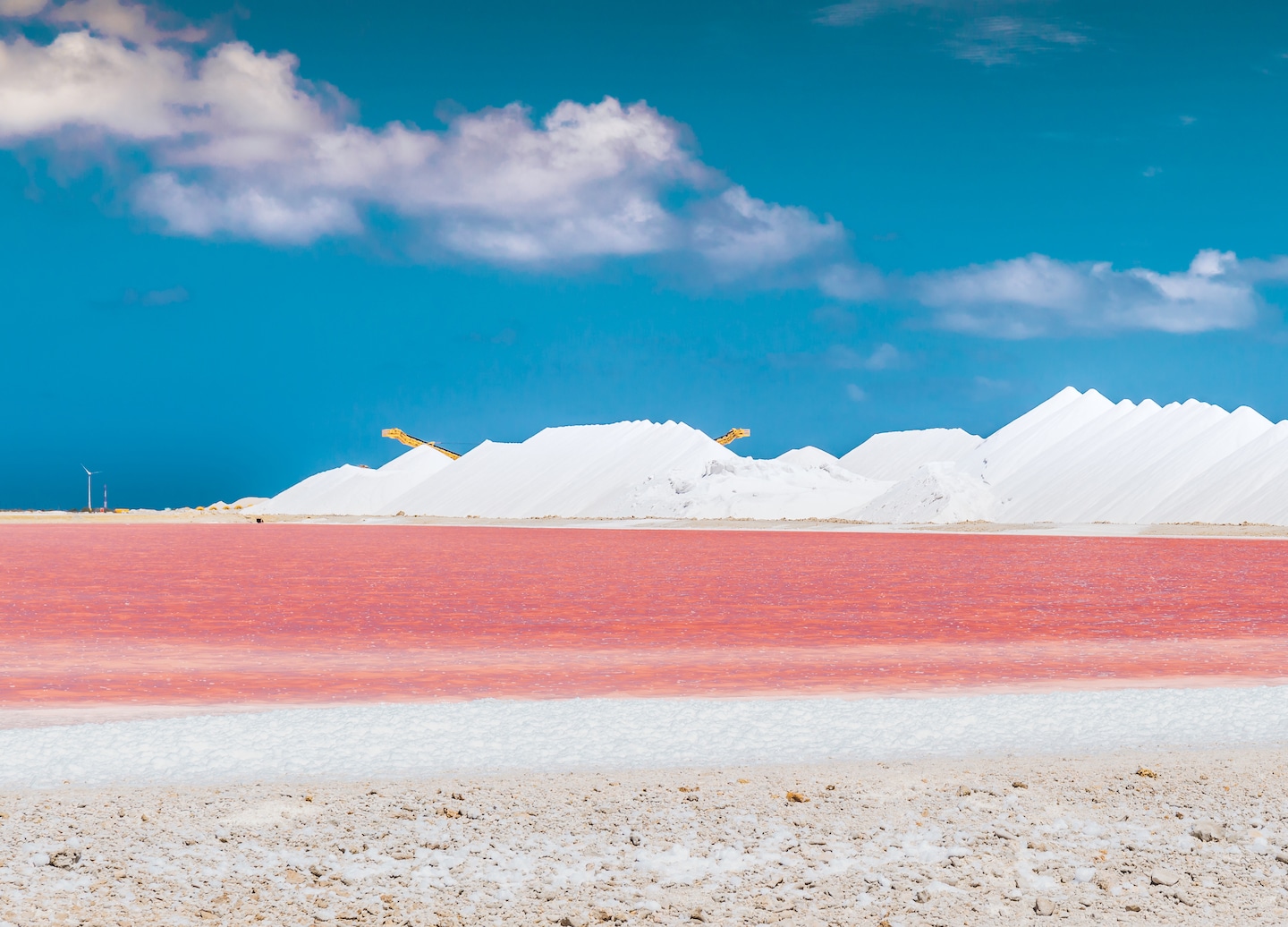
Salt flats are broad, flat areas where salt builds up as water evaporates. Water carries dissolved salts into a low area, then dries up and leaves those minerals behind. Over time, a salt crust can cover the ground.
In Bonaire, the area commonly called the salt flats includes managed ponds used to produce sea salt. These shallow pools put the island’s sunshine and wind to work, helping water evaporate so salt can be collected.
Where Are the Bonaire Salt Flats?
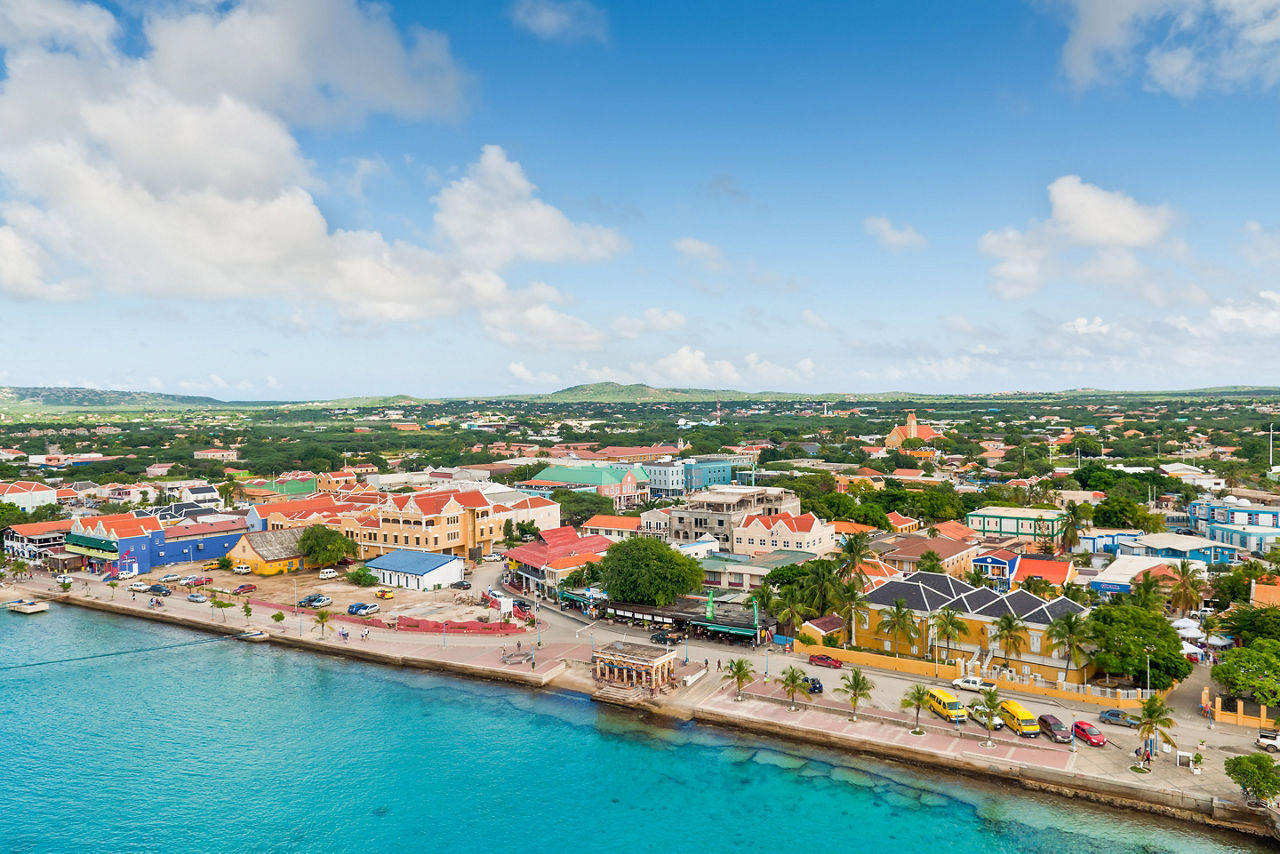
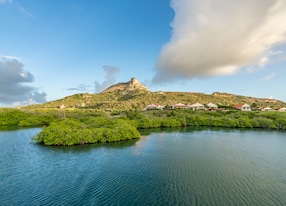
Bonaire’s salt flats are in the low, southern part of the island, south of Kralendijk. This area includes the salt works, rows of white salt piles and the nearby Pekelmeer wetland.
A drive through southern Bonaire brings several parts of this landscape into view. Look for the ponds beside the road, the salt pyramids rising above the flat ground and the historic huts along the coast. Together, they tell a story that reaches well beyond the scenery.
Why Are Bonaire’s Salt Ponds Pink?
Bonaire’s salt ponds turn pink because salt-loving microorganisms produce reddish pigments. These tiny organisms thrive in concentrated saltwater, also called brine, and give some of the ponds their rosy appearance.
The scientific word for salt-loving is halophilic. These organisms can live in water far saltier than the sea. As the amount of salt and the mix of organisms change, the water’s appearance can change, too. That helps explain why the ponds don’t all look the same.
The pink color belongs to the pond’s living community. The harvested salt is white, creating the striking contrast you can see across the landscape.
How Is Sea Salt Made in Bonaire?
Sea salt production in Bonaire uses evaporation. Sunshine and wind remove water from shallow ponds, leaving increasingly salty brine behind.
The process follows a few main steps:
- Saltwater enters the pond system: Shallow ponds give the water plenty of exposure to sun and wind.
- Water evaporates: The remaining water becomes more concentrated with salt.
- Salt crystals form: In the final ponds, enough water evaporates for solid salt to collect.
- The salt is harvested and washed: It's then stacked into the island’s familiar white piles before shipment.
Those “pyramids” are stores of harvested salt. Bonaire’s salt has uses beyond cooking, including water softening and industrial production.
What Is the History of Bonaire’s Salt Flats?
Salt production has shaped Bonaire for centuries. Before refrigeration, salt helped preserve foods such as fish and meat, making it a valuable trading product.
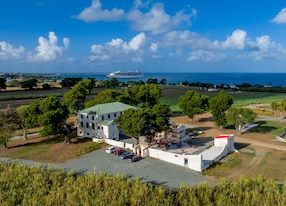
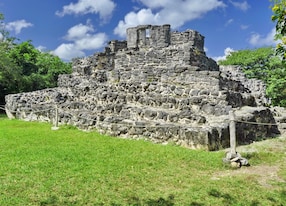
The island’s salt history also includes the forced labor of enslaved people. Small huts built in 1850 still stand along the southern coast. They served as sleeping quarters for people who worked collecting and shipping salt.
Nearby obelisks, or tall stone markers, helped guide arriving ships to loading areas. Seeing these landmarks offers a chance to learn about both the salt trade and the people whose labor supported it.
Can You See Flamingos Near the Salt Flats?
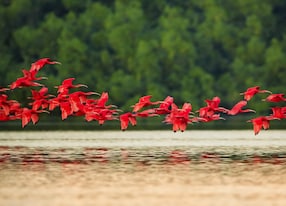
Flamingos live in the wetlands around southern Bonaire, including the Pekelmeer Flamingo Sanctuary. This protected area provides an important breeding habitat for Caribbean flamingos.
Visitors can look for the birds from the road outside the sanctuary. Bring binoculars for a closer view. The sanctuary itself is closed to visitors to protect the birds and their nesting grounds.
Flamingos get their pink feathers from pigments in their food. Their color comes through their diet, rather than from standing in pink water. Their location can change, so spotting them is a welcome wildlife moment during your outing.
How Can You Visit the Bonaire Salt Flats on a Cruise?
An island sightseeing excursion is an easy way to explore the salt flats while learning about the surrounding landscape.
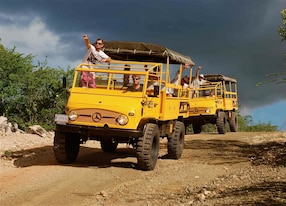
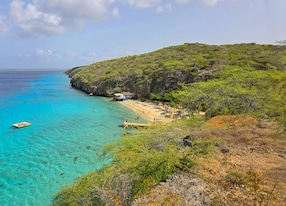
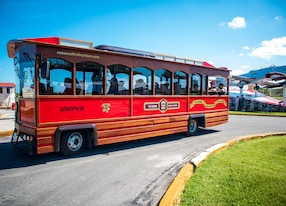
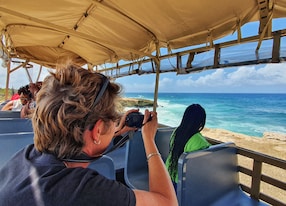
Royal Caribbean’s Bonaire’s Top Sights excursion includes a guided drive through the island’s countryside, the salt flats around Pekelmeer and historic huts connected to the salt industry. The route also includes southeastern mangrove scenery and a bay stop.
This type of outing combines several sides of Bonaire in one trip: colorful scenery, local history and opportunities to look for flamingos.
What Should You Bring to the Salt Flats?
A few simple items can help you enjoy the outing:
- Binoculars: Useful for watching flamingos from a distance.
- A phone or camera: Capture the contrast between the ponds, salt piles and sea.
- A hat and sunglasses: Helpful for the bright, open landscape.
- Drinking water: Bring some for your sightseeing stops.
- Comfortable shoes: Choose a pair suited to getting on and off your tour vehicle and exploring historic sites.
Plan to enjoy the salt works from public roadside areas or the stops included on your tour. For a day that also includes swimming, choose an excursion with a separate beach stop.
Why Visit Bonaire’s Salt Flats?
Bonaire’s salt flats turn a simple island drive into a chance to discover something unexpected. You can learn how seawater becomes salt, understand the story behind historic coastal landmarks and watch for flamingos along the way.
Explore cruises to Bonaire to make this colorful corner of the Caribbean part of your next adventure.
Frequently Asked Questions About Bonaire’s Salt Flats
-
Are Bonaire’s salt flats natural or human-made?
Bonaire’s salt-producing landscape combines natural conditions with managed ponds. The island’s low southern terrain, sunshine and wind support evaporation, while the pond system controls the movement of saltwater for harvesting.
-
Why is the water pink but the salt white?
The pink color comes from pigments in microorganisms living in the concentrated saltwater. The harvested salt crystals are white, which is why Bonaire’s pink ponds sit beside bright white salt piles.
-
Can you go inside Pekelmeer Flamingo Sanctuary?
Pekelmeer Flamingo Sanctuary is closed to visitors to protect its breeding birds. Visitors can watch for flamingos from the surrounding road, with binoculars helping them see birds farther away.
-
Can you visit the salt flats on a shore excursion?
Yes. Bonaire sightseeing excursions can include views of the salt flats and stops at nearby historic landmarks. Royal Caribbean’s Bonaire’s Top Sights excursion includes the Pekelmeer salt flats area as part of a broader island drive.
-
Is a salt flats excursion a salt factory tour?
A salt flats sightseeing excursion generally focuses on views of the ponds, salt piles and nearby landmarks. Royal Caribbean’s Bonaire’s Top Sights is a guided island drive. Its listed itinerary does not include an indoor factory tour or salt-harvesting activity.
-
Are flamingo sightings guaranteed at the salt flats?
Flamingo sightings vary because the birds move between feeding and nesting areas. Southern Bonaire offers opportunities to look for them, and binoculars make distant birds easier to see.
Planning a Trip to Bonaire?
Want to learn more about Bonaire? Check out these guides to plan your next trip:
- Kralendijk, Bonaire Shore Excursions - Explore options for island sightseeing, snorkeling and outdoor adventures.
- What To Do in Bonaire: Top Attractions & Activities - Find more ways to enjoy the island’s coastline, wildlife and local sights.
- What Is Bonaire Known For? - Discover the reefs, flamingos and island experiences that make Bonaire special.