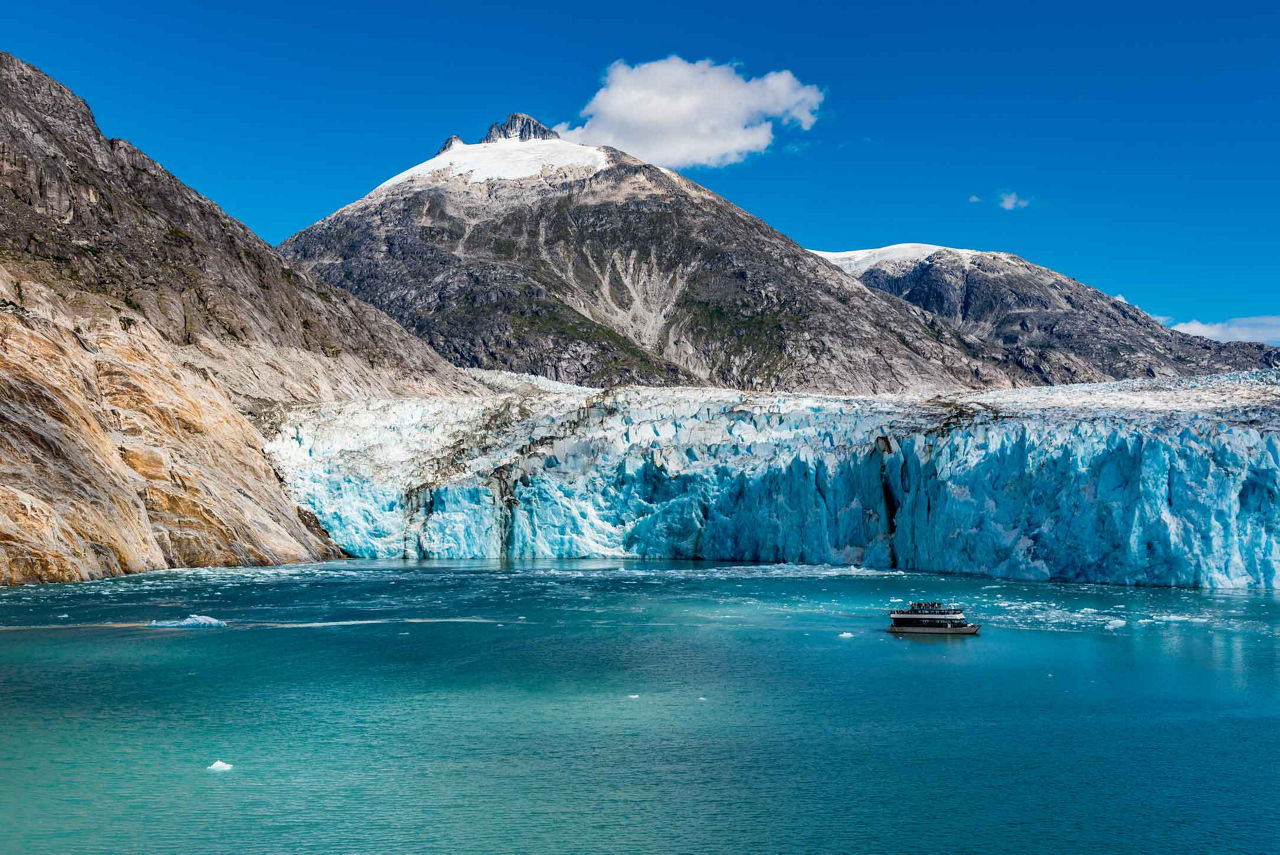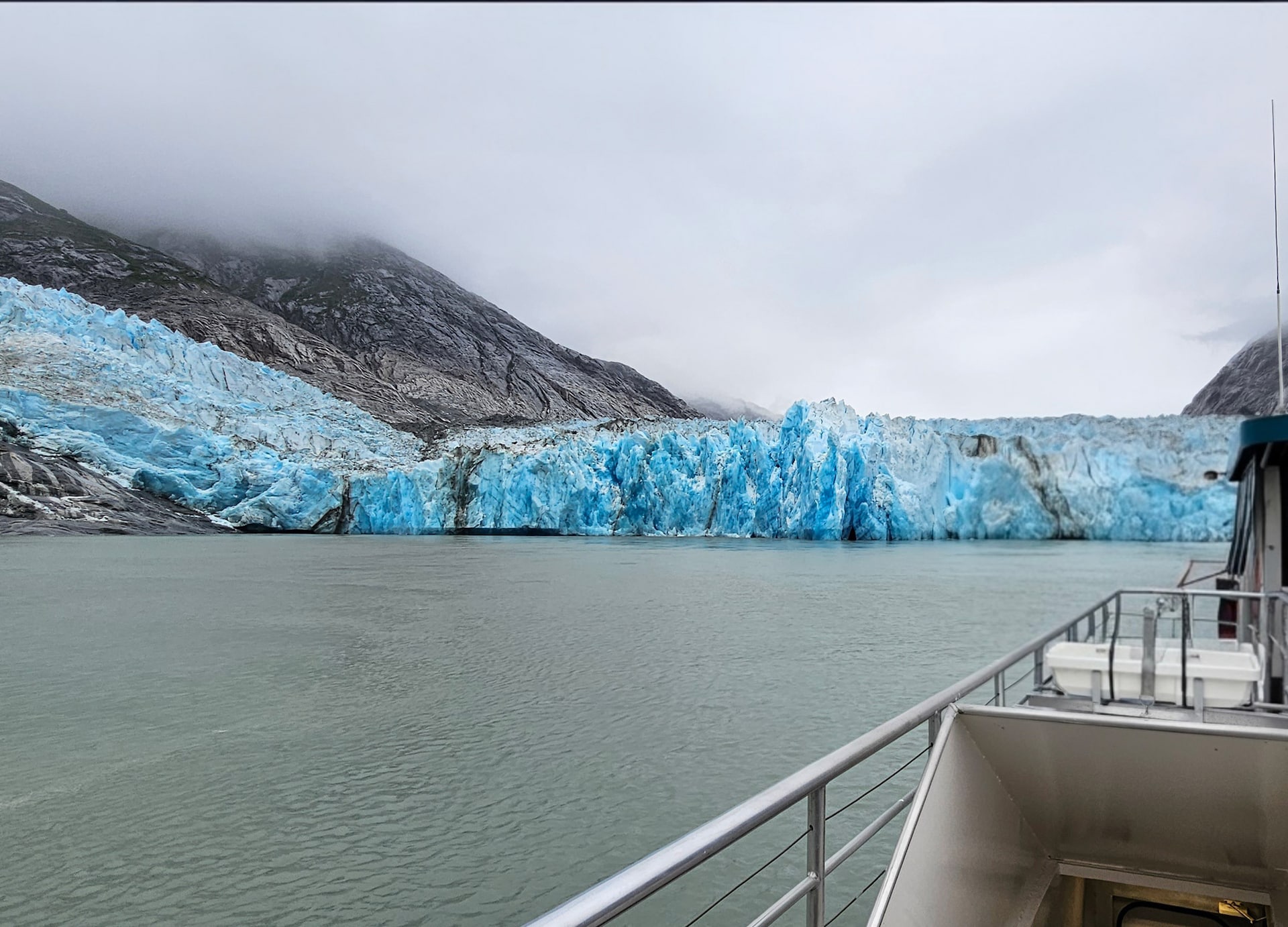
A tidewater glacier is a glacier that flows from land into the ocean. Its edge meets salt water, where pieces of ice break away and become icebergs. Alaska’s Hubbard Glacier and Dawes Glacier are two examples travelers can see while exploring the state’s coast.
You may recognize these glaciers from photos of blue-and-white ice rising above the water. On an Alaska cruise, you can discover what creates those colors, how the ice moves and why pieces fall into the sea. Learning a little about glaciers gives you more to notice during a visit.
What Makes a Glacier a Tidewater Glacier?

The defining feature of a tidewater glacier is where it ends. A glacier that reaches the sea is a tidewater glacier, while others end on land or in freshwater lakes.
The end of a glacier is called its terminus. At the coast, this can form a tall, uneven face of ice above the water. Behind it, the glacier continues inland through mountain valleys.
Despite its solid appearance, the ice is moving. Gravity draws it downhill, gradually delivering more ice toward the ocean. What you see at the shoreline is one part of a much larger glacier.
How Do Tidewater Glaciers Form?
Tidewater glaciers begin with snow that accumulates on land. When more snow falls than melts each year, the older layers become buried and compressed into glacier ice.
The process involves several stages:
- Snow accumulates: Snow builds up over successive years in cold mountain areas.
- Layers become compressed: The weight of newer snow squeezes older layers into increasingly dense ice.
- Ice flows downhill: Gravity causes the glacier to move through the landscape.
- The glacier reaches the sea: Its lower end meets ocean water, making it a tidewater glacier.
As glaciers move, they carry rock and scrape the ground beneath them. Over time, that movement helps shape the valleys and coastal scenery you see during an Alaska vacation.
Why Do Tidewater Glaciers Calve?
Glacier calving happens when pieces of ice break away from a glacier’s end. Movement creates cracks in the ice, while contact with seawater can melt and weaken the glacier’s edge.
Some calving events release small fragments. Others involve larger sections that fall into the water with a splash and a sound often compared to thunder. Ice can also break away below the surface.
The floating pieces gradually change as they melt. Newly broken ice can have sharp edges, while older pieces become smoother and more rounded. Watching these differences is another way to understand what is happening around the glacier.
Large calving events can create waves, so excursion captains keep an appropriate distance from the ice face.
Why Is Glacier Ice Blue?
Glacier ice looks blue because it absorbs more of the red wavelengths in sunlight, while blue light passes through and scatters back toward your eyes.
Fresh snow usually appears white because its many air spaces scatter light. As snow becomes dense glacier ice, fewer bubbles remain, making the blue color easier to see.
During a glacier visit, look at the differences across the ice face. Deep cracks and freshly exposed ice often show stronger blue shades. Other areas appear white or contain dark streaks of rock and sediment carried along by the glacier.
Those colors reveal different parts of the glacier’s structure. The dark bands, for example, are a reminder that glaciers move over land before reaching the sea.
What Is the Connection Between Glaciers & Fjords?
A fjord is a long, narrow coastal inlet occupying a valley carved by a glacier. As the glacier retreats, seawater fills the valley it leaves behind.
That history explains the steep sides and deep water found in many of Alaska’s fjords. The glacier helped shape the valley, and the ocean became part of the landscape afterward.
Endicott Arm is one place to see this connection. Traveling through the fjord toward Dawes Glacier brings together the surrounding rock walls, floating ice and the glacier at the head of the inlet. Each is part of the same landscape’s story.
Which Tidewater Glaciers Can You See in Alaska?
Hubbard Glacier and Dawes Glacier offer two different settings for coastal glacier viewing. One opens onto a broad bay, while the other sits at the end of a narrow fjord.
Hubbard Glacier
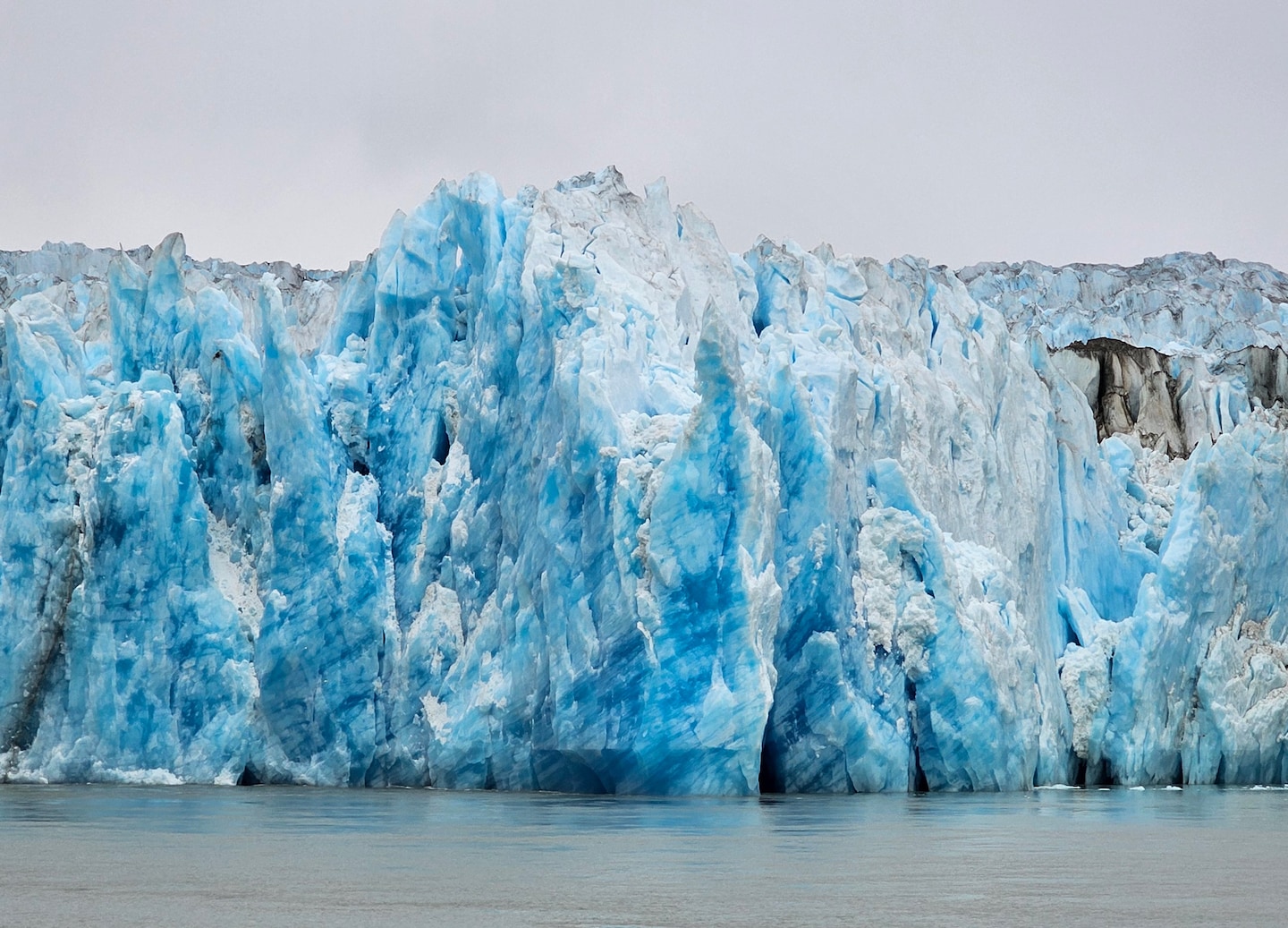
Hubbard Glacier meets the sea in Disenchantment Bay. Its broad ice face makes it an impressive place to see glacier features such as blue crevasses, uneven ice towers and dark bands of sediment.
A boat trip gives you time to study those details while learning about the surrounding area. The mountains behind the glacier also help show how far the landscape extends beyond the ice visible at the shoreline.
Dawes Glacier
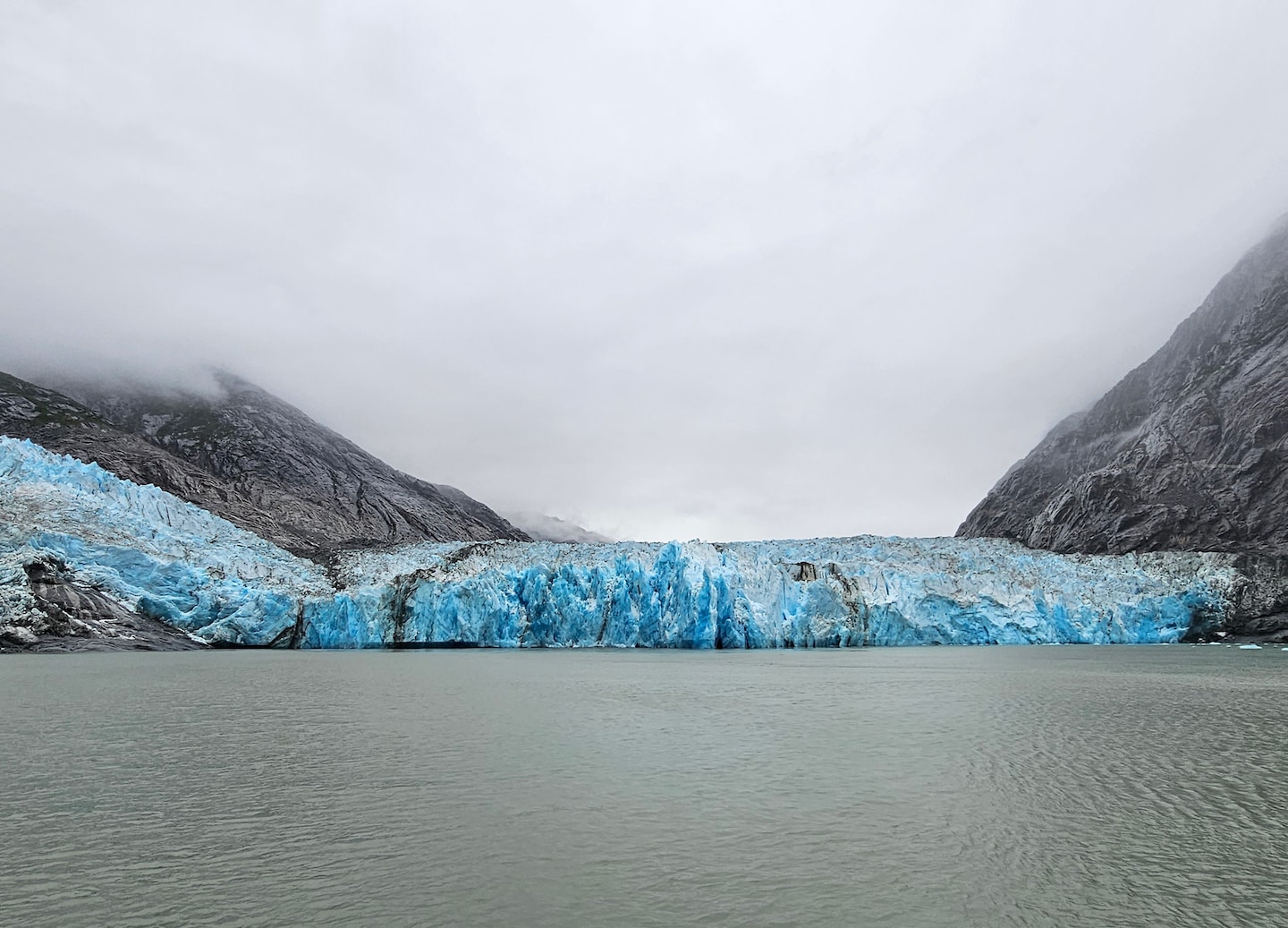
Dawes Glacier sits at the head of Endicott Arm in Southeast Alaska. Reaching it means traveling through a fjord with steep slopes, waterfalls and floating ice.
The approach is an important part of the experience. You see the glacier within the valley it helped shape, with changing views along the waterway. This guide to Endicott Arm and Dawes Glacier introduces the setting and ways to explore it.
Discover Alaska’s Tidewater Glaciers on a Shore Excursion
Royal Caribbean offers glacier-viewing experiences that connect these natural features with time on the water. The excursions provide different perspectives, depending on the destination and route.
Hubbard Glacier Viewing
The Hubbard Glacier Wilderness Explorer travels through Disenchantment Bay aboard a purpose-built excursion boat. Large cabin windows and an outdoor viewing deck provide different places to watch the scenery, while a guide shares information about the area’s ecology and wildlife.
The excursion focuses on viewing the glacier from the water. It’s a good fit for travelers interested in the ice face, floating icebergs and surrounding mountain landscape.
Endicott Arm Exploration

Endicott Arm Fjord and Glacier Explorer combines glacier viewing with a journey through the fjord. An expedition vessel travels past floating ice and steep cliffs, with an onboard naturalist helping explain the surrounding landscape.
This outing connects the glacier itself with the wider setting. Along the way, you can learn how ice shaped the valley and how the coastal environment supports wildlife.
Choose the experience that fits your itinerary and interests. Availability varies by sailing, and weather and ice conditions determine the vessel’s approach.
Discover Alaska Through Its Coastal Glaciers
Understanding tidewater glaciers gives Alaska’s coastal scenery another layer of interest. The blue ice, floating fragments and steep-sided valleys each reveal something about how glaciers form, move and change.
Explore Alaska glacier cruises and pair your vacation with an excursion that brings these features into view.
Frequently Asked Questions About Tidewater Glaciers
-
Are tidewater glaciers made of fresh water or salt water?
Tidewater glaciers are made of fresh water because they form from snow that accumulates on land. The word “tidewater” describes where the glacier ends, rather than the type of water that forms its ice.
-
Are tidewater glaciers the same as sea ice?
Tidewater glaciers form on land and flow into the ocean. Sea ice forms when seawater freezes. Icebergs that break away from a glacier are pieces of land-formed ice floating in the sea.
-
Will you always see a glacier calving?
Calving is not guaranteed during a glacier visit. Its timing and size vary, so a viewing stop might include small falling fragments, a larger event or a quiet period.
-
Do animals use the ice near tidewater glaciers?
Harbor seals use floating glacier ice to rest, give birth and nurse their pups. These ice-filled waters provide important habitat, although wildlife sightings vary by location and visit.
-
Do glacier-viewing boat excursions include walking on the ice?
The Hubbard Glacier Wilderness Explorer and Endicott Arm Fjord and Glacier Explorer are boat-based viewing experiences. They do not include walking on the glacier. Glacier walks require a separate excursion with suitable access, equipment and guides.
Planning a Trip to Alaska?
Want to learn more about exploring Alaska? Check out these guides to plan your next trip:
- Endicott Arm and Dawes Glacier - Explore a glacier-carved fjord, coastal scenery and glacier-viewing experiences.
- Skagway Shore Excursions - Discover outdoor adventures and local history for another day ashore.
- Alaska Cruise Packing Guide - Prepare for time on the water with practical clothing and packing suggestions.